Bill · H.R. 1919· House(119-HR-1919)
Anti-CBDC Surveillance State Act
- Introduced
- 3/6/2025
- Last activity
- 7/17/2025 — Motion to reconsider laid on the table Agreed to without objection.
- Sponsored by
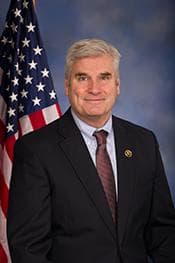
- Tom Emmer
- Cosponsors
- - 134 - 0
- Introduced
- Passed House
- Awaiting Senate
What this bill would do
This act, known as the "Anti-CBDC Surveillance State Act," seeks to amend the Federal Reserve Act. It prohibits Federal Reserve banks from offering financial products or services directly to individuals or maintaining individual accounts. The bill specifically bans the issuance of a central bank digital currency (CBDC) or similar digital assets, whether directly to people or indirectly through financial intermediaries. Additionally, it prevents the Board of Governors and the Federal Open Market Committee from using a CBDC to implement monetary policy. It also stops the Board of Governors from testing, studying, developing, creating, or implementing such digital assets.
Yes
Does this give people more control over their personal data?+7
The bill enhances financial data privacy by prohibiting the central bank from issuing a traceable digital currency.
Does this protect people from being watched or searched?+7
The bill protects individual privacy by preventing the implementation of a CBDC.
Does this give people more protection from unfair business practices?+5
The bill protects consumer financial privacy by preventing the implementation of a central bank digital currency.
The opposite
Does this give the government more power to monitor people inside the country?-5
The bill aims to reduce potential government surveillance by preventing the creation of a digital currency tracking system.
Does this give the federal government more power?-5
The bill restricts the expansion of Federal Reserve power regarding digital assets.
What Congress actually voted on
One recorded vote has been taken on this bill.
- The House: the vote on whether to pass the billPassed 219–210
This is the real decision in this chamber. Passing here sends the bill to the other chamber, which must pass it too before it can go to the President.
07/17/2025 · Roll call 201 · recorded as “On Passage”
Who it would affect, and how
Potential Positive Impacts for People
-
Protection of Financial Privacy: The bill includes an exception that ensures the prohibitions do not prevent the use of dollar-denominated currency that is open, permissionless, private, and preserves the privacy protections of physical currency (Section 4, Subparagraph C).
-
Restriction of Federal Reserve Services: Federal Reserve banks would be prohibited from offering financial products or services directly to an individual or maintaining accounts for them (Section 2, Paragraph 18(A)).
Potential Negative Impacts for People
-
Limitation of Digital Asset Development: The Board of Governors of the Federal Reserve System is prohibited from testing, studying, developing, creating, or implementing a central bank digital currency or similar digital assets (Section 4, Subparagraph A).
-
Restriction of Monetary Policy Tools: The Board of Governors and the Federal Open Market Committee are prohibited from using a central bank digital currency or similar digital assets to implement monetary policy (Section 4, Subparagraph B).
-
Prohibition of Indirect Digital Asset Access: Federal reserve banks are prohibited from offering a central bank digital currency or similar digital assets indirectly to individuals through financial institutions or other intermediaries (Section 3, Paragraph 19(A)).
Groups and Interests Ranking
Every group the model scored this bill for, from -10 to +10. Hover a score for the reason it gave.
- Education And Technology
- Improves Data Privacy+7
- Economy And Finance
- Improves Consumer Protection+5
- National Security And Foreign Policy
- Increases Domestic Surveillance-5
- Governance And Ideology
- Improves Privacy Rights+7Increases Federal Power-5
| Updated | Bill | Title | Policy Area |
|---|---|---|---|
| 1 year ago | On agreeing to the Rules amendment (A001) Agreed to without objection. |
- 7/17/2025
- Motion to reconsider laid on the table Agreed to without objection.
- Passed/agreed to in House: On passage Passed by the Yeas and Nays: 219 - 210 (Roll no. 201).
- On passage Passed by the Yeas and Nays: 219 - 210 (Roll no. 201). (text of amendment in the nature of a substitute: CR H3427-3428)
- Considered as unfinished business. (consideration: CR H3450)
- POSTPONED PROCEEDINGS - At the conclusion of debate on H.R. 1919, the Chair put the question on passage of the bill and by voice vote, announced that the ayes had prevailed. Ms. Waters demanded the yeas and nays and the Chair postponed further proceedings until a time to be announced.
- The previous question was ordered pursuant to the rule.
- DEBATE - The House proceeded with one hour of debate on H.R. 1919.
- Rule provides for consideration of H.R. 4016, H.R. 3633, H.R. 1919 and S. 1582. The resolution provides for consideration of H.R. 4016 and H.R. 3633 under a structured rule, and H.R. 1919 and S. 1582 under a closed rule, with one hour of general debate on each bill. The resolution provides for a motion to recommit on H.R. 4016, H.R. 3633, and H.R. 1919, and a motion to commit on S. 1582.
- Considered under the provisions of rule H. Res. 580. (consideration: CR H3427-3434)
- 7/15/2025
- Rules Committee Resolution H. Res. 580 Reported to House. Rule provides for consideration of H.R. 4016, H.R. 3633, H.R. 1919 and S. 1582. The resolution provides for consideration of H.R. 4016 and H.R. 3633 under a structured rule, and H.R. 1919 and S. 1582 under a closed rule, with one hour of general debate on each bill. The resolution provides for a motion to recommit on H.R. 4016, H.R. 3633, and H.R. 1919, and a motion to commit on S. 1582.
- 5/6/2025
- Reported (Amended) by the Committee on Financial Services. H. Rept. 119-92.
- Placed on the Union Calendar, Calendar No. 66.
- 5/5/2025
- 2 Cosponsors added.
- 4/24/2025
- 17 Cosponsors added.
- 4/8/2025
- 2 Cosponsors added.
- 4/2/2025
- Committee Consideration and Mark-up Session Held
- Ordered to be Reported (Amended) by the Yeas and Nays: 27 - 22.
- 3/25/2025
- 4 Cosponsors added.
- 3/11/2025
- 4 Cosponsors added.
- 3/10/2025
- 6 Cosponsors added.
- 3/6/2025
- Referred to the House Committee on Financial Services.
- 100 Cosponsors added.
- Introduced in House
3 bills Congress.gov lists as related to this one — companions in the other chamber, earlier versions, and bills this one absorbed or was folded into.
- 119-S-1124: Anti-CBDC Surveillance State Act
- 119-S-1318: Fallen Servicemembers Religious Heritage Restoration Act
- 119-HRES-580: Providing for consideration of the bill (H.R. 4016) making appropriations for the Department of Defense for the fiscal year ending September 30, 2026, and for other purposes; providing for consideration of the bill (H.R. 3633) to provide for a system of regulation of the offer and sale of digital commodities by the Securities and Exchange Commission and the Commodity Futures Trading Commission, and for other purposes; providing for consideration of the bill (H.R. 1919) to amend the Federal Reserve Act to prohibit the Federal reserve banks from offering certain products or services directly to an individual, to prohibit the use of central bank digital currency for monetary policy, and for other purposes; providing for consideration of the bill (S. 1582) to provide for the regulation of payment stablecoins, and for other purposes; and waiving a requirement of clause 6(a) of rule XIII with respect to consideration of certain resolutions reported from the Committee on Rules.
 Mark Amodei
Republican · Nevada
 Cliff Bentz
Republican · Oregon
 Stephanie Bice
Republican · Oklahoma
 Gus Bilirakis
Republican · Florida
 Andy Barr
Republican · Kentucky
 Brian Babin
Republican · Texas
 Mike Bost
Republican · Illinois
 Don Bacon
Republican · Nebraska
 Jack Bergman
Republican · Michigan
 Andy Biggs
Republican · Arizona
 Troy Balderson
Republican · Ohio
 James Baird
Republican · Indiana
 Aaron Bean
Republican · Florida
 Josh Brecheen
Republican · Oklahoma
 Michael Baumgartner
Republican · Washington
 Nicholas Begich
Republican · Alaska
 Robert Bresnahan
Republican · Pennsylvania
 Kat Cammack
Republican · Florida
 John Carter
Republican · Texas
 Tom Cole
Republican · Oklahoma
 Michael Cloud
Republican · Texas
 Andrew Clyde
Republican · Georgia
 Ben Cline
Republican · Virginia
 Dan Crenshaw
Republican · Texas
 Mike Carey
Republican · Ohio
 Mike Collins
Republican · Georgia
 Elijah Crane
Republican · Arizona
 Juan Ciscomani
Republican · Arizona
 Jeff Crank
Republican · Colorado
 Byron Donalds
Republican · Florida
 Monica De La Cruz
Republican · Texas
 Warren Davidson
Republican · Ohio
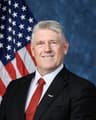 Troy Downing
Republican · Montana
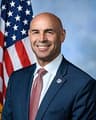 Jake Ellzey
Republican · Texas
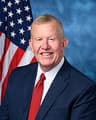 Mike Ezell
Republican · Mississippi
 Chuck Edwards
Republican · North Carolina
 Randy Feenstra
Republican · Iowa
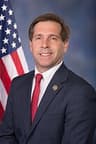 Charles Fleischmann
Republican · Tennessee
 Michelle Fischbach
Republican · Minnesota
 Scott Fitzgerald
Republican · Wisconsin
 Scott Franklin
Republican · Florida
 Mike Flood
Republican · Nebraska
 Brad Finstad
Republican · Minnesota
 Sam Graves
Republican · Missouri
 Brett Guthrie
Republican · Kentucky
 Paul Gosar
Republican · Arizona
 Glenn Grothman
Republican · Wisconsin
 Lance Gooden
Republican · Texas
 Mark Green
Republican · Tennessee
 Michael Guest
Republican · Mississippi
 Marjorie Greene
Republican · Georgia
 Andrew Garbarino
Republican · New York
 Craig Goldman
Republican · Texas
 Brandon Gill
Republican · Texas
 Bill Huizenga
Republican · Michigan
 Richard Hudson
Republican · North Carolina
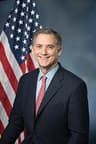 J. Hill
Republican · Arkansas
 Clay Higgins
Republican · Louisiana
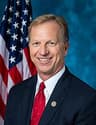 Kevin Hern
Republican · Oklahoma
 Diana Harshbarger
Republican · Tennessee
 Ashley Hinson
Republican · Iowa
 Erin Houchin
Republican · Indiana
 Harriet Hageman
Republican · Wyoming
 Mike Haridopolos
Republican · Florida
 Darrell Issa
Republican · California
 Dusty Johnson
Republican · South Dakota
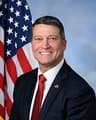 Ronny Jackson
Republican · Texas
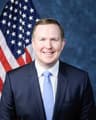 Brian Jack
Republican · Georgia
 Mike Kelly
Republican · Pennsylvania
 Trent Kelly
Republican · Mississippi
 Young Kim
Republican · California
 Thomas Kean
Republican · New Jersey
 Kevin Kiley
Independent · California
 Mike Kennedy
Republican · Utah
 Frank Lucas
Republican · Oklahoma
 Robert Latta
Republican · Ohio
 Barry Loudermilk
Republican · Georgia
 Darin LaHood
Republican · Illinois
 Julia Letlow
Republican · Louisiana
 Anna Paulina Luna
Republican · Florida
 Michael Lawler
Republican · New York
 Nicholas Langworthy
Republican · New York
 Nancy Mace
Republican · South Carolina
 Tracey Mann
Republican · Kansas
 Michael McCaul
Republican · Texas
 John Moolenaar
Republican · Michigan
 Daniel Meuser
Republican · Pennsylvania
 Gregory Murphy
Republican · North Carolina
 Mary Miller
Republican · Illinois
 Barry Moore
Republican · Alabama
 Richard McCormick
Republican · Georgia
 Nathaniel Moran
Republican · Texas
 Ryan Mackenzie
Republican · Pennsylvania
 Mark Messmer
Republican · Indiana
 Tim Moore
Republican · North Carolina
 John McGuire
Republican · Virginia
 Addison McDowell
Republican · North Carolina
 Troy Nehls
Republican · Texas
 Ralph Norman
Republican · South Carolina
 Zachary Nunn
Republican · Iowa
 Burgess Owens
Republican · Utah
 Andrew Ogles
Republican · Tennessee
 August Pfluger
Republican · Texas
 Scott Perry
Republican · Pennsylvania
 Mike Rogers
Republican · Alabama
 David Rouzer
Republican · North Carolina
 John Rutherford
Republican · Florida
 Guy Reschenthaler
Republican · Pennsylvania
 John Rose
Republican · Tennessee
 Chip Roy
Republican · Texas
 Michael Rulli
Republican · Ohio
 Maria Salazar
Republican · Florida
 Pete Sessions
Republican · Texas
 Adrian Smith
Republican · Nebraska
 Marlin Stutzman
Republican · Indiana
 Austin Scott
Republican · Georgia
 Pete Stauber
Republican · Minnesota
 Bryan Steil
Republican · Wisconsin
 W. Steube
Republican · Florida
 Derek Schmidt
Republican · Kansas
 Thomas Tiffany
Republican · Wisconsin
 Claudia Tenney
Republican · New York
 William Timmons
Republican · South Carolina
 David Taylor
Republican · Ohio
 David Valadao
Republican · California
 Jefferson Van Drew
Republican · New Jersey
 Beth Van Duyne
Republican · Texas
 Derrick Van Orden
Republican · Wisconsin
 Robert Wittman
Republican · Virginia
 Steve Womack
Republican · Arkansas
 Ann Wagner
Republican · Missouri
 Randy Weber
Republican · Texas
 Roger Williams
Republican · Texas
 Rudy Yakym
Republican · Indiana
 Ryan Zinke
Republican · Montana