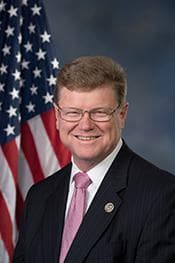


Mark E. Amodei

Mark E. Amodei

Republican · U.S. Representative for Nevada's 2nd district

11 sponsored · 146 cosponsored

Age 68 · In office since 2011

Contact their office: (202) 225-6155 · 104 Cannon House Office Building, Washington, DC 20515 · Official website

What they got done

Most bills never get a vote. These are the ones they wrote or backed that got somewhere.

Became law (4)

  • Mike Quigley (D-IL)

    Cosponsored

    Accelerating Access to Critical Therapies for ALS Reauthorization Act of 2026

    H.R. 8205 Health

    A Democratic bill with 39 Republican cosponsors.

    Became law

    This bill extends the provisions and grants for ALS research found in the original Act through fiscal year 2031.

    Yes· 2 of 3

    • Scored +7

      Does this put more money into medical research?

      The bill extends the authorization of grants for ALS research through fiscal year 2031.

    • Scored +6

      Would people with disabilities be better off under this?

      The bill promotes research into therapies for ALS, a debilitating neurodegenerative disease.

    No question was scored the opposite.
  • Pete Stauber (R-MN)

    Cosponsored

    Miracle on Ice Congressional Gold Medal Act

    H.R. 452 Sports and Recreation

    A Republican bill with 107 Democratic cosponsors.

    Became law

    This Act authorizes the award of 3 Congressional Gold Medals to the members of the 1980 U.S. Olympic Men's Ice Hockey Team. The medals recognize the team's victory over the Soviet Union during the 1980 Winter Olympics.

    Yes

    • Scored +1

      Is this likely to grow the economy?

      The sale of duplicate bronze medals provides a small influx of revenue to the United States Mint Public Enterprise Fund.

    No question was scored the opposite.

  • John Rose (R-TN)

    Cosponsored

    Homebuyers Privacy Protection Act

    H.R. 2808 Finance and Financial Sector

    A Republican bill with 33 Democratic cosponsors.

    Became law

    This bill aims to amend the Fair Credit Reporting Act. It seeks to prevent consumer reporting agencies from sharing consumer reports with others after a person requests a report for a residential mortgage loan.

    Yes· 2 of 3

    • Scored +7

      Does this give people more control over their personal data?

      The bill strengthens data privacy by preventing the sharing of credit reports after a mortgage request.

    • Scored +7

      Does this protect people from being watched or searched?

      The bill provides significant protection for individual privacy regarding sensitive financial information.

    No question was scored the opposite.

And 1 more on their Sponsored and Cosponsored pages.

Passed Congress — the President's turn (1)

Both chambers passed it. The President signs it into law or vetoes it, and a veto stands unless two-thirds of each chamber vote to pass it anyway. Everything Congress has sent the President →

  • Brian Jack (R-GA)

    Cosponsored

    Muhammad Ali American Boxing Revival Act of 2026

    H.R. 4624 Sports and Recreation

    A Republican bill with 8 Democratic cosponsors.

    Passed both chambers

    With no one objecting, no names recorded

    This bill amends the Professional Boxing Safety Act of 1996 to establish requirements for unified boxing organizations.

    Yes· 2 of 8

    • Scored +7

      Does this make health care easier to get in general?

      The act mandates enhanced medical presence, including an additional ambulance and ringside physician at matches.

    • Scored +6

      Would union members be better off under this?

      The act implements stronger contract protections and safety standards for professional athletes.

    The opposite

    • Scored -3

      Would people over 65 be better off under this?

      Boxers aged 40 or older face more frequent and intensive supplemental medical examination requirements.

Passed one chamber, waiting on the other (20)

Halfway: the other chamber has to pass the same text before it can go to the President.

  • Mark Amodei (R-NV)

    Their bill

    Northern Nevada Economic Development and Conservation Act of 2026

    H.R. 2317 Public Lands and Natural Resources

    A Republican bill with no cosponsors.

    Passed the House

    By voice vote, no names recorded

    Now: handed to a committee to examine — Committee on Energy and Natural Resources · Sep 15

    This bill deals with the transfer, sale, and management of various federal lands in northern Nevada.

    Yes· 2 of 23

    • Scored +6

      Would people in rural areas be better off under this?

      Promotes rural economic development, simplifies land management, and supports tribal projects in rural counties.

    • Scored +6

      Would Native Americans be better off under this?

      Transfers land into trust for the Washoe Tribe, takes Walker Lake Parcel into trust, and protects tribal cultural resources.

    The opposite

    • Scored -3

      Does this give the federal government more power?

      Transfers significant amounts of Federal land and reversionary interests to state and tribal control.

  • Mark Amodei (R-NV)

    Their bill

    Mining Regulatory Clarity Act

    H.R. 1366 Environmental Protection

    A Republican bill with 1 Democratic cosponsor. See the voting map.

    Passed the House

    219198

    Now: in the queue for a floor vote, with no date set · Mar 17

    This bill provides for the location of multiple hardrock mining mill sites. It defines mill sites as public land necessary for waste rock disposal or other operations related to mineral development.

    Yes· 2 of 5

    • Scored +5

      Would business owners be better off under this?

      The act increases operational efficiency by allowing proprietors to locate multiple mill sites as needed.

    • Scored +4

      Does this better protect public land such as parks and forests?

      The creation of the Abandoned Hardrock Mine Fund provides resources to address issues related to abandoned mines on public land.

    No question was scored the opposite.

  • Jefferson Shreve (R-IN)

    Cosponsored

    Dismantle Foreign Scam Syndicates Act

    H.R. 5490 International Affairs

    A Republican bill with 30 Democratic cosponsors.

    Passed the House

    By voice vote, no names recorded

    Now: handed to a committee to examine — Committee on Foreign Relations · Nov 19

    This bill sets up an interagency task force led by the Secretary of State to shut down international online scam operations, such as pig butchering scams.

    Yes· 2 of 17

    • Scored +7

      Would immigrants be better off under this?

      Provides support and reintegration services for trafficking victims forced into scam centers.

    • Scored +7

      Does this give people more protection from unfair business practices?

      The bill aims to protect U.S. citizens from mass online financial scams and recover stolen assets.

    The opposite

    • Scored -2

      Does this protect the right to fair treatment by the courts?

      The broad authority for sanctions based on 'credible evidence' could potentially lead to misidentification.

And 17 more on their Sponsored and Cosponsored pages.

Still waiting, of the 11 bills they wrote: 3 cleared committee and wait for a first vote, 6 are in committee. Committee is where most bills end, whoever writes them — silence there, not a vote, is the usual way a bill dies.

What their bills would do

Every bill is scored against plain yes-or-no questions. These count their bills — the ones they wrote and the ones they cosponsored — by how each question was answered: yes, or the opposite. Open one to see those bills, where each stands, and why it was scored that way. Scores are made by AI ().

Who their bills would affect

What else they would change

How they voted lately

Their latest votes that decided something, and what each measure would do.

  • U.S. House · Nov 19, 2026

    Preventive Health Savings Act

    A fast-track vote, needing two-thirds to pass The House sets aside its normal procedure to move quickly: no amendments, little debate, and a two-thirds bar instead of a simple majority. It is used for measures expected to be uncontroversial, so a bill that fails here failed despite broad expectations that it would not.

    Their vote Yea

    This bill amends the Congressional Budget Act of 1974 regarding how preventive health savings are scored.

    • Scored +3

      Does this reduce what the federal government spends?

      By highlighting reductions in budget outlays through preventive health, the bill facilitates the identification of potential spending reductions.

  • U.S. House · Nov 18, 2026

    Earth MRI Reauthorization Act of 2026

    A fast-track vote, needing two-thirds to pass The House sets aside its normal procedure to move quickly: no amendments, little debate, and a two-thirds bar instead of a simple majority. It is used for measures expected to be uncontroversial, so a bill that fails here failed despite broad expectations that it would not.

    Their vote Yea

    This bill updates the Infrastructure Investment and Jobs Act to reauthorize the Earth Mapping Resources Initiative.

    • Scored +7

      Does this put more money into scientific research?

      Authorizes 84 million dollars to update and expand geological mapping and scientific data collection methods.

  • U.S. House · Nov 18, 2026

    Common Sense 250 Act of 2026

    A fast-track vote, needing two-thirds to pass The House sets aside its normal procedure to move quickly: no amendments, little debate, and a two-thirds bar instead of a simple majority. It is used for measures expected to be uncontroversial, so a bill that fails here failed despite broad expectations that it would not.

    Their vote Yea

    Its main purpose is to officially approve the location for a commemorative work honoring Thomas Paine. The monument is designated to be placed within a specific zone known as Area I in Washington, DC, and its environs.

Every vote they cast, and how often they missed one →

On the President’s vetoes

A vetoed bill becomes law only if two-thirds of both chambers pass it again. The President can refuse to sign a bill both chambers passed. It becomes law anyway only if two-thirds of the House and two-thirds of the Senate vote to pass it again. A vote against the veto (a Yea) was a vote to make the bill law over the President’s objection; a vote for it (a Nay) was a vote to let the veto stand.

How busy they have been

How many bills they have put their name to over time — volume, not results: most bills never get a vote.

Legislative activity over time