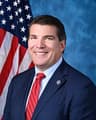
Jay Obernolte (R-CA)
Preventive Health Savings Act
A Republican bill with 8 Democratic cosponsors · See all 25 cosponsors
Last activity — Received in the Senate and Read twice and referred to the Committee on the Budget.
In the other chamber's committee
Passed one chamber and has been handed to a committee in the other.
The committee decides whether it goes any further, and most bills that reach a committee never leave it. A committee that simply does nothing kills a bill without anyone ever voting against it, so no news from here is usually the news.
Its path through Congress
- Introduced
- Passed House 401–0
- In Senate committee
What this bill would do
This bill is called the Preventive Health Savings Act. It amends the Congressional Budget Act of 1974 regarding how preventive health savings are scored. Under this bill, specific committee leaders can ask the Director to determine if proposed legislation will result in net reductions in budget outlays through preventive health care over future years. If the Director makes this determination, they must include a description and estimate of these reductions and the basis for them in their projections. The Director may also prepare a budget projection that includes some or all of the budgetary outyears despite normal time periods. However, these estimates are limited to being supplementary and cannot be used to determine compliance with the Congressional Budget Act or other budgetary controls.
Yes· 3 of 5
- Scored +3
Does this reduce what the federal government owes?
The bill provides a mechanism to track long-term savings from preventive health which could assist in debt reduction strategies.
- Scored +3
Does this reduce what the federal government spends?
By highlighting reductions in budget outlays through preventive health, the bill facilitates the identification of potential spending reductions.
- Scored +2
Does this make the government pay for what it commits to?
It enhances fiscal visibility by accounting for long-term savings in budgetary outyears.
The opposite
No question was scored the opposite.
What Congress actually voted on
One recorded vote has been taken on this bill.
- The House: a fast-track vote, needing two-thirds to pass The House sets aside its normal procedure to move quickly: no amendments, little debate, and a two-thirds bar instead of a simple majority. It is used for measures expected to be uncontroversial, so a bill that fails here failed despite broad expectations that it would not. Passed 401 yes · 0 no
11/19/2026 · Roll call 327 · recorded as “On Motion to Suspend the Rules and Pass”
Who it would affect, and how
Potential Positive Impacts for People
-
Section 2: Adds subsection (h)(1) to allow the Director to determine if proposed legislation results in net reductions in budget outlays in budgetary outyears through preventive health care, upon request by specific committee leaders. This could be considered positive because it allows for a formal look at how preventive health measures might save money over the long term.
-
Section 2: Adds subsection (h)(2) requiring the Director to include a description and estimate of reductions in budget outlays in budgetary outyears, along with the basis for those conclusions, in projections for qualifying legislation. This is positive because it provides transparency and clear explanations for how preventive health care is expected to impact future budgets.
Potential Negative Impacts for People
- Section 2: Adds subsection (h)(3) to place a limitation stating that any estimate provided by the Director pursuant to paragraph (1) must be used as a supplementary estimate and may not be used to determine compliance with the Congressional Budget Act of 1974 or any other budgetary enforcement controls. This could be viewed as a negative or a restriction because the long-term savings identified for preventive health care cannot actually be used for formal budget enforcement or compliance.
Groups and Interests Ranking
Every group the model scored this bill for, from -10 to +10. Tap or hover a score for the reason it gave.
- Economy And Finance
- Does this reduce what the federal government spends? — By highlighting reductions in budget outlays through preventive health, the bill facilitates the identification of potential spending reductions. Does this reduce what the federal government owes? — The bill provides a mechanism to track long-term savings from preventive health which could assist in debt reduction strategies. Does this make the government pay for what it commits to? — It enhances fiscal visibility by accounting for long-term savings in budgetary outyears.
- Governance And Ideology
- Does this make what the government does easier for the public to see? — The bill increases transparency regarding the long-term fiscal impacts of preventive health care.
- Healthcare
- Does this make health care easier to get in general? — The bill indirectly supports healthcare access by emphasizing the fiscal value of preventive health measures.
The version one chamber actually passed
What changed from Referred in Senate: No change to the wording. Only the printed details that record the bill’s progress, such as the heading and dates, are different.
A committee approved it and sent it to the floor
What changed from Introduced in House: No change to the wording. Only the printed details that record the bill’s progress, such as the heading and dates, are different.
- 11/19/2026
- Received in the Senate and Read twice and referred to the Committee on the Budget.
- Motion to reconsider laid on the table Agreed to without objection.
- Passed/agreed to in House: On motion to suspend the rules and pass the bill Agreed to by the Yeas and Nays: (2/3 required): 401 - 0 (Roll no. 327).
- On motion to suspend the rules and pass the bill Agreed to by the Yeas and Nays: (2/3 required): 401 - 0 (Roll no. 327).
- Considered as unfinished business. (consideration: CR H6294-6295)
- 11/18/2026
- At the conclusion of debate, the Yeas and Nays were demanded and ordered. Pursuant to the provisions of clause 8, rule XX, the Chair announced that further proceedings on the motion would be postponed.
- DEBATE - The House proceeded with forty minutes of debate on H.R. 4464.
- Considered under suspension of the rules. (consideration: CR H6266-6270; text: CR H6266-6267)
- Mr. Arrington moved to suspend the rules and pass the bill.
- 11/17/2026
- Reported by the Committee on Budget. H. Rept. 119-882.
- Placed on the Union Calendar, Calendar No. 777.
- 11/9/2026
- 1 Cosponsor added.
- 11/2/2026
- 1 Cosponsor added.
- 10/29/2026
- 1 Cosponsor added.
- 10/1/2026
- 1 Cosponsor added.
- 9/24/2026
- 1 Cosponsor added.
- 9/16/2026
- Committee Consideration and Mark-up Session Held
- Ordered to be Reported by the Yeas and Nays: 29 - 0.
- 9/15/2026
- 1 Cosponsor added.
- 5/13/2026
- 1 Cosponsor added.
- 12/16/2025
- 1 Cosponsor added.
- 12/15/2025
- 1 Cosponsor added.
- 10/21/2025
- 2 Cosponsors added.
- 10/3/2025
- 1 Cosponsor added.
- 9/30/2025
- 1 Cosponsor added.
- 9/2/2025
- 1 Cosponsor added.
- 8/15/2025
- 1 Cosponsor added.
- 7/29/2025
- 1 Cosponsor added.
- 7/25/2025
- 1 Cosponsor added.
- 7/23/2025
- 4 Cosponsors added.
- 7/22/2025
- 1 Cosponsor added.
- 7/16/2025
- Referred to the House Committee on the Budget.
- 3 Cosponsors added.
- Introduced in House
2 bills Congress.gov lists as related to this one — companions in the other chamber, earlier versions, and bills this one absorbed or was folded into.
 Jodey Arrington
Republican · Texas
 Vern Buchanan
Republican · Florida
 Troy Balderson
Republican · Ohio
 Earl Carter
Republican · Georgia
 Mike Carey
Republican · Ohio
 Herbert Conaway
Democrat · New Jersey
 Diana DeGette
Democrat · Colorado
 Suzan DelBene
Democrat · Washington
 Chuck Edwards
Republican · North Carolina
 Bill Foster
Democrat · Illinois
 Young Kim
Republican · California
 Kevin Kiley
Independent · California
 Carol Miller
Republican · West Virginia
 Gregory Murphy
Republican · North Carolina
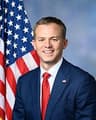 Blake Moore
Republican · Utah
 Mariannette Miller-Meeks
Republican · Iowa
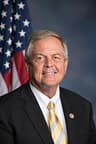 Ralph Norman
Republican · South Carolina
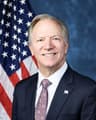 Robert Onder
Republican · Missouri
 Scott Peters
Democrat · California
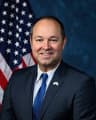 Marlin Stutzman
Republican · Indiana
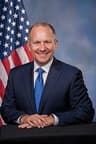 Lloyd Smucker
Republican · Pennsylvania
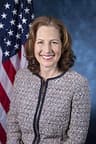 Kim Schrier
Democrat · Washington
 Derek Tran
Democrat · California
 Eugene Vindman
Democrat · Virginia
 Rudy Yakym
Republican · Indiana