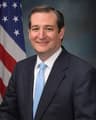
Ted Cruz (R-TX)· Sep 24, 2026
S.Amdt. 6833: In the nature of a substitute.
Offered, and not voted on yet.
Referred to the Committee on Commerce, Science, and Transportation.

Brian Jack (R-GA)
A Republican bill with 8 Democratic cosponsors · See all 13 cosponsors
Last activity — Message on Senate action sent to the House.
Passed both chambers, not yet sent to the President
Both the House and the Senate have passed it, though not necessarily the same text.
If the two chambers passed identical wording, the final copy is being prepared for the President. If they did not, one chamber must accept the other's version or the two negotiate a single one — nothing goes to the President until the text is identical.
Its path through Congress
No one's position on it was recorded: the House by voice vote (members called out yes or no together), and the Senate by unanimous consent (no one objected, so there was no vote).
This bill, known as the Muhammad Ali American Boxing Revival Act of 2026, amends the Professional Boxing Safety Act of 1996 to establish requirements for unified boxing organizations. It aims to give professional boxers increased choice and opportunity while enhancing safety precautions that protect their well-being. The legislation introduces strict medical examinations, minimum pay requirements, and anti-doping programs for boxers participating in covered matches. Additionally, it sets limits on contract lengths and outlines clear rules to prevent conflicts of interest between boxing organizations and managers. Finally, the bill sets criminal penalties and fines for officers or employees of unified boxing organizations who knowingly violate these new standards.
Does this make health care easier to get in general?
The act mandates enhanced medical presence, including an additional ambulance and ringside physician at matches.
Does this raise the lowest wage an employer may pay?
The bill mandates a minimum payment of $200 per round for professional boxers.
Would union members be better off under this?
The act implements stronger contract protections and safety standards for professional athletes.
Would people over 65 be better off under this?
Boxers aged 40 or older face more frequent and intensive supplemental medical examination requirements.
Engrossed Amendment Senate (11/19/2026), compared with Referred in Senate. Each change is on the Text tab.
The newer version of the bill changes how boxing organizations and matches are regulated, altering deadlines, criminal penalties, contract rules, and medical and testing standards. It pushes back the date when these rules start applying to matches from 30 days after enactment to 240 days after enactment, while adding a potential grace period of up to 1 year for individuals or entities showing substantial compliance and proceeding in good faith. The bill sets a minimum payment of $200 per round for boxers, establishes fines up to $100,000 and imprisonment of up to 1 year for certain unified boxing organization violations, and requires specific medical examinations with validity windows ranging from 14 days to 6 years.
Improved Medical Safety and Health Standards: Section 3 and Section 4 establish rigorous medical requirements for professional boxers, including mandatory annual physicals, brain health examinations, dilated eye exams, and specific tests for older fighters. These provisions help protect the long-term health and physical well-being of the athletes.
Guaranteed Minimum Pay: Section 3 (Section 21A(f)) and Section 4(a)(4) mandate that promoters or unified boxing organizations pay boxers a minimum of $200 per scheduled round. This ensures that fighters receive a baseline level of financial compensation for their labor.
Mandatory Insurance Coverage: Section 4(a)(3) updates health insurance requirements to provide a minimum of $50,000 in medical coverage for injuries sustained in a match and $15,000 in accidental death coverage. Importantly, the cost of the premium cannot be the financial responsibility of the boxer.
Support Services and Medical Coordinators: Section 3 (Section 21A(d)) requires unified boxing organizations to provide boxers with access to training and rehabilitation facilities, additional injury insurance during training, and an assigned medical coordinator to help them navigate licensing requirements.
Comprehensive Anti-Doping Programs: Section 3 (Section 21A(e)) requires organizations to enforce a comprehensive anti-doping program with independent testing and clear rights for boxers to challenge positive results. This promotes fair competition and protects athletes from competing against opponents using prohibited substances.
Criminal Penalties for Violations: Section 3 (Section 3(2)) adds criminal penalties where any officer or employee of a unified boxing organization who knowingly violates the new rules can be imprisoned for up to one year or fined up to $100,000, with higher fines for matches generating over $2,000,000 in gross revenues. While holding officials accountable is positive, the existence of these penalties highlights the severe risks of non-compliance within the industry.
Financial Responsibility for Insurance Deductibles: Section 3 (Section 21A(j)(2)) explicitly states that the cost of any deductible for the required health insurance shall be the financial responsibility of the boxer. This places a direct financial burden on the athlete when seeking medical care for injuries.
Every group the model scored this bill for, from -10 to +10. Tap or hover a score for the reason it gave.
The changes one chamber made to the other chamber’s version, as it passed them
The newer version of the bill changes how boxing organizations and matches are regulated, altering deadlines, criminal penalties, contract rules, and medical and testing standards. It pushes back the date when these rules start applying to matches from 30 days after enactment to 240 days after enactment, while adding a potential grace period of up to 1 year for individuals or entities showing substantial compliance and proceeding in good faith. The bill sets a minimum payment of $200 per round for boxers, establishes fines up to $100,000 and imprisonment of up to 1 year for certain unified boxing organization violations, and requires specific medical examinations with validity windows ranging from 14 days to 6 years.
Written by an AI model from a comparison of this version’s text with the one before it, not by a person. .
Ted Cruz (R-TX)· Sep 24, 2026
Offered, and not voted on yet.
Referred to the Committee on Commerce, Science, and Transportation.

Kirsten Gillibrand (D-NY)· Nov 19, 2026
Adopted
With no one objecting, no names recorded
Republican · Nevada

Democrat · Kansas
Democrat · Alabama

Democrat · Nevada
Democrat · Illinois
Democrat · Kentucky

Democrat · New Jersey

Republican · North Carolina

Republican · New Jersey

Democrat · Michigan

Republican · Kansas

Democrat · Nevada
Republican · New Jersey