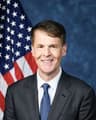
Jefferson Shreve (R-IN)
Dismantle Foreign Scam Syndicates Act
A Republican bill with 30 Democratic cosponsors · See all 74 cosponsors
Last activity — Received in the Senate and Read twice and referred to the Committee on Foreign Relations.
In the other chamber's committee
Passed one chamber and has been handed to a committee in the other.
The committee decides whether it goes any further, and most bills that reach a committee never leave it. A committee that simply does nothing kills a bill without anyone ever voting against it, so no news from here is usually the news.
Its path through Congress
- Introduced
- Passed House voice vote
- In Senate committee
The House by voice vote (members called out yes or no together): no member's position on it was recorded.
What this bill would do
The bill is called the Dismantle Foreign Scam Syndicates Act. It sets up an interagency task force led by the Secretary of State to shut down international online scam operations, such as pig butchering scams. This task force must create a comprehensive government strategy within 240 days to dismantle criminal syndicates and hold corrupt officials accountable. The legislation authorizes the President to impose financial and visa sanctions on foreign persons and government officials who run or benefit from these scam compounds. It also allows the Secretary of State to provide trauma-informed care and support services for victims of human trafficking within these scam centers. Finally, the task force must provide annual reports to Congress regarding financial losses, asset recovery, and the number of rescued trafficking victims.
Yes· 3 of 17
- Scored +7
Would immigrants be better off under this?
Provides support and reintegration services for trafficking victims forced into scam centers.
- Scored +7
Does this strengthen ties with allied countries?
Mandates coordination with allies and partners to combat transnational crime.
- Scored +7
Does this give people more protection from unfair business practices?
The bill aims to protect U.S. citizens from mass online financial scams and recover stolen assets.
The opposite
- Scored -2
Does this protect the right to fair treatment by the courts?
The broad authority for sanctions based on 'credible evidence' could potentially lead to misidentification.
How the text last changed
Engrossed in House (11/18/2026), compared with Introduced in House. Each change is on the Text tab.
The newer version of the bill adjusts several dates, reporting requirements, and the specific authorities used to impose sanctions on individuals connected to online scam operations. It extends the deadline for the Task Force to submit its initial strategy from 180 days to 240 days after enactment, and shortens the Task Force's lifespan from seven years to five years. It also changes how money is provided for the strategy, removing a specific authorization of $30,000,000 for the Department of State for fiscal years 2026 and 2027 and instead requiring the Secretary of State to use amounts otherwise authorized under section 481 of the Foreign Assistance Act of 1961.
Who it would affect, and how
Potential Positive Impacts for People
-
Section 4: Setting up an interagency task force could benefit the American people by bringing a whole-of-government approach to dismantling mass online scam operations that rob thousands of Americans of their life savings.
-
Section 5(a)(11): The strategy includes recovering and returning stolen assets to defrauded United States persons, which directly helps victims regain their lost funds.
-
Section 7: Imposing asset-blocking and visa sanctions on foreign persons and government officials who run, support, or profit from scam compounds holds bad actors accountable and targets the people responsible for financial scams and human trafficking.
-
Section 8: Authorizing programs to provide trauma-informed care, shelter, reintegration, and support services for victims of human trafficking within online scam centers helps vulnerable individuals who have been forced into criminal activity.
Potential Negative Impacts for People
- Section 7(c)(5): Victims of trafficking in persons within an online scam center are explicitly excepted from sanctions, meaning the bill contains protections to prevent penalizing the victims themselves. However, the legislation does not outline any specific negative impacts or burdens for individuals or groups of people in the United States, as its provisions are focused on penalizing foreign criminals, corrupt officials, and transnational syndicates.
Groups and Interests Ranking
Every group the model scored this bill for, from -10 to +10. Tap or hover a score for the reason it gave.
- Demographic And Interest Groups
- Would immigrants be better off under this? — Provides support and reintegration services for trafficking victims forced into scam centers. Would retired people be better off under this? — Retirees are primary targets of the financial scams the bill intends to dismantle. Would people over 65 be better off under this? — Seniors are frequently targeted by 'pig butchering' and other online financial scams. Would billionaires be better off under this? — Protects high-value assets from cryptocurrency and investment scams. Would high-income households be better off under this? — Protects household savings from transnational financial crimes. Would people with substantial wealth be better off under this? — Protects high-value assets from cryptocurrency and investment scams. Would middle-income households be better off under this? — Protects household savings from transnational financial crimes. Would the very wealthiest people be better off under this? — Protects high-value assets from cryptocurrency and investment scams.
- National Security And Foreign Policy
- Does this strengthen ties with allied countries? — Mandates coordination with allies and partners to combat transnational crime. Does this better protect the country from computer attacks? — Uses offensive cyber capabilities and interagency coordination to degrade scam operations. Does this favour talking over confrontation abroad? — Pressure is applied to complicit foreign governments to cooperate in dismantling scam centers. Does this send more money or help to other countries? — Provides funding for trauma-informed care and shelter for trafficking victims abroad.
- Economy And Finance
- Does this give people more protection from unfair business practices? — The bill aims to protect U.S. citizens from mass online financial scams and recover stolen assets.
- Education And Technology
- Does this put more rules on large technology companies? — Requires partnerships and coordination with social media and tech platforms to disrupt scams.
- Healthcare
- Does this make mental health care easier to get? — Authorizes trauma-informed care for victims of trafficking in scam centers.
- Social Issues And Justice
- Is this likely to lift people out of poverty? — Efforts to recover stolen life savings can prevent financial ruin for victims.
- Governance And Ideology
- Does this give the federal government more power? — Establishes a new interagency Task Force with broad coordination powers. Does this protect the right to fair treatment by the courts? — The broad authority for sanctions based on 'credible evidence' could potentially lead to misidentification.
Handed to a committee to examine
What changed from Engrossed in House: No change to the wording. Only the printed details that record the bill’s progress, such as the heading and dates, are different.
The version one chamber actually passed
What changed from Introduced in House
The newer version of the bill adjusts several dates, reporting requirements, and the specific authorities used to impose sanctions on individuals connected to online scam operations. It extends the deadline for the Task Force to submit its initial strategy from 180 days to 240 days after enactment, and shortens the Task Force's lifespan from seven years to five years. It also changes how money is provided for the strategy, removing a specific authorization of $30,000,000 for the Department of State for fiscal years 2026 and 2027 and instead requiring the Secretary of State to use amounts otherwise authorized under section 481 of the Foreign Assistance Act of 1961.
Each change
- Section 2 updates the findings regarding scam operations, including changing references from "Chinese criminal organizations" to criminal organizations from the People's Republic of China, updating statistics on financial losses and global estimates, and adding details about human trafficking victims and local government involvement.
- Section 3 adds a formal statement of policy for the United States to combat transnational organized criminals operating human trafficking compounds and bolster international law enforcement cooperation.
- Section 4 extends the deadline for the Task Force to develop and submit its comprehensive strategy from 180 days to 240 days, alters consulting requirements to focus on investment fraud schemes and private sector actors, and shortens the Task Force sunset from seven years to five years.
- Section 5 updates references to the strategy requirement and adds malicious cyber activity authorities to the list used for imposing sanctions.
- Section 6 modifies annual reporting requirements to Congress regarding sanctioned persons, stolen funds, and funding allocations, and removes the requirement for a specific list of named foreign individuals and entities.
- Section 7 replaces the prior mandatory sanctions framework—which named specific individuals and groups—with a discretionary framework allowing asset blocking and visa restrictions for foreign persons who own, direct, or support scam operations or enable them through government positions, while adding specific exceptions for humanitarian assistance, intelligence activities, vessel safety, victims of trafficking, and goods importation.
- Section 8 updates the title to include human trafficking and forced criminality for victim support programs.
- Section 9 adds a new section authorizing the Secretary of State to provide high-resolution satellite imagery to nongovernmental organizations and research institutions to monitor human rights abuses related to scam centers, along with a related reporting requirement.
- Section 10 replaces a specific $30,000,000 annual funding authorization for fiscal years 2026 and 2027 with a requirement to use funds otherwise authorized under section 481 of the Foreign Assistance Act of 1961.
Written by an AI model from a comparison of this version’s text with the one before it, not by a person. .
- 11/19/2026
- Received in the Senate and Read twice and referred to the Committee on Foreign Relations.
- 11/18/2026
- Motion to reconsider laid on the table Agreed to without objection.
- Passed/agreed to in House: On motion to suspend the rules and pass the bill, as amended Agreed to by voice vote. (text: CR H6262-6264)
- On motion to suspend the rules and pass the bill, as amended Agreed to by voice vote. (text: CR H6262-6264)
- DEBATE - The House proceeded with forty minutes of debate on H.R. 5490.
- Considered under suspension of the rules. (consideration: CR H6262-6266)
- Mr. Mast moved to suspend the rules and pass the bill, as amended.
- 11/17/2026
- 1 Cosponsor added.
- 10/29/2026
- 1 Cosponsor added.
- 9/28/2026
- 1 Cosponsor added.
- 9/16/2026
- 1 Cosponsor added.
- 8/31/2026
- 1 Cosponsor added.
- 8/20/2026
- 1 Cosponsor added.
- 7/21/2026
- 2 Cosponsors added.
- 7/13/2026
- 1 Cosponsor added.
- 6/25/2026
- 1 Cosponsor added.
- 6/22/2026
- 1 Cosponsor added.
- 5/19/2026
- 1 Cosponsor added.
- 5/13/2026
- 2 Cosponsors added.
- 5/12/2026
- 5 Cosponsors added.
- 4/29/2026
- 1 Cosponsor added.
- 4/27/2026
- 1 Cosponsor added.
- 4/21/2026
- 1 Cosponsor added.
- 4/14/2026
- 1 Cosponsor added.
- 4/13/2026
- 1 Cosponsor added.
- 4/6/2026
- 1 Cosponsor added.
- 3/26/2026
- 1 Cosponsor added.
- 3/25/2026
- 1 Cosponsor added.
- 3/24/2026
- 2 Cosponsors added.
- 3/5/2026
- 1 Cosponsor added.
- 3/4/2026
- 1 Cosponsor added.
- 3/3/2026
- 4 Cosponsors added.
- 2/25/2026
- 3 Cosponsors added.
- 2/24/2026
- 1 Cosponsor added.
- 2/23/2026
- 4 Cosponsors added.
- 2/20/2026
- 3 Cosponsors added.
- 1/8/2026
- 1 Cosponsor added.
- 12/18/2025
- 2 Cosponsors added.
- 12/15/2025
- 3 Cosponsors added.
- 12/12/2025
- 1 Cosponsor added.
- 12/11/2025
- 2 Cosponsors added.
- 12/10/2025
- 2 Cosponsors added.
- 12/9/2025
- 1 Cosponsor added.
- 12/3/2025
- Committee Consideration and Mark-up Session Held
- Ordered to be Reported in the Nature of a Substitute (Amended) by the Yeas and Nays: 48 - 0.
- 5 Cosponsors added.
- 12/2/2025
- 3 Cosponsors added.
- 11/25/2025
- 1 Cosponsor added.
- 11/20/2025
- 1 Cosponsor added.
- 11/18/2025
- 1 Cosponsor added.
- 11/17/2025
- 1 Cosponsor added.
- 11/4/2025
- 1 Cosponsor added.
- 10/28/2025
- 1 Cosponsor added.
- 9/18/2025
- Referred to the Committee on Foreign Affairs, and in addition to the Committee on the Judiciary, for a period to be subsequently determined by the Speaker, in each case for consideration of such provisions as fall within the jurisdiction of the committee concerned.
- 2 Cosponsors added.
- Introduced in House
 Mark Amodei
Republican · Nevada
 Gabe Amo
Democrat · Rhode Island
 Gus Bilirakis
Republican · Florida
 Mike Bost
Republican · Illinois
 Michael Baumgartner
Republican · Washington
 Sheri Biggs
Republican · South Carolina
 Henry Cuellar
Democrat · Texas
 André Carson
Democrat · Indiana
 Joaquin Castro
Democrat · Texas
 Ben Cline
Republican · Virginia
 Donald Davis
Democrat · North Carolina
 Warren Davidson
Republican · Ohio
 Troy Downing
Republican · Montana
 Brian Fitzpatrick
Republican · Pennsylvania
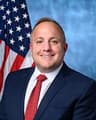 Russell Fry
Republican · South Carolina
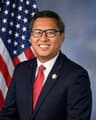 Vince Fong
Republican · California
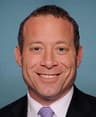 Josh Gottheimer
Democrat · New Jersey
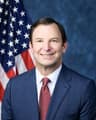 Craig Goldman
Republican · Texas
 Laura Gillen
Democrat · New York
 Bill Huizenga
Republican · Michigan
 Josh Harder
Democrat · California
 Mike Haridopolos
Republican · Florida
 Jonathan Jackson
Democrat · Illinois
 Raja Krishnamoorthi
Democrat · Illinois
 Young Kim
Republican · California
 Thomas Kean
Republican · New Jersey
 Sydney Kamlager-Dove
Democrat · California
 Timothy Kennedy
Democrat · New York
 Frank Lucas
Republican · Oklahoma
 Darin LaHood
Republican · Illinois
 Susie Lee
Democrat · Nevada
 Michael Lawler
Republican · New York
 George Latimer
Democrat · New York
 James McGovern
Democrat · Massachusetts
 John Moolenaar
Republican · Michigan
 Seth Moulton
Democrat · Massachusetts
 Daniel Meuser
Republican · Pennsylvania
 James Moylan
Republican · Guam
 Max Miller
Republican · Ohio
 Nathaniel Moran
Republican · Texas
 Ryan Mackenzie
Republican · Pennsylvania
 Mark Messmer
Republican · Indiana
 Tim Moore
Republican · North Carolina
 Kristen McDonald Rivet
Democrat · Michigan
 Sarah McBride
Democrat · Delaware
 Addison McDowell
Republican · North Carolina
 Eleanor Norton
Democrat · District of Columbia
 Johnny Olszewski
Democrat · Maryland
 August Pfluger
Republican · Texas
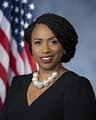 Ayanna Pressley
Democrat · Massachusetts
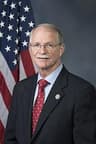 John Rutherford
Republican · Florida
 Michael Rulli
Republican · Ohio
 Josh Riley
Democrat · New York
 Brad Sherman
Democrat · California
 Christopher Smith
Republican · New Jersey
 Janice Schakowsky
Democrat · Illinois
 Elise Stefanik
Republican · New York
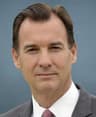 Thomas Suozzi
Democrat · New York
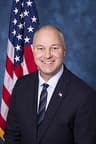 Pete Stauber
Republican · Minnesota
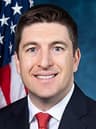 Bryan Steil
Republican · Wisconsin
 Shri Thanedar
Democrat · Michigan
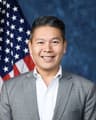 Derek Tran
Democrat · California
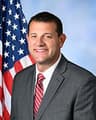 David Valadao
Republican · California
 Jefferson Van Drew
Republican · New Jersey
 Derrick Van Orden
Republican · Wisconsin
 Eugene Vindman
Democrat · Virginia
 Matt Van Epps
Republican · Tennessee
 Joe Wilson
Republican · South Carolina
 Debbie Wasserman Schultz
Democrat · Florida
 Robert Wittman
Republican · Virginia
 Ann Wagner
Republican · Missouri
 Roger Williams
Republican · Texas
 George Whitesides
Democrat · California
 Rudy Yakym
Republican · Indiana