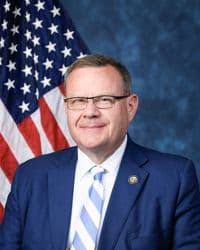

Tim Moore

Tim Moore

Republican · U.S. Representative for North Carolina's 14th district

33 sponsored · 313 cosponsored

Age 56 · In office since 2025

Contact their office: (202) 225-5634 · 1424 Longworth House Office Building, Washington, DC 20515 · Official website

What they got done

Most bills never get a vote. These are the ones they wrote or backed that got somewhere.

Became law (10)

  • Richard Hudson (R-NC)

    Cosponsored

    To authorize the Secretary of the Army to convey to the State of North Carolina a certain parcel of real property located at Fort Bragg, North Carolina, on which the State shall construct a veterans’ State home, and for other purposes.

    H.R. 10159 Armed Forces and National Security

    A Republican bill with 4 Democratic cosponsors.

    Became law

    This bill allows the Secretary of the Army to give a specific piece of land at Fort Bragg in North Carolina to the State of North Carolina without charging them for it.

    Yes· 2 of 17

    • Scored +9

      Would veterans be better off under this, taking everything together?

      Directly enables the construction of a state home specifically for veterans' use.

    • Scored +7

      Does this help veterans get medical care?

      Provides land for the construction of a veterans' state home, improving long-term care options for veterans.

    No question was scored the opposite.

  • Mike Quigley (D-IL)

    Cosponsored

    Accelerating Access to Critical Therapies for ALS Reauthorization Act of 2026

    H.R. 8205 Health

    A Democratic bill with 39 Republican cosponsors.

    Became law

    This bill extends the provisions and grants for ALS research found in the original Act through fiscal year 2031.

    Yes· 2 of 3

    • Scored +7

      Does this put more money into medical research?

      The bill extends the authorization of grants for ALS research through fiscal year 2031.

    • Scored +6

      Would people with disabilities be better off under this?

      The bill promotes research into therapies for ALS, a debilitating neurodegenerative disease.

    No question was scored the opposite.

  • J. Hill (R-AR)

    Cosponsored

    21st Century ROAD to Housing Act

    H.R. 6644 Housing and Community Development

    A Republican bill with 16 Democratic cosponsors. See the voting map.

    Became law

    The House voted 358–32 on Jun 23.

    The 21st Century ROAD to Housing Act aims to increase housing supply and affordability across the United States.

    Yes· 2 of 51

    • Scored +10

      Would households on low incomes be better off under this?

      Extensive grants, vouchers, rent caps, and wealth-building pilots directly target low-income families.

    • Scored +10

      Would people in rural areas be better off under this?

      Extensive focus on rural housing preservation, USDA reforms, and rural credit union revitalization.

    The opposite· 2 of 6

    • Scored -8

      Would billionaires be better off under this?

      Directly targets and restricts large-scale corporate ownership of single-family homes.

    • Scored -7

      Would the very wealthiest people be better off under this?

      Imposes severe penalties on large institutional investors regarding single-family home ownership.

And 7 more on their Sponsored and Cosponsored pages.

Passed one chamber, waiting on the other (43)

Halfway: the other chamber has to pass the same text before it can go to the President.

  • Tim Moore (R-NC)

    Their bill

    DLARA

    H.R. 4238 Commerce

    A Republican bill with 2 Democratic cosponsors.

    Passed the House

    By voice vote, no names recorded

    Now: in the queue for a floor vote, with no date set · Jun 24

    This bill aims to improve accountability within the Small Business Administration's disaster loan program. It implements new monthly reporting requirements regarding loan funding levels and depletion dates.

    Yes· 2 of 6

    • Scored +5

      Does this make what the government does easier for the public to see?

      The bill significantly improves transparency by mandating frequent and detailed reports on loan availability and costs.

    • Scored +3

      Would business owners be better off under this?

      Increased predictability and transparency in disaster funding can provide security for business owners during crises.

    No question was scored the opposite.

  • Tim Moore (R-NC)

    Their bill

    TRUST Act of 2025

    H.R. 4478 Finance and Financial Sector

    A Republican bill with 1 Democratic cosponsor.

    Passed the House

    By voice vote, no names recorded

    Now: handed to a committee to examine — Committee on Banking, Housing, and Urban Affairs · May 13

    This Act seeks to amend the Federal Deposit Insurance Act. It aims to change the thresholds used by Federal banking agencies when examining certain insured depository institutions.

    Yes· 2 of 3

    • Scored +1

      Would business owners be better off under this?

      Provides regulatory clarity and updated thresholds for depository institutions, which benefits banking business owners.

    • Scored +1

      Is this likely to grow the economy?

      By updating examination cycles for mid-sized banks, it may provide more predictable regulatory environments for financial institutions.

    No question was scored the opposite.

  • Tim Moore (R-NC)

    Their bill

    Improving Law Enforcement Officer Safety and Wellness Through Data Act

    H.R. 2240 Crime and Law Enforcement

    A Republican bill with 4 Democratic cosponsors. See the voting map.

    Passed the House

    40311

    Now: handed to a committee to examine — Committee on the Judiciary · May 19

    This bill requires the Attorney General to develop several comprehensive reports. These reports focus on violent attacks, ambushes, and aggressive actions taken against law enforcement officers.

    Yes· 2 of 3

    • Scored +5

      Does this make mental health care easier to get?

      The bill mandates reports to improve the assessment and provision of mental health and wellness resources for law enforcement officers.

    • Scored +4

      Does this change how police departments operate?

      The act focuses on improving officer safety, training, and mental health through better data collection and resource allocation.

    No question was scored the opposite.

And 40 more on their Sponsored and Cosponsored pages.

Still waiting, of the 33 bills they wrote: 30 are in committee. Committee is where most bills end, whoever writes them — silence there, not a vote, is the usual way a bill dies.

What their bills would do

Every bill is scored against plain yes-or-no questions. These count their bills — the ones they wrote and the ones they cosponsored — by how each question was answered: yes, or the opposite. Open one to see those bills, where each stands, and why it was scored that way. Scores are made by AI ().

Who their bills would affect

What else they would change

How they voted lately

Their latest votes that decided something, and what each measure would do.

  • U.S. House · Nov 19, 2026

    Preventive Health Savings Act

    A fast-track vote, needing two-thirds to pass The House sets aside its normal procedure to move quickly: no amendments, little debate, and a two-thirds bar instead of a simple majority. It is used for measures expected to be uncontroversial, so a bill that fails here failed despite broad expectations that it would not.

    Their vote Yea

    This bill amends the Congressional Budget Act of 1974 regarding how preventive health savings are scored.

    • Scored +3

      Does this reduce what the federal government spends?

      By highlighting reductions in budget outlays through preventive health, the bill facilitates the identification of potential spending reductions.

  • U.S. House · Nov 18, 2026

    Earth MRI Reauthorization Act of 2026

    A fast-track vote, needing two-thirds to pass The House sets aside its normal procedure to move quickly: no amendments, little debate, and a two-thirds bar instead of a simple majority. It is used for measures expected to be uncontroversial, so a bill that fails here failed despite broad expectations that it would not.

    Their vote Yea

    This bill updates the Infrastructure Investment and Jobs Act to reauthorize the Earth Mapping Resources Initiative.

    • Scored +7

      Does this put more money into scientific research?

      Authorizes 84 million dollars to update and expand geological mapping and scientific data collection methods.

  • U.S. House · Nov 18, 2026

    Common Sense 250 Act of 2026

    A fast-track vote, needing two-thirds to pass The House sets aside its normal procedure to move quickly: no amendments, little debate, and a two-thirds bar instead of a simple majority. It is used for measures expected to be uncontroversial, so a bill that fails here failed despite broad expectations that it would not.

    Their vote Yea

    Its main purpose is to officially approve the location for a commemorative work honoring Thomas Paine. The monument is designated to be placed within a specific zone known as Area I in Washington, DC, and its environs.

Every vote they cast, and how often they missed one →

On the President’s vetoes

A vetoed bill becomes law only if two-thirds of both chambers pass it again. The President can refuse to sign a bill both chambers passed. It becomes law anyway only if two-thirds of the House and two-thirds of the Senate vote to pass it again. A vote against the veto (a Yea) was a vote to make the bill law over the President’s objection; a vote for it (a Nay) was a vote to let the veto stand.

How busy they have been

How many bills they have put their name to over time — volume, not results: most bills never get a vote.

Legislative activity over time