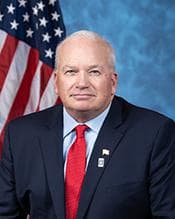

Scott Fitzgerald

Scott Fitzgerald

Republican · U.S. Representative for Wisconsin's 5th district

33 sponsored · 195 cosponsored

Age 63 · In office since 2021

Contact their office: (202) 225-5101 · 2444 Rayburn House Office Building, Washington, DC 20515 · Official website

What they got done

Most bills never get a vote. These are the ones they wrote or backed that got somewhere.

Became law (2)

  • Brian Mast (R-FL)

    Cosponsored

    Medal of Sacrifice Act

    H.R. 3497 Crime and Law Enforcement

    A Republican bill with 9 Democratic cosponsors.

    Became law

    This bill establishes a medal to honor law enforcement officers and first responders who were killed in the line of duty.

    Yes· 2 of 7

    • Scored +1

      Would people in cities be better off under this?

      The bill honors law enforcement and first responders who serve various jurisdictions.

    • Scored +1

      Would veterans be better off under this, taking everything together?

      The bill honors the service and sacrifice of first responders and law enforcement personnel.

    The opposite

    • Scored -1

      Does this change how police departments operate?

      The bill requires a Commission to investigate the circumstances of death and eligibility based on findings of wrongdoing.
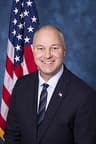
  • Pete Stauber (R-MN)

    Cosponsored

    Miracle on Ice Congressional Gold Medal Act

    H.R. 452 Sports and Recreation

    A Republican bill with 107 Democratic cosponsors.

    Became law

    This Act authorizes the award of 3 Congressional Gold Medals to the members of the 1980 U.S. Olympic Men's Ice Hockey Team. The medals recognize the team's victory over the Soviet Union during the 1980 Winter Olympics.

    Yes

    • Scored +1

      Is this likely to grow the economy?

      The sale of duplicate bronze medals provides a small influx of revenue to the United States Mint Public Enterprise Fund.

    No question was scored the opposite.

Passed one chamber, waiting on the other (26)

Halfway: the other chamber has to pass the same text before it can go to the President.

  • Scott Fitzgerald (R-WI)

    Their bill

    NDO Fairness Act of 2025

    H.R. 6048 Crime and Law Enforcement

    A Republican bill with 1 Democratic cosponsor.

    Passed the House

    By voice vote, no names recorded

    Now: handed to a committee to examine — Committee on the Judiciary · Sep 14

    This bill seeks to amend how the government handles delayed notice requirements for warrants, orders, or subpoenas.

    Yes· 2 of 10

    • Scored +7

      Does this make what the government does easier for the public to see?

      Requires annual reporting by the Attorney General on the use of nondisclosure orders.

    • Scored +7

      Does this protect people from being watched or searched?

      Establishes strict time limits and notification requirements for government access to electronic records.

    The opposite

    • Scored -3

      Does this give the government more power to monitor people inside the country?

      While adding oversight, it formalizes the process for nondisclosure orders in electronic surveillance.

  • Scott Fitzgerald (R-WI)

    Their bill

    Keeping Violent Offenders Off Our Streets Act of 2025

    H.R. 6260 Crime and Law Enforcement

    A Republican bill with 5 Republican cosponsors. See the voting map.

    Passed the House

    243179

    Now: handed to a committee to examine — Committee on the Judiciary · May 18

    This Act aims to amend title 18, United States Code. The specific change involves prohibiting fraud related to the posting of bail.

    Yes· 2 of 5

    • Scored +5

      Does this give people more protection from unfair business practices?

      The bill expands federal fraud prohibitions to include bail-related transactions, providing more protection against deceptive practices.

    • Scored +3

      Would immigrants be better off under this?

      The bill adds protections against fraud specifically regarding Federal immigration bail bonds.

    No question was scored the opposite.

  • Scott Fitzgerald (R-WI)

    Their bill

    Law-Enforcement Innovate to De-Escalate Act

    To modernize Federal firearms laws to account for advancements in technology and less-than-lethal weapons, and for other purposes.

    H.R. 2189 Crime and Law Enforcement

    A Republican bill with 23 Democratic cosponsors. See the voting map.

    Passed the House

    233185

    Now: arrived in the other chamber; nothing has happened to it there yet · Feb 24

    This act aims to modernize federal firearms laws by addressing advancements in technology and less-than-lethal weapons.

    Yes· 2 of 3

    • Scored +5

      Would business owners be better off under this?

      The bill reduces the tax burden and regulatory hurdles for manufacturers of less-than-lethal devices.

    • Scored +5

      Does this change how police departments operate?

      The bill facilitates de-escalation by exempting less-than-lethal devices from certain firearm restrictions.

    The opposite

    • Scored -2

      Does this put more limits on buying or owning guns?

      The bill reduces restrictions on certain types of projectile devices.

And 23 more on their Sponsored and Cosponsored pages.

Still waiting, of the 33 bills they wrote: 4 cleared committee and wait for a first vote, 26 are in committee. Committee is where most bills end, whoever writes them — silence there, not a vote, is the usual way a bill dies.

What their bills would do

Every bill is scored against plain yes-or-no questions. These count their bills — the ones they wrote and the ones they cosponsored — by how each question was answered: yes, or the opposite. Open one to see those bills, where each stands, and why it was scored that way. Scores are made by AI ().

Who their bills would affect

What else they would change

How they voted lately

Their latest votes that decided something, and what each measure would do.

  • U.S. House · Nov 19, 2026

    Preventive Health Savings Act

    A fast-track vote, needing two-thirds to pass The House sets aside its normal procedure to move quickly: no amendments, little debate, and a two-thirds bar instead of a simple majority. It is used for measures expected to be uncontroversial, so a bill that fails here failed despite broad expectations that it would not.

    Their vote Yea

    This bill amends the Congressional Budget Act of 1974 regarding how preventive health savings are scored.

    • Scored +3

      Does this reduce what the federal government spends?

      By highlighting reductions in budget outlays through preventive health, the bill facilitates the identification of potential spending reductions.

  • U.S. House · Nov 18, 2026

    Earth MRI Reauthorization Act of 2026

    A fast-track vote, needing two-thirds to pass The House sets aside its normal procedure to move quickly: no amendments, little debate, and a two-thirds bar instead of a simple majority. It is used for measures expected to be uncontroversial, so a bill that fails here failed despite broad expectations that it would not.

    Their vote Yea

    This bill updates the Infrastructure Investment and Jobs Act to reauthorize the Earth Mapping Resources Initiative.

    • Scored +7

      Does this put more money into scientific research?

      Authorizes 84 million dollars to update and expand geological mapping and scientific data collection methods.

  • U.S. House · Nov 18, 2026

    Common Sense 250 Act of 2026

    A fast-track vote, needing two-thirds to pass The House sets aside its normal procedure to move quickly: no amendments, little debate, and a two-thirds bar instead of a simple majority. It is used for measures expected to be uncontroversial, so a bill that fails here failed despite broad expectations that it would not.

    Their vote Yea

    Its main purpose is to officially approve the location for a commemorative work honoring Thomas Paine. The monument is designated to be placed within a specific zone known as Area I in Washington, DC, and its environs.

Every vote they cast, and how often they missed one →

On the President’s vetoes

A vetoed bill becomes law only if two-thirds of both chambers pass it again. The President can refuse to sign a bill both chambers passed. It becomes law anyway only if two-thirds of the House and two-thirds of the Senate vote to pass it again. A vote against the veto (a Yea) was a vote to make the bill law over the President’s objection; a vote for it (a Nay) was a vote to let the veto stand.

How busy they have been

How many bills they have put their name to over time — volume, not results: most bills never get a vote.

Legislative activity over time