Bill · H.R. 2189· House(119-HR-2189)
Law-Enforcement Innovate to De-Escalate Act
To modernize Federal firearms laws to account for advancements in technology and less-than-lethal weapons, and for other purposes.
- Introduced
- 3/18/2025
- Last activity
- 2/24/2026 — Received in the Senate.
- Sponsored by
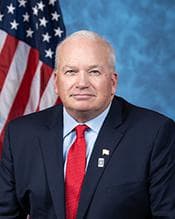
- Scott Fitzgerald
- Cosponsors
- - 72 - 23
- Introduced
- Passed House
- Awaiting Senate
What this bill would do
This act aims to modernize federal firearms laws by addressing advancements in technology and less-than-lethal weapons. Title I, the "Law-Enforcement Innovate to De-Escalate Act," amends title 18 of the United States Code to exempt certain less-than-lethal projectile devices from specific restrictions. Title II, the "Innovate Less Lethal to De-Escalate Tax Modernization Act," amends the Internal Revenue Code of 1986 to exempt these devices and their shells or cartridges from the firearms and ammunition tax. The bill defines these devices as those not intended to expel standard ammunition and not likely to cause death or serious bodily injury. Additionally, the Secretary is tasked with maintaining annual lists of these devices and new technologies.
Yes
Would business owners be better off under this?+5
The bill reduces the tax burden and regulatory hurdles for manufacturers of less-than-lethal devices.
Does this change how police departments operate?+5
The bill facilitates de-escalation by exempting less-than-lethal devices from certain firearm restrictions.
Would gun owners be better off under this?+2
The bill expands the scope of exempted devices, which may benefit those interested in non-lethal tools.
The opposite
Does this put more limits on buying or owning guns?-2
The bill reduces restrictions on certain types of projectile devices.
What Congress actually voted on
One recorded vote has been taken on this bill.
- The House: the vote on whether to pass the billPassed 233–185
This is the real decision in this chamber. Passing here sends the bill to the other chamber, which must pass it too before it can go to the President.
02/12/2026 · Roll call 70 · recorded as “On Passage”
Who it would affect, and how
Potential Positive Impacts for People
-
Exemption from Federal Firearms Restrictions: By amending title 18 of the United States Code, the bill exempts specific less-than-lethal projectile devices from certain restrictions (Section 102). This may assist in de-escalation efforts.
-
Tax Relief on Less-Than-Lethal Equipment: The bill amends the Internal Revenue Code of 1986 to ensure the tax imposed by section 4181 does not apply to less-than-lethal projectile devices or their specific shells and cartridges (Section 202(a)(1)).
-
Public Information and Technology Tracking: The Secretary is required to make publicly available a list of determined less-than-lethal devices and update it annually to include new technology (Section 202(a)(4)(A)).
Potential Negative Impacts for People
- Requirement for Determination: The Attorney General and the Secretary are both required to make determinations on whether a device meets the "less-than-lethal" definition within a 90-day window upon receiving a request (Sections 102(A)(B) and 202(a)(3)).
Groups and Interests Ranking
Every group the model scored this bill for, from -10 to +10. Hover a score for the reason it gave.
- Demographic And Interest Groups
- Good For Business Owners+5Good For Gun Owners+2
- Social Issues And Justice
- Improves Policing Reform+5Improves Gun Control Measures-2
| Updated | Bill | Title | Policy Area |
|---|---|---|---|
| 8 months ago | On agreeing to the Rules amendment (A001) Agreed to without objection. |
- 2/24/2026
- Received in the Senate.
- 2/12/2026
- Motion to reconsider laid on the table Agreed to without objection.
- Passed/agreed to in House: On passage Passed by the Yeas and Nays: 233 - 185 (Roll no. 70). (text of amendment in the nature of a substitute: CR H2190-2191)
- On passage Passed by the Yeas and Nays: 233 - 185 (Roll no. 70). (text of amendment in the nature of a substitute: CR H2190-2191)
- The previous question was ordered pursuant to the rule.
- DEBATE - The House proceeded with one hour of debate on H.R. 2189.
- Rule provides for consideration of S. 1383, H.R. 2189, H.R. 261 and H.R. 3617. The resolution provides for consideration of S. 1383, H.R. 2189, H.R. 261, and H.R. 3617 under a closed rule and provides for one motion to recommit H.R. 2189, H.R. 261, and H.R. 3617, and one motion to commit S. 1383.
- Considered under the provisions of rule H. Res. 1057. (consideration: CR H2190-2204)
- 2/11/2026
- Rules Committee Resolution H. Res. 1057 Reported to House. Rule provides for consideration of S. 1383, H.R. 2189, H.R. 261 and H.R. 3617. The resolution provides for consideration of S. 1383, H.R. 2189, H.R. 261, and H.R. 3617 under a closed rule and provides for one motion to recommit H.R. 2189, H.R. 261, and H.R. 3617, and one motion to commit S. 1383.
- 2/9/2026
- Rules Committee Resolution H. Res. 1042 Reported to House. Rule provides for consideration of H.R. 2189, H.R. 261 and H.R. 3617. The resolution provides for consideration of H.R. 2189, H.R. 261, and H.R. 3617 under a closed rule and provides for one hour of debate and one motion to recommit on each bill.
- 1/30/2026
- Reported (Amended) by the Committee on Judiciary. H. Rept. 119-472.
- Placed on the Union Calendar, Calendar No. 403.
- 1/15/2026
- 1 Cosponsor added.
- 1/14/2026
- 1 Cosponsor added.
- 12/23/2025
- 1 Cosponsor added.
- 12/15/2025
- 1 Cosponsor added.
- 11/20/2025
- Committee Consideration and Mark-up Session Held
- Ordered to be Reported (Amended) by the Yeas and Nays: 18 - 8.
- 11/18/2025
- Committee Consideration and Mark-up Session Held
- 11/17/2025
- 1 Cosponsor added.
- 11/7/2025
- 1 Cosponsor added.
- 10/31/2025
- 3 Cosponsors added.
- 10/28/2025
- 1 Cosponsor added.
- 10/24/2025
- 5 Cosponsors added.
- 10/17/2025
- 2 Cosponsors added.
- 10/10/2025
- 1 Cosponsor added.
- 10/6/2025
- 2 Cosponsors added.
- 9/30/2025
- 2 Cosponsors added.
- 9/18/2025
- 2 Cosponsors added.
- 9/17/2025
- 3 Cosponsors added.
- 9/16/2025
- 2 Cosponsors added.
- 9/15/2025
- 2 Cosponsors added.
- 9/10/2025
- 1 Cosponsor added.
- 9/8/2025
- 1 Cosponsor added.
- 9/2/2025
- 6 Cosponsors added.
- 8/8/2025
- 1 Cosponsor added.
- 7/23/2025
- 2 Cosponsors added.
- 7/22/2025
- 1 Cosponsor added.
- 7/2/2025
- 1 Cosponsor added.
- 6/23/2025
- 4 Cosponsors added.
- 6/12/2025
- 1 Cosponsor added.
- 6/10/2025
- 3 Cosponsors added.
- 6/4/2025
- 2 Cosponsors added.
- 6/2/2025
- 3 Cosponsors added.
- 5/29/2025
- 2 Cosponsors added.
- 5/23/2025
- 1 Cosponsor added.
- 5/20/2025
- 1 Cosponsor added.
- 5/19/2025
- 2 Cosponsors added.
- 5/15/2025
- 2 Cosponsors added.
- 5/14/2025
- 3 Cosponsors added.
- 5/13/2025
- 2 Cosponsors added.
- 5/6/2025
- 1 Cosponsor added.
- 4/30/2025
- 2 Cosponsors added.
- 4/29/2025
- 1 Cosponsor added.
- 4/24/2025
- 2 Cosponsors added.
- 4/17/2025
- 3 Cosponsors added.
- 4/14/2025
- 2 Cosponsors added.
- 4/9/2025
- 2 Cosponsors added.
- 4/7/2025
- 3 Cosponsors added.
- 4/1/2025
- 1 Cosponsor added.
- 3/31/2025
- 1 Cosponsor added.
- 3/27/2025
- 2 Cosponsors added.
- 3/26/2025
- 2 Cosponsors added.
- 3/21/2025
- 2 Cosponsors added.
- 3/18/2025
- Referred to the House Committee on the Judiciary.
- 1 Cosponsor added.
- Introduced in House
4 bills Congress.gov lists as related to this one — companions in the other chamber, earlier versions, and bills this one absorbed or was folded into.
- 119-HR-4242: Innovate Less Lethal to De-Escalate Tax Modernization Act
- 119-S-1283: Innovate to De-Escalate Modernization Act
- 119-HRES-1042: Providing for consideration of the bill (H.R. 2189) to modernize Federal firearms laws to account for advancements in technology and less-than-lethal weapons, and for other purposes; providing for consideration of the bill (H.R. 261) to amend the National Marine Sanctuaries Act to prohibit requiring an authorization for the installation, continued presence, operation, maintenance, repair, or recovery of undersea fiber optic cables in a national marine sanctuary if such activities have previously been authorized by a Federal or State agency; providing for consideration of the bill (H.R. 3617) to amend the Department of Energy Organization Act to secure the supply of critical energy resources, including critical minerals and other materials, and for other purposes; and for other purposes.
- 119-HRES-1057: Providing for consideration of the bill (S. 1383) to establish the Veterans Advisory Committee on Equal Access, and for other purposes; providing for consideration of the bill (H.R. 2189) to modernize Federal firearms laws to account for advancements in technology and less-than-lethal weapons, and for other purposes; providing for consideration of the bill (H.R. 261) to amend the National Marine Sanctuaries Act to prohibit requiring an authorization for the installation, continued presence, operation, maintenance, repair, or recovery of undersea fiber optic cables in a national marine sanctuary if such activities have previously been authorized by a Federal or State agency; providing for consideration of the bill (H.R. 3617) to amend the Department of Energy Organization Act to secure the supply of critical energy resources, including critical minerals and other materials, and for other purposes; and waiving a requirement of clause 6(a) of rule XIII with respect to consideration of certain resolutions reported from the Committee on Rules.
 Sanford Bishop
Democrat · Georgia
 Lauren Boebert
Republican · Colorado
 Joyce Beatty
Democrat · Ohio
 Brendan Boyle
Democrat · Pennsylvania
 Jack Bergman
Republican · Michigan
 Andy Biggs
Republican · Arizona
 Tim Burchett
Republican · Tennessee
 Eric Burlison
Republican · Missouri
 Michael Baumgartner
Republican · Washington
 Nicholas Begich
Republican · Alaska
 Ken Calvert
Republican · California
 Henry Cuellar
Democrat · Texas
 Yvette Clarke
Democrat · New York
 J. Correa
Democrat · California
 Ben Cline
Republican · Virginia
 Troy Carter
Democrat · Louisiana
 Mike Carey
Republican · Ohio
 Jasmine Crockett
Democrat · Texas
 Elijah Crane
Republican · Arizona
 Juan Ciscomani
Republican · Arizona
 Donald Davis
Democrat · North Carolina
 Mike Ezell
Republican · Mississippi
 Chuck Edwards
Republican · North Carolina
 Gabe Evans
Republican · Colorado
 Pat Fallon
Republican · Texas
 Charles Fleischmann
Republican · Tennessee
 Michelle Fischbach
Republican · Minnesota
 Brad Finstad
Republican · Minnesota
 Russell Fry
Republican · South Carolina
 Glenn Grothman
Republican · Wisconsin
 Josh Gottheimer
Democrat · New Jersey
 Lance Gooden
Republican · Texas
 Michael Guest
Republican · Mississippi
 Marie Perez
Democrat · Washington
 Laura Gillen
Democrat · New York
 Brandon Gill
Republican · Texas
 Adam Gray
Democrat · California
 Clay Higgins
Republican · Louisiana
 Kevin Hern
Republican · Oklahoma
 Ashley Hinson
Republican · Iowa
 Erin Houchin
Republican · Indiana
 Wesley Hunt
Republican · Texas
 Harriet Hageman
Republican · Wyoming
 Abraham Hamadeh
Republican · Arizona
 Pat Harrigan
Republican · North Carolina
 Darrell Issa
Republican · California
 Jonathan Jackson
Democrat · Illinois
 Julie Johnson
Democrat · Texas
 David Kustoff
Republican · Tennessee
 Young Kim
Republican · California
 Thomas Kean
Republican · New Jersey
 Mike Kennedy
Republican · Utah
 Brad Knott
Republican · North Carolina
 John Larson
Democrat · Connecticut
 Doug LaMalfa
Republican · California
 Laurel Lee
Republican · Florida
 Nick LaLota
Republican · New York
 Nicholas Langworthy
Republican · New York
 Nicole Malliotakis
Republican · New York
 Tracey Mann
Republican · Kansas
 Carol Miller
Republican · West Virginia
 Mary Miller
Republican · Illinois
 Barry Moore
Republican · Alabama
 Mariannette Miller-Meeks
Republican · Iowa
 Max Miller
Republican · Ohio
 Nathaniel Moran
Republican · Texas
 Celeste Maloy
Republican · Utah
 Ryan Mackenzie
Republican · Pennsylvania
 Tim Moore
Republican · North Carolina
 John McGuire
Republican · Virginia
 Addison McDowell
Republican · North Carolina
 Troy Nehls
Republican · Texas
 Robert Onder
Republican · Missouri
 John Rutherford
Republican · Florida
 Michael Simpson
Republican · Idaho
 David Schweikert
Republican · Arizona
 Marlin Stutzman
Republican · Indiana
 Pete Stauber
Republican · Minnesota
 W. Steube
Republican · Florida
 Haley Stevens
Democrat · Michigan
 Hillary Scholten
Democrat · Michigan
 Derek Schmidt
Republican · Kansas
 Thomas Tiffany
Republican · Wisconsin
 Bennie Thompson
Democrat · Mississippi
 Claudia Tenney
Republican · New York
 Shri Thanedar
Democrat · Michigan
 Marc Veasey
Democrat · Texas
 Jefferson Van Drew
Republican · New Jersey
 Beth Van Duyne
Republican · Texas
 Derrick Van Orden
Republican · Wisconsin
 Gabe Vasquez
Democrat · New Mexico
 Eugene Vindman
Democrat · Virginia
 Robert Wittman
Republican · Virginia
 Rudy Yakym
Republican · Indiana
 Ryan Zinke
Republican · Montana