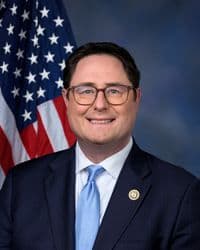

Mike Flood

Mike Flood

Republican · U.S. Representative for Nebraska's 1st district

30 sponsored · 213 cosponsored

Age 51 · In office since 2022

Contact their office: (202) 225-4806 · 343 Cannon House Office Building, Washington, DC 20515 · Official website

What they got done

Most bills never get a vote. These are the ones they wrote or backed that got somewhere.

Became law (6)

  • J. Hill (R-AR)

    Cosponsored

    21st Century ROAD to Housing Act

    H.R. 6644 Housing and Community Development

    A Republican bill with 16 Democratic cosponsors. See the voting map.

    Became law

    The House voted 358–32 on Jun 23.

    The 21st Century ROAD to Housing Act aims to increase housing supply and affordability across the United States.

    Yes· 2 of 51

    • Scored +10

      Would households on low incomes be better off under this?

      Extensive grants, vouchers, rent caps, and wealth-building pilots directly target low-income families.

    • Scored +10

      Would people in rural areas be better off under this?

      Extensive focus on rural housing preservation, USDA reforms, and rural credit union revitalization.

    The opposite· 2 of 6

    • Scored -8

      Would billionaires be better off under this?

      Directly targets and restricts large-scale corporate ownership of single-family homes.

    • Scored -7

      Would the very wealthiest people be better off under this?

      Imposes severe penalties on large institutional investors regarding single-family home ownership.
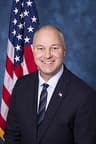
  • Pete Stauber (R-MN)

    Cosponsored

    Miracle on Ice Congressional Gold Medal Act

    H.R. 452 Sports and Recreation

    A Republican bill with 107 Democratic cosponsors.

    Became law

    This Act authorizes the award of 3 Congressional Gold Medals to the members of the 1980 U.S. Olympic Men's Ice Hockey Team. The medals recognize the team's victory over the Soviet Union during the 1980 Winter Olympics.

    Yes

    • Scored +1

      Is this likely to grow the economy?

      The sale of duplicate bronze medals provides a small influx of revenue to the United States Mint Public Enterprise Fund.

    No question was scored the opposite.

  • John Rose (R-TN)

    Cosponsored

    Homebuyers Privacy Protection Act

    H.R. 2808 Finance and Financial Sector

    A Republican bill with 33 Democratic cosponsors.

    Became law

    This bill aims to amend the Fair Credit Reporting Act. It seeks to prevent consumer reporting agencies from sharing consumer reports with others after a person requests a report for a residential mortgage loan.

    Yes· 2 of 3

    • Scored +7

      Does this give people more control over their personal data?

      The bill strengthens data privacy by preventing the sharing of credit reports after a mortgage request.

    • Scored +7

      Does this protect people from being watched or searched?

      The bill provides significant protection for individual privacy regarding sensitive financial information.

    No question was scored the opposite.

And 3 more on their Sponsored and Cosponsored pages.

Passed one chamber, waiting on the other (21)

Halfway: the other chamber has to pass the same text before it can go to the President.

  • Mike Flood (R-NE)

    Their bill

    TRIA Program Reauthorization Act of 2026

    H.R. 7128 Finance and Financial Sector

    A Republican bill with 3 Democratic cosponsors. See the voting map.

    Passed the House

    37315

    Now: handed to a committee to examine — Committee on Banking, Housing, and Urban Affairs · Jul 13

    H.R. 7128, known as the TRIA Program Reauthorization Act of 2026, extends the Terrorism Risk Insurance Program from the year 2027 out to 2034.

    Yes· 2 of 4

    • Scored +5

      Would business owners be better off under this?

      Provides essential risk mitigation through the extension of the Terrorism Risk Insurance Program.

    • Scored +3

      Does this make what the government does easier for the public to see?

      Requires the Secretary to publish notices and provide explanations in the Federal Register regarding terrorism certifications.

    No question was scored the opposite.

  • Mike Flood (R-NE)

    Their bill

    Equal Opportunity for All Investors Act of 2025

    H.R. 3339 Finance and Financial Sector

    A Republican bill with 3 Democratic cosponsors.

    Passed the House

    By voice vote, no names recorded

    Now: handed to a committee to examine — Committee on Banking, Housing, and Urban Affairs · Jul 22

    This bill requires the Securities and Exchange Commission to revise the definition of an "accredited investor" under Regulation D.

    Yes· 2 of 3

    • Scored +5

      Does this give people more protection from unfair business practices?

      The bill enhances investor protection by requiring competency in understanding risks and conflicts of interest.

    • Scored +4

      Would households on low incomes be better off under this?

      The bill expands investment access to natural persons who can demonstrate financial competency.

    No question was scored the opposite.

  • Gabe Evans (R-CO)

    Cosponsored

    Ratepayer Protection Act

    H.R. 9340 Energy

    A Republican bill with 7 Democratic cosponsors. See the voting map.

    Passed the House

    4173

    This bill amends the Public Utility Regulatory Policies Act of 1978 to create a new Federal standard regarding the costs of upgrades for large-load customers.

    Yes· 2 of 5

    • Scored +7

      Does this keep data centers from raising household electric and water bills?

      The bill requires large-load customers to cover the full incremental cost of grid upgrades and provide financial assurances, preventing those costs from being passed to households.

    • Scored +5

      Does this give people more protection from unfair business practices?

      The bill protects general ratepayers by ensuring large-load entities cover their own infrastructure costs.

    The opposite· 2 of 4

    • Scored -5

      Would business owners be better off under this?

      Large-scale non-residential energy consumers face increased costs and financial assurance requirements.

    • Scored -3

      Does this make it easier to build data centers and the power supply for them?

      The bill imposes new financial obligations and requirements for financial assurances that may act as a hurdle to data center development.

And 18 more on their Sponsored and Cosponsored pages.

Resolutions of theirs that were adopted (3)

A resolution is a chamber speaking for itself — a position, a rule or a tribute. Adopting it puts it into effect, but it is not a law.

Still waiting, of the 30 bills they wrote: 2 cleared committee and wait for a first vote, 23 are in committee. Committee is where most bills end, whoever writes them — silence there, not a vote, is the usual way a bill dies.

What their bills would do

Every bill is scored against plain yes-or-no questions. These count their bills — the ones they wrote and the ones they cosponsored — by how each question was answered: yes, or the opposite. Open one to see those bills, where each stands, and why it was scored that way. Scores are made by AI ().

Who their bills would affect

What else they would change

How they voted lately

Their latest votes that decided something, and what each measure would do.

  • U.S. House · Nov 19, 2026

    Preventive Health Savings Act

    A fast-track vote, needing two-thirds to pass The House sets aside its normal procedure to move quickly: no amendments, little debate, and a two-thirds bar instead of a simple majority. It is used for measures expected to be uncontroversial, so a bill that fails here failed despite broad expectations that it would not.

    Their vote Yea

    This bill amends the Congressional Budget Act of 1974 regarding how preventive health savings are scored.

    • Scored +3

      Does this reduce what the federal government spends?

      By highlighting reductions in budget outlays through preventive health, the bill facilitates the identification of potential spending reductions.

  • U.S. House · Nov 18, 2026

    Earth MRI Reauthorization Act of 2026

    A fast-track vote, needing two-thirds to pass The House sets aside its normal procedure to move quickly: no amendments, little debate, and a two-thirds bar instead of a simple majority. It is used for measures expected to be uncontroversial, so a bill that fails here failed despite broad expectations that it would not.

    Their vote Yea

    This bill updates the Infrastructure Investment and Jobs Act to reauthorize the Earth Mapping Resources Initiative.

    • Scored +7

      Does this put more money into scientific research?

      Authorizes 84 million dollars to update and expand geological mapping and scientific data collection methods.

  • U.S. House · Nov 18, 2026

    Common Sense 250 Act of 2026

    A fast-track vote, needing two-thirds to pass The House sets aside its normal procedure to move quickly: no amendments, little debate, and a two-thirds bar instead of a simple majority. It is used for measures expected to be uncontroversial, so a bill that fails here failed despite broad expectations that it would not.

    Their vote Yea

    Its main purpose is to officially approve the location for a commemorative work honoring Thomas Paine. The monument is designated to be placed within a specific zone known as Area I in Washington, DC, and its environs.

Every vote they cast, and how often they missed one →

On the President’s vetoes

A vetoed bill becomes law only if two-thirds of both chambers pass it again. The President can refuse to sign a bill both chambers passed. It becomes law anyway only if two-thirds of the House and two-thirds of the Senate vote to pass it again. A vote against the veto (a Yea) was a vote to make the bill law over the President’s objection; a vote for it (a Nay) was a vote to let the veto stand.

How busy they have been

How many bills they have put their name to over time — volume, not results: most bills never get a vote.

Legislative activity over time