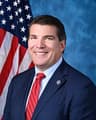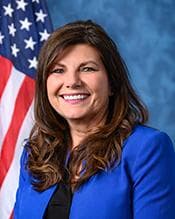


Diana Harshbarger

Diana Harshbarger

Republican · U.S. Representative for Tennessee's 1st district

37 sponsored · 264 cosponsored

Age 66 · In office since 2021

Contact their office: (202) 225-6356 · 167 Cannon House Office Building, Washington, DC 20515 · Official website

What they got done

Most bills never get a vote. These are the ones they wrote or backed that got somewhere.

Became law (3)

Passed Congress — the President's turn (1)

Both chambers passed it. The President signs it into law or vetoes it, and a veto stands unless two-thirds of each chamber vote to pass it anyway. Everything Congress has sent the President →

  • Kat Cammack (R-FL)

    Cosponsored

    Charlotte Woodward Organ Transplant Discrimination Prevention Act

    H.R. 1520 Health

    A Republican bill with 13 Democratic cosponsors.

    Passed both chambers

    With no one objecting, no names recorded

    This bill stops discrimination against qualified individuals with disabilities when it comes to organ transplants and related services.

    Yes· 2 of 5

    • Scored +10

      Would people with disabilities be better off under this?

      The bill prevents healthcare entities from denying organ transplants solely based on an individual's disability.

    • Scored +10

      Does this expand the rights of people with disabilities?

      The bill prohibits discrimination in organ transplant access and requires reasonable modifications to policies for qualified individuals.

    No question was scored the opposite.

Passed one chamber, waiting on the other (27)

Halfway: the other chamber has to pass the same text before it can go to the President.

  • Diana Harshbarger (R-TN)

    Their bill

    Nuclear Advisory Committee Reform Act

    H.R. 9613 Energy

    A Republican bill with 1 Republican cosponsor.

    Passed the House

    By voice vote, no names recorded

    Now: handed to a committee to examine — Committee on Environment and Public Works · Nov 10

    This bill updates the role and structure of the Advisory Committee on Reactor Safeguards. The committee will consist of a maximum of 15 members with diverse technical backgrounds appointed by the Commission.

    Yes

    • Scored +5

      Does this make what the government does easier for the public to see?

      The bill requires that committee reports on license applications be made part of the public record.

    • Scored +4

      Does this better protect air, water and wildlife?

      The bill enhances reactor safety oversight by requiring the committee to focus on safety-significant and novel reactor designs.

    No question was scored the opposite.

  • Diana Harshbarger (R-TN)

    Their bill

    Affordable Innovation for the Grid Act

    H.R. 9339 Energy

    A Republican bill with 3 Democratic cosponsors.

    Passed the House

    By voice vote, no names recorded

    Now: handed to a committee to examine — Committee on Energy and Natural Resources · Sep 16

    This bill requires the Secretary of Energy to conduct an assessment regarding the use of artificial intelligence and high-performance computing technologies.

    Yes· 2 of 20

    • Scored +3

      Would business owners be better off under this?

      More reliable power and faster interconnection for energy projects benefit businesses.

    • Scored +3

      Does this better protect the country from computer attacks?

      The bill specifically requires assessing cybersecurity limitations affecting AI adoption in the bulk-power system.

    No question was scored the opposite.

  • Diana Harshbarger (R-TN)

    Their bill

    American Music Tourism Act of 2025

    H.R. 617 Arts, Culture, Religion

    A Republican bill with 7 Democratic cosponsors.

    Passed the House

    By voice vote, no names recorded

    Now: in the queue for a floor vote, with no date set · Apr 29

    This bill aims to amend the Visit America Act to promote music tourism.

    Yes· 2 of 8

    • Scored +4

      Would business owners be better off under this?

      The bill benefits owners of music-related businesses, venues, and tourism services through increased promotion.

    • Scored +4

      Is this likely to grow the economy?

      The bill encourages domestic and international travel, which serves as a driver for national economic growth.

    No question was scored the opposite.

And 24 more on their Sponsored and Cosponsored pages.

Still waiting, of the 37 bills they wrote: 1 cleared committee and waits for a first vote, 33 are in committee. Committee is where most bills end, whoever writes them — silence there, not a vote, is the usual way a bill dies.

What their bills would do

Every bill is scored against plain yes-or-no questions. These count their bills — the ones they wrote and the ones they cosponsored — by how each question was answered: yes, or the opposite. Open one to see those bills, where each stands, and why it was scored that way. Scores are made by AI ().

Who their bills would affect

What else they would change

How they voted lately

Their latest votes that decided something, and what each measure would do.

  • U.S. House · Nov 19, 2026

    Preventive Health Savings Act

    A fast-track vote, needing two-thirds to pass The House sets aside its normal procedure to move quickly: no amendments, little debate, and a two-thirds bar instead of a simple majority. It is used for measures expected to be uncontroversial, so a bill that fails here failed despite broad expectations that it would not.

    Their vote Not Voting

    This bill amends the Congressional Budget Act of 1974 regarding how preventive health savings are scored.

    • Scored +3

      Does this reduce what the federal government spends?

      By highlighting reductions in budget outlays through preventive health, the bill facilitates the identification of potential spending reductions.

  • U.S. House · Nov 18, 2026

    Earth MRI Reauthorization Act of 2026

    A fast-track vote, needing two-thirds to pass The House sets aside its normal procedure to move quickly: no amendments, little debate, and a two-thirds bar instead of a simple majority. It is used for measures expected to be uncontroversial, so a bill that fails here failed despite broad expectations that it would not.

    Their vote Yea

    This bill updates the Infrastructure Investment and Jobs Act to reauthorize the Earth Mapping Resources Initiative.

    • Scored +7

      Does this put more money into scientific research?

      Authorizes 84 million dollars to update and expand geological mapping and scientific data collection methods.

  • U.S. House · Nov 18, 2026

    Common Sense 250 Act of 2026

    A fast-track vote, needing two-thirds to pass The House sets aside its normal procedure to move quickly: no amendments, little debate, and a two-thirds bar instead of a simple majority. It is used for measures expected to be uncontroversial, so a bill that fails here failed despite broad expectations that it would not.

    Their vote Nay

    Its main purpose is to officially approve the location for a commemorative work honoring Thomas Paine. The monument is designated to be placed within a specific zone known as Area I in Washington, DC, and its environs.

Every vote they cast, and how often they missed one →

On the President’s vetoes

A vetoed bill becomes law only if two-thirds of both chambers pass it again. The President can refuse to sign a bill both chambers passed. It becomes law anyway only if two-thirds of the House and two-thirds of the Senate vote to pass it again. A vote against the veto (a Yea) was a vote to make the bill law over the President’s objection; a vote for it (a Nay) was a vote to let the veto stand.

How busy they have been

How many bills they have put their name to over time — volume, not results: most bills never get a vote.

Legislative activity over time