Bill · H.R. 1520· House(119-HR-1520)
Charlotte Woodward Organ Transplant Discrimination Prevention Act
- Introduced
- 2/24/2025
- Last activity
- 6/24/2025 — Received in the Senate and Read twice and referred to the Committee on Health, Education, Labor, and Pensions.
- Sponsored by
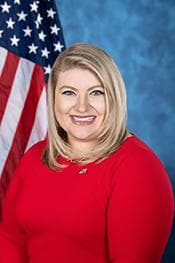
- Kat Cammack
- Cosponsors
- - 15 - 13
- Introduced
- Passed House
- In Senate committee
What this bill would do
The Charlotte Woodward Organ Transplant Discrimination Prevention Act aims to prohibit discrimination based on mental or physical disability during the organ transplant process. It prevents covered entities from denying transplants, related services, or placement on waiting lists solely because of a disability. The bill requires covered entities to make reasonable modifications to policies or practices to ensure accessibility for qualified individuals. It also defines terms such as "supported decision-making" and "support network" to aid in the care process. While medical significance of a disability can be considered, the act ensures that a lack of independence does not disqualify a person if they have a support network.
Yes· 3 of 5
Would people with disabilities be better off under this?+10
The bill prevents healthcare entities from denying organ transplants solely based on an individual's disability.
Does this expand the rights of people with disabilities?+10
The bill prohibits discrimination in organ transplant access and requires reasonable modifications to policies for qualified individuals.
Does this make health care easier to get in general?+8
The act prohibits the denial of organ transplants or related services based solely on a disability.
The opposite
No question was scored the opposite.
Who it would affect, and how
Potential Positive Impacts for People
-
Prevention of Discrimination: Covered entities are prohibited from determining an individual is ineligible, denying them a transplant or related services, refusing referrals, or refusing to place them on a waiting list solely based on a disability (Section 4(a)).
-
Access through Reasonable Modifications: Entities must make reasonable modifications to their policies or practices to make transplants and related services available to qualified individuals, provided it does not fundamentally alter the nature of the policies (Section 4(c)).
-
Protection against Denials due to Missing Aids: A qualified individual cannot be denied a procedure simply because auxiliary aids and services are absent, unless the entity can prove it would fundamentally alter the procedure or cause an undue burden (Section 4(d)(1)).
-
Inclusion of Support Networks: The bill allows for the consideration of support networks—including family, friends, or community members—to help a person comply with health requirements, ensuring that an inability to comply independently is not used to deny care (Section s 2(7)(B) and 4(b)(2)).
-
Empowerment through Supported Decision-Making: The act recognizes "supported decision-making," which allows individuals to use a support person to assist in making health care decisions, communicating information, or processing health-related information (Section 2(9)).
-
Legal Recourse: Individuals who believe they have been subjected to a violation can bring a claim to the Office for Civil Rights of the Department of Health and Human Services for expedited resolution (Section 4(e)(1)).
Potential Negative Impacts for People
-
Medical Exceptions for Decision Making: A covered entity may still take a disability into account if a physician determines through an individualized evaluation that the disability is medically significant to the receipt of the transplant or related services (Section 4(b)(1)(A)).
-
Limitations on Modifications: An entity is not required to make modifications if they can demonstrate that doing so would fundamentally alter the nature of their policies or practices (Section 4(c)).
-
Limitations on Auxiliary Aids: An entity may deny a procedure if they can demonstrate that providing necessary auxiliary aids and services would fundamentally alter the procedure or result in an undue burden (Section 4(d)(1)).
Groups and Interests Ranking
Every group the model scored this bill for, from -10 to +10. Hover a score for the reason it gave.
- Demographic And Interest Groups
- Good For People With Disabilities+10Good For Low Income Households+2
- Social Issues And Justice
- Improves Disability Rights+10
- Healthcare
- Improves Healthcare Access+8Increases Medicaid Funding+1
- 6/24/2025
- Received in the Senate and Read twice and referred to the Committee on Health, Education, Labor, and Pensions.
- 6/23/2025
- Motion to reconsider laid on the table Agreed to without objection.
- Passed/agreed to in House: On motion to suspend the rules and pass the bill Agreed to by voice vote. (text: CR H2858-2859)
- On motion to suspend the rules and pass the bill Agreed to by voice vote. (text: CR H2858-2859)
- DEBATE - The House proceeded with forty minutes of debate on H.R. 1520.
- Considered under suspension of the rules. (consideration: CR H2858-2860)
- Mr. Bilirakis moved to suspend the rules and pass the bill.
- 6/12/2025
- Reported by the Committee on Energy and Commerce. H. Rept. 119-159.
- Placed on the Union Calendar, Calendar No. 126.
- 5/13/2025
- 5 Cosponsors added.
- 5/8/2025
- 1 Cosponsor added.
- 5/7/2025
- 1 Cosponsor added.
- 4/30/2025
- 1 Cosponsor added.
- 4/29/2025
- Committee Consideration and Mark-up Session Held
- Ordered to be Reported by the Yeas and Nays: 46 - 1.
- 1 Cosponsor added.
- 4/7/2025
- 1 Cosponsor added.
- 3/25/2025
- 1 Cosponsor added.
- 3/6/2025
- 3 Cosponsors added.
- 2/27/2025
- 10 Cosponsors added.
- 2/24/2025
- Referred to the House Committee on Energy and Commerce.
- 4 Cosponsors added.
- Introduced in House
One bill Congress.gov lists as related to this one — companions in the other chamber, earlier versions, and bills this one absorbed or was folded into.
 Stephanie Bice
Republican · Oklahoma
 Don Bacon
Republican · Nebraska
 Nanette Barragán
Democrat · California
 Steve Cohen
Democrat · Tennessee
 Gerald Connolly
Democrat · Virginia
 Angie Craig
Democrat · Minnesota
 Donald Davis
Democrat · North Carolina
 Debbie Dingell
Democrat · Michigan
 Brian Fitzpatrick
Republican · Pennsylvania
 Josh Gottheimer
Democrat · New Jersey
 Andrew Garbarino
Republican · New York
 Diana Harshbarger
Republican · Tennessee
 Josh Harder
Democrat · California
 Ashley Hinson
Republican · Iowa
 Darrell Issa
Republican · California
 Seth Moulton
Democrat · Massachusetts
 Mary Miller
Republican · Illinois
 Mariannette Miller-Meeks
Republican · Iowa
 Seth Magaziner
Democrat · Rhode Island
 Celeste Maloy
Republican · Utah
 Eleanor Norton
Democrat · District of Columbia
 John Rutherford
Republican · Florida
 Pete Sessions
Republican · Texas
 Pete Stauber
Republican · Minnesota
 Paul Tonko
Democrat · New York
 Claudia Tenney
Republican · New York
 Debbie Wasserman Schultz
Democrat · Florida
 Robert Wittman
Republican · Virginia