Bill · H.R. 7148· House(119-HR-7148)
Consolidated Appropriations Act, 2026
- Introduced
- 1/20/2026
- Last activity
- 2/3/2026 — Became Public Law No: 119-75.
- Sponsored by
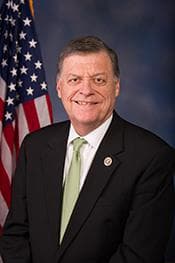
- Tom Cole
- Cosponsors
- None
- Introduced
- Passed House
- Passed Senate
- To President
- Became Law
What this bill would do
This legislation, titled the "Consolidated Appropriations Act, 2026," provides comprehensive funding for various government departments and agencies for the fiscal year ending September 30, 2026. It allocates significant resources to the Department of Defense, Navy shipbuilding, and international security, while also funding the Departments of Labor, Health and Human Services, Education, and Transportation. The bill includes critical investments in student financial assistance, public health initiatives, and infrastructure development. Additionally, it establishes various administrative rules, oversight mechanisms for pharmacy benefit managers, and specific restrictions on the use of funds across multiple sectors. The Act also addresses housing assistance, workforce development, and international humanitarian aid.
Yes· 3 of 69
Does this put more money into medical research?+8
Massive appropriations are provided for the NIH and various medical research institutes.
Does this make the country readier for the next outbreak?+7
The bill provides substantial funding for medical countermeasures, influenza pandemic response, and research.
Does this make child care cost less?+7
Substantial funding is provided for the Child Care and Development Block Grant and Head Start.
The opposite· 3 of 4
Does this make abortion easier to get?-6
The bill explicitly prohibits and restricts the use of funds for abortion services.
Does this put more limits on buying or owning guns?-5
The bill prohibits the use of funds to advocate or promote gun control.
Does this reduce what is spent on the military?-2
The bill rescinds billions of dollars from various military procurement and operation accounts.
What Congress actually voted on
4 recorded votes have been taken on this bill. 3 of them decided something; the rest moved it along.
- The House: the vote on whether to pass the billPassed 341–88
This is the real decision in this chamber. Passing here sends the bill to the other chamber, which must pass it too before it can go to the President.
01/22/2026 · Roll call 45 · recorded as “On Passage”
- The Senate: the vote on whether to pass the billBill Passed 71–29
This is the real decision in this chamber. Passing here sends the bill to the other chamber, which must pass it too before it can go to the President.
01/30/2026 · Roll call 20 · recorded as “On Passage of the Bill H.R. 7148”
- The House: a vote to accept the other chamber's changesPassed 217–214
The House and Senate passed different versions. This votes on accepting the other chamber's wording, which is the last step before the bill goes to the President.
02/03/2026 · Roll call 53 · recorded as “On Motion to Concur in the Senate Amendments”
Who it would affect, and how
Potential Positive Impacts for People
-
Support for Military Families: The bill provides $5,000,000 for the Fisher House Foundation, Inc., to fund the construction and furnishing of additional Fisher Houses to assist military family members during the illness or hospitalization of an eligible beneficiary (Sec. 8067).
-
Benefit to Indian Tribes: The Secretary of the Air Force may convey relocatable military housing units at no cost to Indian tribes in several states, including Nevada, Idaho, North and South Dakota, Montana, Oregon, Minnesota, and Washington (Sec. 8021).
-
Environmental Protection for Tribal Lands: At least $12,000,000 is made available for the mitigation of environmental impacts on Indian lands resulting from Department of Defense activities (Sec. 8022).
-
Support for Veterans and Widows: The Act allocates $174,000 for payment to the widow of the late Representative Douglas L. LaMalfa (Sec. 6). The bill also designates funds for the Transition Assistance Program and assistance for homeless veterans or those at risk of homelessness (Sec. 8083; Sec. 8087; Sec. 8106).
-
Economic Support for Small Businesses: The bill includes provisions for the Small Business Innovation Research and Small Business Technology Transfer programs (Sec. 8051) and provides funding for the Small Business Administration's entrepreneurial development programs, including support for women's business centers, veteran outreach, and technical assistance for microloans (Sec. 542).
-
Job Training and Workforce Development: Significant funding is provided for the Workforce Innovation and Opportunity Act (WIOA), Job Corps, and apprenticeship programs (Division B, Title I). This includes specific support for Job Corps programs on Treasure Island and in San Marcos, Texas (Sec. 115).
-
Protection of Workers' Rights: The bill prohibits federal contracts that require employees to resolve civil rights or sexual assault claims through mandatory arbitration (Sec. 8086).
-
Support for Disadvantaged Groups: Funding is earmarked for Native American programs, migrant and seasonal farmworker programs, and ex-offender activities (Division B, Title I, Sec. 166, 167, 169).
-
Strengthening the Industrial Base: The bill provides $500,000,000 to modernize and expand the solid rocket motor industrial base (Sec. 8153).
-
Financial Support for Older Americans: Funding is provided for community service employment for older Americans under the Older Americans Act (Division B, Title I).
-
Health Workforce Expansion: Provides $1,413,776,000 for the health workforce, including the National Health Service Corps (NHSC) Loan Repayment Program to assist those providing primary health services (Sec. 115, Health Workforce).
-
Medical Student Support: Grants are provided to public institutions of higher education to expand or support graduate education for physicians, with priority given to states facing primary care provider shortages (Sec. s, Medical Student Education).
-
Disease Research: Significant funding is allocated to the National Cancer Institute ($7,352,159,000) and the National Institute of Allergy and Infectious Diseases ($6,585,279,000), which includes $270,000,000 for universal flu vaccine research (Sec. s, National Institutes of Health).
-
Mental Health and Substance Abuse: Provides $2,790,407,000 for mental health services, including the National Child Traumatic Stress Initiative, and $4,091,098,000 for substance abuse treatment (Sec. s, SAMHSA).
-
Educational Support: Allocates $19,127,790,000 for education for the disadvantaged through the ESEA and $15,490,264,000 for special education through the IDEA (Sec. s, Office of Elementary and Secondary Education; Office of Special Education and Rehabilitative Services).
-
Family and Child Support: Includes $8,831,387,000 for the Child Care and Development Block Grant to supplement assistance for low-income families (Sec. s, Administration for Children and Families).
-
Support for Students: The bill provides $24,615,352,000 for student financial assistance, which includes a maximum Pell Grant of $6,335 for the 2026-2027 award year (Office of Federal Student Aid).
-
Empowerment for Individuals with Disabilities: Funds are allocated for vocational rehabilitation services under title I of the Rehabilitation Act to support competitive integrated employment for youth and other individuals with disabilities (Rehabilitation Services).
-
Investment in Specialized Education: The bill provides significant funding for institutions serving specific populations, such as $92,500,000 for the National Technical Institute for the Deaf and $167,361,000 for Gallaudet University (Special Institutions for Persons with Disabilities).
-
Infrastructure and Safety Improvements: The Department of Transportation receives funds for aviation safety activities ($1,842,037,000) and research on transportation resilience and nuclear technology (Research and Technology).
-
National Service Opportunities: Funding is provided for the Corporation for National and Community Service to carry out various service programs (Corporation for National and Community Service).
-
Support for Small Businesses and Infrastructure: The bill provides $35,000,000 in grants to help qualified shipyards (Sec. 172).
-
Improved Transit and Safety for Major Events: Funding is provided for transit agencies to support the mobility needs of those attending the 2028 Olympic and Paralympic events (Sec. 165) and the 2026 FIFA World Cup (Sec. 166).
-
Protection of Private Aircraft Privacy: The act prevents the use of funds to implement limitations that would stop private aircraft owners from blocking their flight identification from public real-time tracking (Sec. 116).
-
Economic Assistance for Specific Regions: There are funds allocated for the Appalachian development highway system (Sec. 119-6) and the Denali Commission (Sec. 119-9) to support regional infrastructure.
-
Reimbursement for Airport Disruptions: Up to $3,500,000 is available to reimburse airport sponsors for financial losses caused by temporary flight restrictions near a President's residence (Sec. 119E).
-
Improved Safety and Research: Funds are dedicated to research on sustainable stormwater management to protect salmon-bearing streams (Sec. 119-15) and behavioral research on automated driving systems (Sec. 140).
-
Transit Benefits Support: The Secretary of Transportation is authorized to establish uniform standards for agency transit passes and benefits, which can be distributed via paper or electronic media (Sec. 189).
-
Hiring Preferences for Local Jurisdictions: The bill allows the Department of Transportation to assist with contracts that utilize geographic or economic hiring preferences, provided certain conditions regarding workforce availability and employee displacement are met (Sec. 190).
-
University Research Opportunities: The Secretary is authorized to issue funding opportunities for six new university transportation centers (Sec. 194).
-
Public Housing Maintenance and Safety: Funding is provided for public housing agencies to address emergency capital needs, specifically including up to $10,000,000 for safety and security measures (Sec. 197, paragraph 4).
-
Reduction of Health Hazards: Funds are allocated for the lead hazard reduction program and the healthy homes initiative to mitigate housing-s-related health and safety hazards (Sec. 199, paragraph 2).
-
Support for Low-Income Seniors: Funding is available for safety and functional home modification repairs and renovations to help low-income seniors remain in their primary residences (Sec. 199, paragraph 2).
-
Veterans Housing Assistance: The bill provides funds for incremental rental voucher assistance to be used in conjunction with the Department of Veterans Affairs (Sec. s 197, paragraph 4).
-
Family Unification and Youth Support: Funds are earmarked for the family unification program and to assist eligible youth (Sec. 197, paragraph 5).
-
Legal Assistance for Tenants: The bill provides funds for legal assistance for eligible low-income tenants who are at risk of or subject to eviction (Sec. 202).
-
Affordable Housing Production: Grants are available to identify and remove barriers to affordable housing production and preservation (Sec. 203, paragraph 2).
-
Homeless Assistance: Significant funding is allocated for the continuum of care program and emergency solutions grants to assist those experiencing homelessness (Sec. s 197, paragraph 11).
-
Housing Debt Relief: The Secretary may forgive or restructure the terms of debt for certain property owners with 200 or fewer units and a specific inspection score, which can help ensure the long-term stability of property operations (Sec. 239).
-
Homelessness Support Stability: The bill provides for the non-competitive renewal of expiring projects within the continuum of care program, ensuring that services for those facing homelessness continue without interruption (Sec. 244).
-
Educational Support for D.C. Residents: A federal payment is provided to support a nationwide tuition program for residents of the District of Columbia, which can be awarded based on academic merit and financial need (Title IV, Federal Funds).
-
Workforce Development: Funding is directed toward various workforce and research initiatives, such as the "Fabrication Laboratory Equipment for Preparing the Semiconductor Workforce" (Sec. 426).
-
Increased Transparency: The bill requires agencies to maintain updated lists of grant awards and funding opportunities on their websites, which allows the public to track how money is being used (Sec. 423).
-
Protection for Whistleblowers: Whistleblower protections are explicitly extended to various contracts funded by this act, protecting those who report wrongdoing (Sec. 238). Also, the bill prohibits entities from requiring employees to sign agreements that prevent them from reporting fraud, waste, or abuse to federal investigators (Sec. 742).
-
Small Business Support: The Small Business Administration receives funding for various entrepreneurial development programs, including support for women's business centers, veteran outreach, and technical assistance for microloans (Sec. 542).
-
Legal Representation: Funds are allocated for defender services in D.C. courts, including representation in family court and adoption proceedings (Sec. 11-2604, 11-2605, D.C. Official Code).
-
Disaster Relief: The Small Business Administration is funded to carry out a direct loan program for major disasters (Sec. 542).
-
Workplace Protections: The bill includes a provision ensuring that women may breastfeed their children at any location in a Federal building or on Federal property, provided they are authorized to be there (Sec. 722).
-
Increased Support for Global Health: Significant funding is directed toward fighting infectious diseases such as HIV/AIDS, tuberculosis, and malaria, as well as maternal and child health (Sec. III, Global Health Programs).
-
Strengthening International Peacekeeping: Funds are provided for international peacekeeping activities to help maintain and restore global peace and security (Sec. III, Contributions for International Peacekeeping Activities).
-
Disaster and Refugee Relief: The bill provides for international humanitarian assistance to assist those affected by natural or man-made disasters and helps meet the needs of refugees (Sec. III, International Humanitarian Assistance).
-
Support for Democracy and Human Rights: Funding is allocated for the promotion of democracy globally and for the National Endowment for Democracy (Sec. III, Democracy Fund).
-
Increased Financial Assistance for Students: The bill increases the amount of funding available for the District of Columbia College Access Act (Sec. 820).
-
Improved Assistance Quality: Funds are designated for the regular and systematic collection of feedback directly from beneficiaries to enhance the quality and relevance of assistance (Section (b)).
-
Increased Transparency: Federal agencies are required to maintain public websites to post reports required by the Act, making government actions more visible to the public (Section 7016(b)).
-
Support for Democracy and Human Rights: The bill provides funding for democracy programs, including support for freedom of expression, association, and the protection of civil society activists and journalists (Section 7032).
-
Economic Resilience: The Economic Resilience Initiative is designed to enhance economic security and stability through strategic infrastructure and critical mineral supply chain security (Section 7030(a)).
-
Religious Freedom and Minority Support: Funds are made available for international religious freedom programs and for humanitarian assistance for vulnerable and persecuted ethnic and religious minorities (Section 7033).
-
Combatting Drug Trafficking: Resources are allocated to counter the flow of fentanyl and other synthetic drugs, aimed at disrupting transnational criminal organizations (Section 7036).
-
Humanitarian Aid for Victims: Funds are made available for victims of war, displaced children, and those combating human trafficking (Section 7034(a)).
-
Support for Peace and Economic Integration: Funds are directed toward the June 27, 2025 Peace Agreement between the Democratic Republic of the Congo and Rwanda to support economic linkages, health security, and education (Sec. 7042(b)(1)).
-
Humanitarian and Social Aid in Africa: Provisions include assistance for agriculture, global health, and programs to address violence against women and girls in the Democratic Republic of the Congo (Sec. 7042(b)(2)).
-
Support for Human Rights in Ethiopia: Assistance is directed toward political dialogue, the protection of human rights, and the restoration of basic services in conflict-impacted areas (Sec. 7042(d)).
-
Human Rights and Democracy in Burma: The bill allocates funds for democracy, governance, atrocities prevention, and support for political prisoners (Sec. 7043(a)(2)).
-
Health and Disability Assistance in Laos and Vietnam: Funds are available to assist persons with disabilities caused by unexploded ordnance or Agent Orange, as well as for dioxin remediation (Sec. 7043(c); Sec. 7043(l)).
-
Empowerment of Women Worldwide: The bill provides funds to expand economic opportunities for women, increase their political leadership, and implement strategies to prevent gender-based violence (Sec. 7059(b); Sec. 7059(d)).
-
Global Health and Food Security: Significant resources are allocated for food security, agricultural development, and the prevention and treatment of infectious diseases like HIV/AIDS and malaria (Sec. 7058(a); Sec. 7060(e)).
-
Water and Sanitation Access: Funds are provided for water supply and sanitation projects globally, with a specific focus on sub-Saharan Africa (Sec. 7060(h)).
-
Increased Medicare Coverage for Cancer Detection: Medicare will cover multi-cancer early detection screening tests for individuals starting in 2029, which can help detect multiple cancer types through a single test (Section 6221).
-
Expanded Telehealth Access: The bill extends various telehealth flexibilities, including expanded access for federally qualified health clinics and rural health clinics, and delays certain in-person requirements for mental health services (Section 6209).
-
Support for Military Families: Medicaid requirements are updated to ensure that active duty relocated individuals are treated as residents of their new state to maintain continuity of coverage and access to waiting lists (Section 6103).
-
Improved Medicare Pharmacy Access: The act works to ensure pharmacy access and choice for Medicare beneficiaries by requiring drug plans to permit any willing pharmacy to participate in their networks under reasonable terms (Section 6223).
-
Enhanced Medicare Provider Accuracy: Medicare Advantage organizations will be required to maintain accurate provider directories, which protects enrollees from unexpected costs when they rely on incorrect information (Section 6220).
-
Expanded Home Care Options: Medicare will allow for the coverage of external infusion pumps and associated drugs in the home setting under specific safety and supervision criteria (Section 6222).
-
Enhanced Pharmacy Protections: The bill establishes a process for pharmacies to submit allegations of contract violations and includes anti-retaliation and anti-coercion protections to prevent PDP sponsors from punishing pharmacies for their reports (Section 1860D-4(b)(1)(F)(i)(VIII)).
-
Increased PBM Accountability: PBMs are required to enter into written agreements where they agree to reimburse PDP sponsors for civil penalties resulting from violations they caused (Section 1860D-12(b)(9)).
-
Improved Transparency of Drug Costs: PBMs must submit highly detailed annual reports to sponsors and the Secretary, including data on brand vs. generic costs, rebates, and out-of-pocket spending for enrollees (Section 1860D-12(h)(1)(C)(i)).
-
Standardized Pricing Transparency: The bill requires PBMs to be transparent in how they calculate performance against pricing guarantees, specifically regarding terms like "generic drug" and "brand name drug" (Section 1860D-12(h)(1)(B)).
-
Support for Specialized Medical Research: The bill provides funding for various research areas, including pediatric cancer research (Section 6601), sickle cell disease (Section 6505), and studies on preterm births (Section 6507).
-
lExpanded Access to Health Services: The legislation extends funding for Community Health Centers, the National Health Service Corps, and Teaching Health Centers (Section 6401).
-
Increased Transparency of Drug Costs: PBMs must provide detailed reports to group health plans including contracted compensation, net prices, and total out-of-pocket spending for participants (Section 726(b)(2)(A)). This allows for a clearer understanding of how money is being spent on prescriptions.
-
Full Rebate Pass-Through: The bill requires that 100 percent of rebates, fees, and discounts related to drug spending be remitted back to the group health plan or its issuer (Section 6702(a)(C)(i)(aa)). This ensures that cost-saving discounts are actually utilized by the plan rather than being kept by the PBM.
-
Enhanced Rights for Participants: Participants and beneficiaries have the right to request specific, claims-level information regarding their drug coverage and spending (Section 726(c)(2)).
-
Improved Generic Drug Clarity: The Secretary of Health and Human Services is required to inform applicants if a drug is qualitatively and quantitatively the same as a listed drug, including identifying specific ingredient deviations if they are not the same (Section 6702(a)).
-
Protection of Privacy: The bill explicitly mandates that all reporting must comply with HIPAA privacy regulations to protect sensitive health information (Section 726(4)(A)).
Potential Negative Impacts for People
-
Restrictions on Shipbuilding: The bill prohibits the use of funds for the construction or conversion of any naval vessel in foreign shipyards (Division A, Title III, Shipbuilding and Conversion, Navy).
-
Limitations on Troop Reassignments: No part of the appropriation can be used to pay the basic pay of a member of the Armed Forces or civilian employee who is transferred or reassigned from a headquarters activity if their duty station remains at that location (Sec. 8044).
-
Restrictions on Program Changes: Funds cannot be used to initiate a new Department of Defense federally funded research and development center (FFRDC) (Sec. 8026).
-
Constraints on Economic Activity: The bill restricts the use of funds for certain multiyear procurement contracts unless specific conditions and notifications are met (Sec. 8010).
-
Restrictions on Intelligence Information: Certain funds cannot be used for the integration of foreign intelligence information unless collected lawfully, which may impact intelligence processing (Sec. 8079).
-
Limitations on Research and Technology: Funds for the National Intelligence Program are subject to expiration at the end of the current fiscal year, except for specific research and technology funds (Sec. 8080).
-
Restrictions on Federal Contracts: Some federal contracts may be restricted if they involve specific types of labor or manufacturing requirements (Sec. 8095; Sec. 8096).
-
Labor Market Restrictions: Rules regarding H-2B nonimmigrants include specific requirements for job postings and labor market assessments that could impact employer flexibility (Sec. 109).
-
Rescission of Immigration Funds: $206,000,000 is permanently rescinded from unobligated funds available under section 286(s)(2) of the Immigration and Nationality Act (Sec. 116).
-
Rescission of Nonrecurring Expenses: $1,826,000,000 is rescinded from the "Nonrecurring Expenses Fund" (Sec. 237).
-
Restrictions on Family Planning: Funds for voluntary family planning projects under title X of the PHS Act cannot be used for abortions (Sec. s, Family Planning).
-
Restrictions on Gun Control Advocacy: None of the funds appropriated in this title may be used to advocate or promote gun control (Sec. 210).
-
Restrictions on Student Loan Servicing: The bill implements specific requirements for new Federal student loan servicing environments, including a mandate for multiple servicers and potential re-allocation of accounts for non-compliance (Office of Federal Student Aid).
-
Limitations on Higher Education Funding: Some provisions include limitations on how certain institutions can use income from endowment funds (Section 304).
-
Employment and Economic Restrictions: Certain funds are prohibited from being used for specific activities, such as the creation of human embryos for research (Section 508) or the promotion of legalized drugs under schedule I (Section s 509).
-
Labor Relations Restrictions: The National Labor Relations Board is prohibited from using funds to assist in organizing agricultural laborers (National Labor Relations Board).
-
Restrictions on FAA Staffing: There is a cap on the amount of technical staff-years that can be compensated under a specific contract between the FAA and the Center for Advanced Aviation Systems Development (Sec. 110).
-
Limitations on Personnel and Leadership: The bill places strict limits on the number of political and Presidential appointees allowed within the FAA (Sec. 117) and the broader Department of Transportation (Sec. 183).
-
Restrictions on Pay and Benefits: Funding is prohibited for paying premium pay to certain FAA employees unless they performed work during that time (Sec. 114), and Amtrak employees face a cap on overtime pay at $35,000 unless a waiver is granted (Sec. 151).
-
Budgetary Reductions via Rescissions: The bill permanently rescinds several previously available funds for various programs, including parts of the National Network Grants, the Tanker Security Fleet, and various railroad safety and research accounts (Sec. 125, 126, 127, 156).
-
Restrictions on Reprogramming Notice: The Secretary of Transportation may be limited in providing notice of reprogramming actions to congressional committees other than the House and Senate Committees on Appropriations (Sec. 187).
-
Restrictions on Mask Mandates: Funds cannot be used to enforce mask mandates in response to the COVID-19 virus (Sec. 193).
-
Potential for Revenue Offsets: The Secretary may perform a statutory offset of public housing agency allocations based on the amount of their net restricted assets (Sec. 197, paragraph 1).
-
Restrictions on Student Assistance: Under section 8, assistance may be denied to individuals who are enrolled as students at an institution of higher education (Sec. 209).
-
Limitations on Local Government Funds: Funds for the community development block grant program may not be used for certain economic development projects unless they meet specific guidelines (Sec. 203, paragraph 1).
-
Formula Allocation Offsets: The Secretary has the authority to adjust for previous funding errors by offsetting a recipient's current allocation, which could critically impair a recipient's ability to accomplish their program's purpose (Sec. 230).
-
Restrictions on Zoning Influence: The Secretary is prohibited from using funds to direct grantees to undertake specific changes to existing zoning laws as part of fair housing initiatives (Sec. 237).
-
Eminent Domain Limitations: The bill prohibits the use of funds for projects that seek to use eminent domain for economic development that primarily benefits private entities (Sec. 407).
-
Employee Training Restrictions: There are strict limitations on how employee training funds can be used, specifically prohibiting training that contains content associated with religious or "new age" belief systems (Sec. 404).
-
Restrictions on Safety Standards: Funds may not be used to finalize or implement the Safety Standard for Recreational Off-Highway Vehicles until a specific study is completed and reported (Sec. 501).
-
Restrictions on Product Regulations: Funds are prohibited from being used to implement regulations intended to ban gas stoves as a class of products (Sec. s502).
-
Limitations on Employment: The bill includes a provision that limits the use of funds for the declassification of documents and the administration of certain programs, which may impact transparency (Sec. 421, 000, 000).
-
Strict Employment Requirements: There are restrictions on the employment of non-citizens for positions within the continental United States, which could impact workforce diversity (Sec. 704).
-
Restrictions on Pay Increases: The bill limits pay increases for certain high-level executive schedule positions and political appointees during the 2026 calendar year. (Sec. 747)
-
Limitations on Global Health Initiatives: Funding for family planning and reproductive health is subject to strict requirements that prohibit the use of funds for certain practices or to lobby for or against abortion. (Sec. III, Global Health Programs)
-
Restrictions on the District of Columbia: The bill imposes several limitations on how the District of Columbia government can use its funds, including prohibitions on using funds for certain legal actions, specific types of healthcare, or certain legislative purposes. (Sec. 806, 809, 810)
-
Constraints on International Assistance: Assistance may be cut off for any country where a head of government is deposed by a military coup. (Sec. 7008)
-
Financial Burdens on Recipients: The bill requires co-investment by recipient governments and cost matching from sources other than the United States (Section (3)(D)).
-
Aid Limitations Due to Default: Assistance may be denied to any country that is in default on loans to the United States for more than one year (Section 7012).
-
Impact of Taxation Prohibitions: The bill imposes penalties on foreign governments that assess taxes on U.S. assistance, which could lead to the withholding of funds (Section s 7013(b)).
-
Restrictions Based on Political Support: Assistance may be denied to foreign governments that provide lethal military equipment to countries supporting international terrorism (Section 7021(a)).
-
Strict Conditions for Palestinian Assistance: Assistance to the Palestinian Authority is subject to various prohibitions and specific requirements regarding the direction of funds and political stances (Section 7040).
-
Restrictions on Economic Competition: The bill prohibits funding for the production of certain commodities if they are likely to be in surplus and cause injury to United States producers (Section 7025(a)).
-
Restrictions on Government Actions: Funds for certain central governments, such as in Nigeria or El Salvador, Guatemala, and Honduras, are subject to obligations only after specific certifications regarding corruption, human rights, and security are met. (Sec. 7042(e); Sec. 7045(b)(2))
-
Financial Limitations for Zimbabwe: The Secretary of the Treasury is instructed to vote against loans or grants to the Government of Zimbabwe unless specific human rights and rule of law conditions are met. (Sec. 7042(h)(1))
-
Prohibitions on Assistance to the Russian Federation: Funds are prohibited for the central government of Russia and for any country found to be supporting the annexation of Ukrainian territory. (Sec. 7047(a); Sec. 7047(b)(1))
-
Restrictions on UN Funding: Certain funds may be withheld from United Nations agencies until they implement specific policies regarding whistleblowers, travel, and anti-bias measures. (Sec. 7048(b))
-
Potential Loss of Funds due to Rescissions: The bill permanently rescinds large sums of unobligated balances from various previous programs, such as the Millennium Challenge Corporation and Consular and Border Security Programs. (Sec. 7072)
-
Restrictions on International Aid: The bill prohibits funds from being used for contributions, grants, or payments to the United Nations Relief and Works Agency through March 25, 2027. (Division G, Section 101)
-
Medicaid Age Restrictions for Disability Benefits: While the bill modifies certain groups, it involves changes to how age limits apply to Medicaid eligibility for working adults with disabilities. (Section 6102)
-
Risk of Dismissing Valid Complaints: The Secretary has the authority to temporarily prohibit pharmacies from using the allegation submission process if they are determined to be submitting "frivolous allegations on a routine basis" (Section 1860D-4(b)(1)(F)(i)(V))
-
Administrative Burdens for Healthcare Providers: The bill introduces new requirements for off-campus outpatient departments to obtain unique National Provider Identifiers and submit various attestations (Section 6225(a))
-
Increased Complexity in Drug Development: The implementation of the Mikaela Nayon Give Kids a Chance Act includes specific requirements for molecularly targeted pediatric cancer investigations that may impact how drugs are investigated (Section 6601(a))
-
Financial Penalties for Non-Compliance: Entities that fail to provide required information can be hit with civil monetary penalties of $10,000 for each day the violation continues (Section 726(d)(2))
-
Severe Penalties for Falsehoods: Entities that knowingly provide false information face much higher penalties, up to $100,000 for each item of false information (Section 726(d)(3))
-
Administrative Burdens: The bill requires the Secretary to establish new standard formats and regulations within 18 months, which creates new regulatory requirements for entities to follow (Section s 726(5)(A)-(B))
Groups and Interests Ranking
Every group the model scored this bill for, from -10 to +10. Hover a score for the reason it gave.
- Demographic And Interest Groups
- Good For People With Disabilities+6Good For Veterans+6Good For Children+5Good For Low Income Households+5Good For Native Americans+5Good For Retirees+5Good For Seniors+5Good For Students+5Good For Women+5Good For African Americans+4Good For Middle Class Households+4Good For Business Owners+3Good For Immigrants+3Good For Rural Residents+3Good For Urban Residents+3Good For Gun Owners+2Good For Young Adults+2Good For Farmers+1
- Healthcare
- Increases Research Funding+8Improves Pandemic Preparedness+7Improves Healthcare Access+6Improves Veterans Healthcare+6Reduces Prescription Drug Costs+6Improves Mental Health Access+5Improves Opioid Crisis Response+5Increases Medicare Funding+5Increases Medicaid Funding+4Reduces Private Insurance Premiums+3Increases Affordable Care Act Support+2Improves Abortion Access-6
- Social Issues And Justice
- Improves Childcare Affordability+7Improves Affordable Housing+6Improves Disability Rights+6Improves Poverty Reduction+5Improves Social Security+5Reduces Homelessness+5Improves Gender Equality+4Improves Racial Equity+3Improves Religious Freedom+2Improves Second Amendment Protections+2Improves Gun Control Measures-5
- National Security And Foreign Policy
- Improves Veterans Benefits+7Improves Cybersecurity Defense+5Increases Foreign Aid+5Improves Diplomatic Engagement+4Improves International Alliances+4Increases Counter Terrorism Funding+4Improves International Trade+2Reduces Military Spending-2Increases Domestic Surveillance-1
- Education And Technology
- Increases Public School Funding+7Increases Scientific Research Funding+5Improves College Affordability+4Improves Internet Access+4Improves Student Loan Relief+3Improves Data Privacy+2
- Economy And Finance
- Increases Unemployment Benefits+5Reduces National Debt+4Improves Consumer Protection+3Improves Fiscal Responsibility+3Increases Job Creation+3Improves Economic Growth+2Improves Small Business Support+2Reduces Government Spending+1
- Environment Energy And Infrastructure
- Increases Renewable Energy Investment+5Improves Disaster Relief And F E M A+4Improves Environmental Protections+4Improves Public Transit+4Improves Roads And Bridges+4Improves Public Land Management+1
- Governance And Ideology
- Improves Government Transparency+4Improves Electoral Process+2Improves Privacy Rights+2
- Public Law(2/4/2026)
The text as it became law
- Enrolled Bill
The final version, on its way to the President
The changes one chamber made to the other chamber’s version, as it passed them
| Updated | Bill | Title | Policy Area |
|---|---|---|---|
| 8 months ago | Amendment sought to prohibit the use of funds to implement section 24220 of the Infrastructure Investment and Jobs Act, including any requirements enabling or supporting vehicle "kill switch" technology, and to prohibit federal spending for the execution or enforcement of such authorities. | ||
| 3 months ago | Amendment sought to prohibit the use of funds for certain community funding projects. | ||
| 8 months ago | On agreeing to the Rules amendment (A003) Agreed to without objection. | ||
| 7 months ago | To strike the earmark for the Community and Training Center by the New Immigrant Community Empowerment. | ||
| 7 months ago | To strike all earmarks. | ||
| 7 months ago | To eliminate National Endowment for Democracy funding. | ||
| 7 months ago | To eliminate funding for refugee and entrant assistance. | ||
| 7 months ago | To provide continuing appropriations for the Department of Homeland Security. | ||
| 7 months ago | To eliminate funding for the United States African Development Foundation. | ||
| 7 months ago | To prevent the deferral or rescission of appropriations within 90 days of their expiration. |


- 2/3/2026
- Resolving differences -- House actions: On motion that the House agree to the Senate amendments Agreed to by the Yeas and Nays: 217 - 214 (Roll no. 53).
- Presented to President.
- Signed by President.
- Became Public Law No: 119-75.
- Motion to reconsider laid on the table Agreed to without objection.
- On motion that the House agree to the Senate amendments Agreed to by the Yeas and Nays: 217 - 214 (Roll no. 53).
- The previous question was ordered pursuant to the rule.
- DEBATE - Pursuant to the provisions of H. Res. 1032, the House proceeded with one hour of debate on the motion to agree to the Senate amendments to H.R. 7148.
- Mr. Cole moved that the House agree to the Senate amendments (consideration: CR H1960-1967)
- Pursuant to the provisions of H. Res. 1032, Mr. Cole called up the Senate amendments to H.R. 7148.
- 1/30/2026
- Motion to proceed to measure considered in Senate. (CR S401)
- Motion to proceed to consideration of measure agreed to in Senate by Unanimous Consent.
- Measure laid before Senate by unanimous consent. (consideration: CR S411-416)
- Cloture motion on the motion to proceed rendered moot in Senate.
- Motion by Senator Thune to reconsider the vote by which cloture on the motion to proceed to H.R.7148 was not invoked (Record Vote No. 13) rendered moot in Senate.
- Passed/agreed to in Senate: Passed Senate, under the order of 1/30/2026, having achieved 60 votes in the affirmative, with amendments by Yea-Nay Vote. 71 - 29. Record Vote Number: 20.
- Passed Senate, under the order of 1/30/2026, having achieved 60 votes in the affirmative, with amendments by Yea-Nay Vote. 71 - 29. Record Vote Number: 20.
- 1/29/2026
- Motion to proceed to measure considered in Senate. (CR S357)
- Cloture on the motion to proceed to the measure not invoked in Senate by Yea-Nay Vote. 45 - 55. Record Vote Number: 13. (CR S361)
- Motion by Senator Thune to reconsider the vote by which cloture on the motion to proceed to the measure was not invoked (Record Vote No. 13) entered in Senate.
- 1/28/2026
- Motion to proceed to measure considered in Senate. (CR S301)
- 1/27/2026
- Motion to proceed to consideration of measure made in Senate. (CR S281)
- Cloture motion on the motion to proceed to the measure presented in Senate. (CR S287)
- 1/26/2026
- Received in the Senate. Read the first time. Placed on Senate Legislative Calendar under Read the First Time. (Legislative Day January 15, 2026).
- Read the second time. Placed on Senate Legislative Calendar under General Orders. Calendar No. 302.
- 1/22/2026
- Motion to reconsider laid on the table Agreed to without objection.
- Passed/agreed to in House: On passage Passed by the Yeas and Nays: 341 - 88 (Roll No. 45). (text of amendment in the nature of a substitute: CR H1193-1297)
- On passage Passed by the Yeas and Nays: 341 - 88 (Roll No. 45). (text of amendment in the nature of a substitute: CR H1193-1297)
- The previous question was ordered pursuant to the rule.
- The House rose from the Committee of the Whole House on the state of the Union to report H.R. 7148.
- The House resolved into Committee of the Whole House on the state of the Union for further consideration.
- Considered as unfinished business. (consideration: CR H1330-1333)
- Committee of the Whole House on the state of the Union rises leaving H.R. 7148 as unfinished business.
- On motion that the committee rise Agreed to by voice vote.
- Mr. Cole moved that the committee rise.
- POSTPONED PROCEEDINGS - At the conclusion of debate on the Norman amendment No. 2, the Chair put the question on agreeing to the amendment and by voice vote, announced the ayes had prevailed. Ms. DeLauro demanded a recorded vote and the Chair postponed further proceedings until a time to be announced.
- DEBATE - Pursuant to the provisions of H. Res. 1014, the Committee of the Whole proceeded with 10 minutes of debate on the Norman amendment No. 2.
- POSTPONED PROCEEDINGS - At the conclusion of debate on the Massie amendment No. 1, the Chair put the question on agreeing to the amendment and by voice vote, announced the ayes had prevailed. Mr. Massie demanded a recorded vote and the Chair postponed further proceedings until a time to be announced.
- DEBATE - Pursuant to the provisions of H. Res. 1014, the Committee of the Whole proceeded with 10 minutes of debate on the Massie amendment No. 1.
- GENERAL DEBATE - The Committee of the Whole proceeded with one hour of general debate on H.R. 7148.
- The Speaker designated the Honorable Mary E. Miller to act as Chairwoman of the Committee.
- House resolved itself into the Committee of the Whole House on the state of the Union pursuant to H. Res. 1014 and Rule XVIII.
- Rule provides for consideration of H.R. 7148 and H.R. 7147. The resolution provides for consideration of H.R. 7148 under a structured rule and H.R. 7147 under a closed rule. The rule provides for one hour of debate and a motion to recommit on each bill.
- Considered under the provisions of rule H. Res. 1014. (consideration: CR H1185-1299)
- Rules Committee Resolution H. Res. 1014 Reported to House. Rule provides for consideration of H.R. 7148 and H.R. 7147. The resolution provides for consideration of H.R. 7148 under a structured rule and H.R. 7147 under a closed rule. The rule provides for one hour of debate and a motion to recommit on each bill.
- 1/20/2026
- Referred to the Committee on Appropriations, and in addition to the Committees on the Budget, and Ways and Means, for a period to be subsequently determined by the Speaker, in each case for consideration of such provisions as fall within the jurisdiction of the committee concerned.
- Introduced in House
55 bills Congress.gov lists as related to this one — companions in the other chamber, earlier versions, and bills this one absorbed or was folded into.
- 119-HR-628: Honor Our Living Donors Act
- 119-HR-842: Nancy Gardner Sewell Medicare Multi-Cancer Early Detection Screening Coverage Act
- 119-HR-929: Dr. Lorna Breen Health Care Provider Protection Reauthorization Act
- 119-HR-950: Saving Seniors Money on Prescriptions Act
- 119-HR-1197: PREEMIE Reauthorization Act of 2025
- 119-HR-1262: Mikaela Naylon Give Kids a Chance Act
- 119-HR-1509: Accelerating Kids’ Access to Care Act of 2025
- 119-HR-1625: Haiti Economic Lift Program Extension Act of 2025
- 119-HR-1794: United States-Abraham Accords Cooperation and Security Act of 2025
- 119-HR-1796: Sickle Cell Disease and Other Heritable Blood Disorders Research, Surveillance, Prevention, and Treatment Act of 2025
- 119-HR-1843: To amend the Federal Food, Drug, and Cosmetic Act to increase transparency in generic drug applications.
- 119-HR-2092: SPEAK Act of 2025
- 119-HR-2450: Prescription Drug Transparency and Affordability Act
- 119-HR-2822: To extend the National Flood Insurance Program through December 31, 2026.
- 119-HR-4016: Department of Defense Appropriations Act, 2026
- 119-HR-4213: Department of Homeland Security Appropriations Act, 2026
- 119-HR-4313: Hospital Inpatient Services Modernization Act
- 119-HR-4317: PBM Reform Act of 2025
- 119-HR-4552: Transportation, Housing and Urban Development, and Related Agencies Appropriations Act, 2026
- 119-HR-4779: National Security, Department of State, and Related Programs Appropriations Act, 2026
- 119-HR-4993: Joe Fiandra Access to Home Infusion Act of 2025
- 119-HR-5064: Save our Safety-Net Hospitals Act of 2025
- 119-HR-5166: Financial Services and General Government Appropriations Act, 2026
- 119-HR-5259: Permanent OPTN Fee Authority Act
- 119-HR-5281: REAL Health Providers Act
- 119-HR-5304: Departments of Labor, Health and Human Services, and Education, and Related Agencies Appropriations Act, 2026
- 119-HR-5574: To extend the National Flood Insurance Program through November 21, 2025.
- 119-HR-6500: Continuing Appropriations and Extensions Act, 2027
- 119-HR-6504: Haiti Economic Lift Program Extension Act
- 119-HR-7006: Financial Services and General Government and National Security, Department of State, and Related Programs Appropriations Act, 2026
- 119-HR-7147: Homeland Security and Further Additional Continuing Appropriations Act, 2026.
- 119-HR-7744: Department of Homeland Security Appropriations Act, 2026
- 119-HR-8173: Reforming ICE and Protecting America Act
- 119-S-266: Dr. Lorna Breen Health Care Provider Protection Reauthorization Act
- 119-S-339: Nancy Gardner Sewell Medicare Multi-Cancer Early Detection Screening Coverage Act
- 119-S-532: OPTN Fee Collection Authority Act
- 119-S-735: Sickle Cell Disease and Other Heritable Blood Disorders Research, Surveillance, Prevention, and Treatment Act of 2025
- 119-S-742: Haiti Economic Lift Program Extension Act of 2025
- 119-S-752: Accelerating Kids’ Access to Care Act
- 119-S-882: Patients Before Middlemen Act
- 119-S-932: Give Kids a Chance Act of 2025
- 119-S-1015: A bill to extend the National Flood Insurance Program through December 31, 2026.
- 119-S-1302: Increasing Transparency in Generic Drug Applications Act
- 119-S-2237: Hospital Inpatient Services Modernization Act
- 119-S-2465: Transportation, Housing and Urban Development, and Related Agencies Appropriations Act, 2026
- 119-S-2497: Fair Billing Act
- 119-S-2572: Department of Defense Appropriations Act, 2026
- 119-S-2587: Departments of Labor, Health and Human Services, and Education, and Related Agencies Appropriations Act, 2026
- 119-S-2743: Save Our Safety-Net Hospitals Act of 2025
- 119-S-2751: Permanent OPTN Fee Authority Act
- 119-S-3290: Financial Services and General Government Appropriations Act, 2026
- 119-S-3302: Mikaela Naylon Give Kids a Chance Act of 2025
- 119-S-3690: Ensuring Access to Medicaid Buy-in Programs Act of 2026
- 119-S-3750: REAL Health Providers Act
- 119-HRES-1014: Providing for consideration of the bill (H.R. 7148) making further consolidated appropriations for the fiscal year ending September 30, 2026, and for other purposes; providing for consideration of the bill (H.R. 7147) making further consolidated appropriations for the fiscal year ending September 30, 2026, and for other purposes; and for other purposes.