Bill · H.R. 8173· House(119-HR-8173)
Reforming ICE and Protecting America Act
- Introduced
- 4/2/2026
- Last activity
- 4/2/2026 — Referred to the Committee on Appropriations, and in addition to the Committee on the Budget, for a period to be subsequently determined by the Speaker, in each case for consideration of such provisions as fall within the jurisdiction of the committee concerned.
- Sponsored by
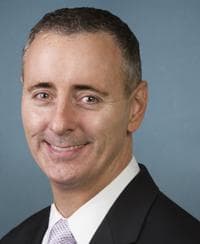
- Brian Fitzpatrick
- Cosponsors
- - 0 - 1
- Introduced
- In Committee
What this bill would do
This legislation, titled the "Reforming ICE and Protecting America Act" or "Department of Homeland Security Appropriations Act, 2026," provides funding for the Department of Homeland Security for the fiscal year ending September 30, 2026. The bill allocates money across various divisions, including Customs and Border Protection, ICE, the Coast Guard, the Secret Service, and FEMA. It includes the "Bipartisan ICE Reform Act of 2026," which mandates body camera usage and specific identification for immigration agents. The bill also rescinds various unobligated balances from several DHS accounts and funds. Additionally, it establishes new priorities for detention and implements oversight mechanisms for various agencies.
Yes· 3 of 20
Does this improve help for people hit by a disaster?+6
The bill provides $26,367,000,000 for the Disaster Relief Fund to support major disasters.
Would women be better off under this?+5
The bill includes specific protections for the health and rights of pregnant women in custody.
Does this change how police departments operate?+5
The bill mandates the use of body cameras for immigration agents and requires FBI investigations into officer-involved shootings.
The opposite
Does this reduce what the federal government spends?-2
The bill rescinds various unobligated balances from several DHS accounts and funds.
Who it would affect, and how
Potential Positive Impacts for People
-
Protection of Pregnant Individuals: The bill mandates that specific standards of treatment are implemented to safeguard the health, safety, and rights of pregnant women in U.S. Customs and Border Protection custody (Sec. 211).
-
Protection of Pregnant Individuals from Restraints: The bill prohibits the use of funds to place restraints on pregnant women in custody, except in specific, determined circumstances (Sec. s527).
-
Support for Human Exploitation Victims: Funding is allocated for paid apprenticeships for participants in the Human Exploitation Rescue Operative Child-Rescue Corps (Sec. 2, Division A, Title I, ICE section).
-
Enhanced Security for Nonprofits: The bill provides funds for the Nonprofit Security Grant Program to assist eligible recipients at risk of terrorist or extremist attacks (Sec. 2, Division A, Title III, FEMA section).
-
Increased Security for Children: The United States Secret Service is provided a grant for activities related to investigations of missing and exploited children (Sec. 2, Division A, Title I, Secret Service section).
-
Firefighter and Emergency Response Support: Funding is provided for Assistance to Firefighter Grants and Staffing for Adequate Fire and Emergency Response Grants (Sec. 2, Division A, Title III, FEMA section).
-
Increased Accountability through Body Cameras: Covered immigration agents must wear and operate a body camera during public immigration enforcement functions, which can provide video evidence (Sec. 602).
-
Protection for Victims and Witnesses: Video footage can be retained for up to three years if requested by a subject of the video, a parent/guardian of a minor subject, or a deceased subject's next of kin (Sec. 602).
-
Enhanced Oversight via Independent Review: The Secretary of Homeland Security is required to establish an independent advisory panel with experts in civil rights, privacy, and technology to recommend policies for body camera use (Sec. 602).
-
Increased Safety through Identification: Immigration enforcement personnel must visibly display a unique identifier, their employer's name, and their face during enforcement functions (Sec. 603).
-
Investigation of Officer-involved Shootings: The FBI is required to conduct investigations when an immigration officer discharges a firearm during the enforcement of immigration laws to check for violations of law or protocols (Sec. 605).
-
Protection of U.S. Citizens: The Secretary of Homeland Security is prohibited from knowingly detaining a U.S. citizen unless there is probable cause that they committed a crime (Sec. 609/610).
-
Protection of Sensitive Locations: Civil immigration enforcement actions are prohibited at sensitive locations, such as schools, medical facilities, and places of worship, without a warrant (Sec. 612).
Potential Negative Impacts for People
-
Reduced Funding for DHS Operations: The bill rescinds significant amounts of money from various accounts, including $52,349,050 from the Cybersecurity and Infrastructure Security Agency and $18,525,975 from FEMA (Sec. 552).
-
Increased Penalties for Doxxing Law Enforcement: The definition of "restricted personal information" is expanded to include items like license plates and GPS coordinates, and sentencing guidelines will be adjusted to treat offenses against law enforcement officers as an aggravated factor (Sec. 604).
-
Financial Penalties for State/Local Agencies: State or local law enforcement agencies that do not comply with new immigration enforcement priorities may have up to 12 percent of their Emergency Management Performance Grant funds withheld (Sec. 606).
-
Restrictions on Prescription Drug Imports: Funds cannot be used to prevent individuals from importing a personal-use quantity (up to a 90-day supply) of certain prescription drugs from Canada, provided they are not controlled substances or biological products (Sec. 205).
-
Limitations on Border Crossing Fees: The Secretary is prohibited from establishing or collecting new border crossing fees for individuals crossing the Southern or Northern borders at a land port of entry (Sec. 207).
-
Surveillance System Restrictions: Funds for Border Security Assets and Infrastructure may not be used for the procurement or deployment of surveillance systems that are not autonomous (Sec. 210).
Groups and Interests Ranking
Every group the model scored this bill for, from -10 to +10. Hover a score for the reason it gave.
- Demographic And Interest Groups
- Good For Women+5Good For Immigrants+4Good For Children+3Good For Low Income Households+2Good For Native Americans+2Good For Union Workers+2
- Social Issues And Justice
- Improves Policing Reform+5Improves Border Security+3Reduces Homelessness+3Improves Poverty Reduction+2Improves Racial Equity+2
- Environment Energy And Infrastructure
- Improves Disaster Relief And F E M A+6Improves Environmental Protections+2Improves Roads And Bridges+2
- Governance And Ideology
- Improves Government Transparency+4Improves Privacy Rights+3
- Healthcare
- Reduces Prescription Drug Costs+5
- National Security And Foreign Policy
- Improves Cybersecurity Defense+3
- Education And Technology
- Increases Scientific Research Funding+2
- Economy And Finance
- Increases Job Creation+1Reduces Government Spending-2
- 4/2/2026
- Referred to the Committee on Appropriations, and in addition to the Committee on the Budget, for a period to be subsequently determined by the Speaker, in each case for consideration of such provisions as fall within the jurisdiction of the committee concerned.
- 1 Cosponsor added.
- Introduced in House
6 bills Congress.gov lists as related to this one — companions in the other chamber, earlier versions, and bills this one absorbed or was folded into.
- 119-HR-5653: Trust Through Transparency Act of 2025
- 119-HR-7147: Homeland Security and Further Additional Continuing Appropriations Act, 2026.
- 119-HR-7148: Consolidated Appropriations Act, 2026
- 119-HR-7481: Department of Homeland Security Appropriations Act, 2026
- 119-HR-7744: Department of Homeland Security Appropriations Act, 2026
- 119-HR-8029: Pay Our Homeland Defenders Act
 Thomas Suozzi
Democrat · New York