Bill · S. 2465· Senate(119-S-2465)
Transportation, Housing and Urban Development, and Related Agencies Appropriations Act, 2026
- Introduced
- 7/24/2025
- Last activity
- 7/24/2025 — Placed on Senate Legislative Calendar under General Orders. Calendar No. 125.
- Sponsored by
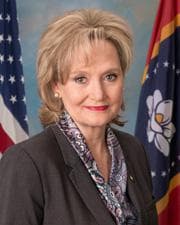
- Cindy Hyde-Smith
- Cosponsors
- None
- Introduced
- On Calendar
What this bill would do
This legislation, the "Transportation, Housing and Urban Development, and Related Agencies Appropriations Act, 2026," provides funding for various federal agencies and programs. It makes appropriations for the Departments of Transportation, Housing and Urban Development, and related agencies for the fiscal year ending September 30, 2026. Significant resources are allocated to the Federal Aviation Administration, the Federal Transit Administration, and the Federal Railroad Administration. The bill also provides massive funding for tenant-based rental assistance, public housing, and homeless assistance programs. Additionally, it supports community development, maritime security, and infrastructure research. The act contains various provisions for project-based assistance transfers and several rescissions of unobligated balances to manage federal spending.
Yes· 3 of 31
Does this make housing cost less?+10
The bill allocates tens of billions of dollars for rental assistance, public housing, and elderly/disabled housing.
Would Native Americans be better off under this?+7
The bill provides over $1.3 billion for Native American housing assistance through NAHASDA and other programs.
Would veterans be better off under this, taking everything together?+7
The bill includes specific funding for HUD-VASH vouchers to assist veterans with housing.
The opposite
Does this reduce what the federal government spends?-3
The bill utilizes several rescissions, including funds from the Interagency Council on Homelessness, to reduce spending.
Would people in cities be better off under this?-2
Reduced funding for homelessness programs may negatively affect urban residents who rely on such services.
Does this reduce what the federal government owes?-2
The bill includes several rescissions of unobligated balances to manage federal spending.
Who it would affect, and how
Potential Positive Impacts for People
-
Infrastructure Research and Development: $9,000,000 is designated for the Advanced Research Projects Agency--Infrastructure (ARPA-I), which includes $6,000,000 specifically for research into the durability, resiliency, and sustainability of bridges and other infrastructure (Title I, Research and Technology).
-
Equitable Infrastructure Investment: Not less than 5 percent of the $250,000,000 for local and regional project assistance must be awarded to projects in historically disadvantaged communities or areas of persistent poverty (Title I, National Infrastructure Investments).
-
Support for Small Businesses: The bill provides $5,330,000 for small and disadvantaged business utilization and outreach, including the maintenance of at least 11 small business transportation resource centers (Title I, Small and Disadvantaged Business Utilization and Outreach).
-
Aviation Safety and Training: The Federal Aviation Administration is allocated $1,876,039,000 for aviation safety activities, which includes $100,000,000 for the Office of Aerospace Medicine (Title I, Federal Aviation Administration).
-
Workforce Development in Aviation: Funds include $30,000,000 for aviation workforce development programs, which includes $20,000,000 for manufacturing workforce grants and $10,000,000 for two community colleges (Title I, Research, Engineering, and Development).
-
Transit Safety and Security: $20,000,000 is available to improve public safety in transit systems, including costs for operating equipment and facilities to reduce crime and increase security (Title I, Transit Infrastructure Grants).
-
Enhanced Transit Infrastructure: The bill provides $1,950,000,000 for capital investment grants to carry out fixed guideway projects, which can improve public transportation systems (Capital Investment Grants).
-
Improved Safety for Transit Riders: For the Washington Metropolitan Area Transit Authority, the Secretary is required to prioritize investments that improve system safety before approving grants (Grants to the Washington Metropolitan Area Transit Authority).
-
Support for High-Profile Sporting Events: Funding is provided to support transportation needs for the 2028 Olympic and Paralympic events and the 2026 FIFA World Cup (Sec. 169 and Sec. 169A).
-
Protection for Housing Tenants: The bill allocates billions for the renewal of section 8 tenant-based annual contributions contracts to help maintain housing stability (Public and Indian Housing - Tenant-Based Rental Assistance).
-
Support for Vulnerable Populations: Significant funds are directed toward the continuum of care program to assist those experiencing homelessness, including specific provisions for youth and survivors of violence (Homeless Assistance Grants).
-
Preservation of Manufactured Housing: Competitive grants are available to revitalize manufactured housing communities, which can help preserve long-sought affordability for residents (Preservation and Reinvestment Initiative for Community Enhancement).
-
Empowerment through Homeownership: Funding is provided for the self-help and assisted homeownership opportunity program to help individuals achieve homeownership (Self-help and Assisted Homeownership Opportunity Program).
-
Legal Assistance for Tenants: The bill provides funds for legal assistance, including post-trial activities and alternative dispute resolution, at no cost to eligible low-income tenants facing eviction (Proviso under the first paragraph of the text).
-
Fair Housing Support: It allocates $26,355,000 for the fair housing assistance program and $56,000,000 for fair housing initiatives, which includes education, outreach, and private enforcement (Section: Fair Housing and Equal Opportunity, paragraph 1).
-
Language Access: $1,000,000 is designated for the creation and promotion of translated materials to assist persons with limited English proficiency in using Department of Housing and Urban Development services (Section: Fair Housing and Equal Opportunity, paragraph 3).
-
Lead Hazard Reduction: The bill provides $155,600,000 for lead-based paint abatement grants, with at least $105,000,000 directed to areas with the highest need (Section: Office of Lead Hazard Control and Healthy Homes, paragraph 1).
-
Support for Low-Income Seniors: $30,000,000 is set aside for grants to help low-income seniors through safety and functional home modification repairs and renovations to remain in their primary residences (Section: Office of Lead Hazard Control and Healthy Homes, paragraph 2).
-
Housing Stability for Families: The Secretary may authorize the transfer of project-based assistance to ensure that low-income households do not lose assistance during project transfers (Section 208).
Potential Negative Impacts for People
-
Restrictions on Aviation Service: Under the Essential Air Service program, the bill states that basic requirements shall not include the 15-passenger capacity requirement (Title I, Payments to Air Carriers).
-
Limitations on Employee Compensation: For the National Railroad Passenger Corporation, the bill limits individual employee overtime costs to not more than $35,000 (Title I, Administrative Provisions—Federal Railroad Administration).
-
Restrictions on Commercial Motor Vehicles: The bill prohibits the use of funds to implement requirements for electronic logging devices for operators transporting livestock or insects (Title I, Administrative Provisions—Federal Motor Carrier Safety Administration).
-
Restrictions on Aviation Equipment: The bill prohibits the use of funds for the planning or execution of programs where total obligations for certain projects exceed $209,600,000 (Title I, National Highway Traffic Safety Administration).
-
Restrictions on Financial Autonomy for Agencies: The Secretary may perform statutory offsets of a public housing agency's allocations based on the amount of its net restricted assets, which could impact local agency budgets (Public and Indian Housing - Public Housing Fund).
-
Limitations on Housing Assistance for Specific Groups: While funds are provided for various groups, some provisions, such as the competitive grants for the preservation of manufactured housing, include a requirement that they prioritize low- or moderately low-income residents, which implies a limit on who can benefit (Preservation and Reinvestment Initiative for Community Enhancement).
-
Potential for Reduced Program Scope: The bill includes various permanent rescissions of previously available funds for the Maritime Administration's maritime security, cable security, and tanker security programs (Maritime Security Program; Cable Security Fleet; Tanker Security Program).
-
Restrictions on Legal Action: Funds cannot be used to investigate or prosecute legal actions that are engaged in solely for the purpose of achieving or preventing action by a Government official or entity (Section 202).
-
Limitations on Assistance for Students: Individuals who are enrolled as students at institutions of higher education are ineligible for assistance under section 8 of the United States Housing Act of 1937 (Section 209).
-
Eminent Domain Restrictions: Funds cannot be used for projects seeking to use eminent domain unless the use is specifically for a public use that does not primarily benefit private entities (Section 409).
-
Employee Training Constraints: Funds cannot be used for employee training that contains elements likely to induce high levels of emotional response or psychological stress (Section 404).
Groups and Interests Ranking
Every group the model scored this bill for, from -10 to +10. Hover a score for the reason it gave.
- Demographic And Interest Groups
- Good For Native Americans+7Good For Veterans+7Good For People With Disabilities+6Good For Retirees+6Good For Seniors+6Good For African Americans+5Good For Rural Residents+5Good For Children+4Good For Hispanic Americans+4Good For Immigrants+4Good For Middle Class Households+4Good For Low Income Households+3Good For Urban Residents-2
- Environment Energy And Infrastructure
- Improves Public Transit+7Improves Roads And Bridges+6Improves Environmental Protections+5Improves Rural Development+5Increases Renewable Energy Investment+5
- Social Issues And Justice
- Improves Affordable Housing+10Improves Racial Equity+4Reduces Homelessness+3Improves Poverty Reduction+1
- Economy And Finance
- Improves Union Protections+5Increases Job Creation+5Improves Economic Growth+4Improves Small Business Support+4Reduces Government Spending-3Reduces National Debt-2
- National Security And Foreign Policy
- Improves Cybersecurity Defense+7Improves Veterans Benefits+6
- Education And Technology
- Increases Scientific Research Funding+5Improves College Affordability+3
- Governance And Ideology
- Improves Government Transparency+3
- Healthcare
- Improves Healthcare Access+3
No amendments submitted yet for this bill.
- 7/24/2025
- Committee on Appropriations. Original measure reported to Senate by Senator Hyde-Smith. With written report No. 119-47.
- Placed on Senate Legislative Calendar under General Orders. Calendar No. 125.
- Introduced in Senate
- 6/11/2025
- Subcommittee on Transportation, Housing and Urban Development, and Related Agencies . Hearings held on the subject prior to the subcommittee ordering to be reported an original measure. With printed Hearing: S.Hrg. 119-72.
- 5/15/2025
- Subcommittee on Transportation, Housing and Urban Development, and Related Agencies . Hearings held on the subject prior to the subcommittee ordering to be reported an original measure. With printed Hearing: S.Hrg. 119-72.
2 bills Congress.gov lists as related to this one — companions in the other chamber, earlier versions, and bills this one absorbed or was folded into.