Bill · H.R. 7006· House(119-HR-7006)
Financial Services and General Government and National Security, Department of State, and Related Programs Appropriations Act, 2026
- Introduced
- 1/12/2026
- Last activity
- 1/15/2026 — Received in the Senate.
- Sponsored by
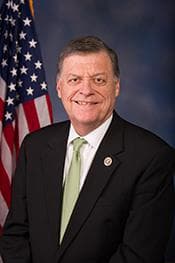
- Tom Cole
- Cosponsors
- None
- Introduced
- Passed House
- Awaiting Senate
What this bill would do
This Act, known as the Financial Services and General Government and National Security, Department of State, and Related Programs Appropriations Act, 2026, provides funding for various federal agencies including the Department of the Treasury, the Executive Office of the President, the Judiciary, and the District of Columbia. It covers independent agencies such as the Federal Communications Commission and the Securities and Exchange Commission, as well as the Small Business Administration and the United States Postal Service. The legislation allocates resources toward small business development, entrepreneurial programs, diplomatic operations, and global health. Significant funds are directed toward international assistance, security, and humanitarian relief. Additionally, the bill establishes several administrative rules, limitations on travel expenses, and restrictions on how funds may be used for various programs.
Yes· 3 of 41
Would women be better off under this?+10
Significant resources are dedicated to women's economic empowerment, leadership, and protection from violence.
Does this narrow the gap between how men and women are treated?+10
The bill provides significant funding for women's economic empowerment, leadership, and combating gender-based violence.
Does this put more money into wind, solar and other renewable power?+7
The bill promotes the adoption of nuclear energy technologies and support for nuclear energy assistance trust funds.
The opposite· 3 of 4
Does this make abortion easier to get?-10
The bill explicitly prohibits the use of funds for any assistance related to the performance of abortions.
Does this send more money or help to other countries?-7
The bill implements large-scale rescissions of various international aid and development programs.
Does this favour talking over confrontation abroad?-4
Rescissions in cultural exchange and democracy funds may reduce the tools available for diplomatic engagement.
What Congress actually voted on
One recorded vote has been taken on this bill.
- The House: the vote on whether to pass the billPassed 341–79
This is the real decision in this chamber. Passing here sends the bill to the other chamber, which must pass it too before it can go to the President.
01/14/2026 · Roll call 28 · recorded as “On Passage”
Who it would affect, and how
Potential Positive Impacts for People
-
Financial Assistance for Communities: The bill provides $324,000,000 for the Community Development Financial Institutions Fund, which includes funds for financial and technical assistance to benefit individuals with disabilities (Sec. 5. Community Development Financial Institutions Fund) and support for Native American, Native Hawaiian, and Alaska Native communities (Sec. 5. Community Development Financial Institutions Fund, paragraph 2).
-
Support for High-Poverty Areas: The CDFI Fund is instructed to prioritize financial assistance awards to organizations that invest and lend in high-poverty areas (Sec. 5. Community Development Financial Institutions Fund, paragraph 1).
-
Healthy Food Access: A portion of the CDFI Fund, totaling not less than $24,000,000, is designated for the Healthy Food Financing Initiative to expand the availability of healthy food options in distressed communities (Sec. 5. Community Development Financial Institutions Fund, paragraph 4).
-
Taxpayer Services: The Internal Revenue Service receives over $3 billion for taxpayer services, which includes the Tax Counseling for the Elderly Program (Sec. 5. Internal Revenue Service, taxpayer services) and grants for low-income taxpayer clinics (Sec. 5. Internal Revenue Service, taxpayer services).
-
Educational Support: In the District of Columbia, $40,000,000 is allocated for a resident tuition support program to assist students (Sec. 5. District of Columbia, federal payment for resident tuition support). In addition, substantial funding is provided for basic education through the Nita M. Lowey Basic Education Fund and for higher education assistance (Sec. 7060(a)).
-
Election Security: The Election Assistance Commission is provided $45,000,000 to help states improve election technology and security (Sec. 5. Election Assistance Commission, election security grants).
-
Small Business Support: The bill provides $323,118,000 for the Small Business Administration, which includes $15,500,000 specifically for certifying small businesses owned and controlled by veterans or service-disabled veterans (Small Business Administration).
-
Entrepreneurial Development: Significant funding is directed toward various development programs, such as $27,000,000 for the Women's Business Center program and $21,400,000 for veteran outreach (Entrepreneurial Development Programs).
-
Disaster Relief: The bill allocates $282,000,000 for the disaster loans program to assist with major disasters (Disaster Loans Program Account).
-
Post Office Protections: The legislation specifies that funds may not be used to consolidate or close small rural and other small post offices (United States Postal Service).
-
Educational and Cultural Exchange: Funding is provided for educational and cultural exchange programs, including at least $273,410,000 for the Fulbright Program (Educational and Cultural Exchange Programs).
-
Breastfeeding Rights: The bill ensures that a woman may breastfeed her child at any location in a Federal building or on Federal property, provided she is authorized to be there (Sec. 722).
-
Global Health Advancement: The bill provides $3,531,975,000 for global health activities, including child survival, maternal health, immunization, and the prevention and treatment of infectious diseases like HIV/AIDS, polio, and malaria (Title III, Global Health Programs).
-
Humanitarian Relief: Significant funds are allocated for international disaster relief, rehabilitation, and reconstruction, as well as for refugee and migration needs (Title III, International Humanitarian Assistance).
-
Economic Development: The bill provides funding for the Millennium Challenge Corporation and the International Development Finance Corporation to support various development and economic programs (Title III, National Security Investment Programs; Title VI, United States International Development Finance Corporation).
-
Support for Democracy and Human Rights: Large grants are provided to the National Endowment for Democracy and funds are allocated for the United States Commission on International Religious Freedom to support democratic and human rights initiatives (Title I, National Endowment for Democracy; Title I, United States Commission on International Religious Freedom).
-
Security and Peacekeeping: Funds are allocated for peacekeeping operations and the training of foreign law enforcement to enhance security and stability (Title IV, International Narcotics Control and Law Enforcement; Title IV, Peacekeeping Operations).
-
Economic Security and Infrastructure: Funds are allocated for strategic infrastructure and critical mineral supply chain security to enhance economic stability (Sec. 7030(a)).
-
Energy Access: Provisions allow for energy development to improve productivity and self-reliance in various countries (Sec. 7030(c)).
-
Democracy and Human Rights: Significant funds are designated for democracy programs, including support for freedom of expression, association, and independent media (Sec. 7032(c)).
-
Protection of Journalists and Activists: Funds are specifically made available to support and protect members of civil society and journalists facing threats or attacks (Sec. 7032(e)).
-
Religious Freedom: Funding is provided for international religious freedom programs, specifically prioritizing countries of concern (Sec. 7033(b)).
-
Humanitarian and Post-Conflict Support: Resources are allocated for victims of war, displaced children, and the exhumation and identification of victims of war crimes or genocide (Sec. 7034(b)).
-
Public Health and Education: Funds are directed toward higher education in Egypt and assistance for health and disability programs in Vietnam (Sec. 7041(a); Sec. 7043(l)).
-
Crime and Safety: Assistance is provided to combat human trafficking and improve the effectiveness of civilian police authority (Sec. 7034; Sec. 7035(a)).
-
Countering Russian Influence: At least $300,000,000 is set aside to carry out the Countering Russian Influence Fund and enhance law enforcement and security cooperation in Europe, Eurasia, and Central Asia (Sec. 7047(d)).
-
Women's Empowerment: Significant funds are allocated to expand economic opportunities for women, including increasing the number of women-owned enterprises and improving access to financial services (Sec. 7059(b)).
-
Gender-Based Violence Prevention: Over $187,500,000 is available to implement strategies to prevent and respond to gender-based violence in conflict and non-conflict settings (Sec. 7059(d)).
-
Food Security: More than $720,000,000 is designated for food security and agricultural development programs (Sec. 7060(e)).
-
Global Health Security: Funds are made available to help countries prevent, detect, and respond to infectious disease outbreaks (Sec. 7058(b)(1)).
-
Water and Sanitation: Over $338,250,000 is allocated for water supply and sanitation projects (Sec. 7060(h)).
-
Internet Freedom: At least $78,375,000 is provided for programs to promote internet freedom globally (Sec. 7050).
Potential Negative Impacts for People
-
Restrictions on Consumer Products: The bill prevents the use of funds to finalize or implement specific safety standards for Recreational Off-Highway Vehicles until a study is completed (Sec. 5. Consumer Product Safety Commission, administrative provisions—consumer product safety commission, Sec. 501).
-
Restrictions on Regulatory Actions: Funds are prohibited from being0 being used to ban gas stoves as a class of products (Sec. 5. Consumer Product Safety Commission, administrative provisions—consumer product safety commission, Sec. 502).
-
Taxpayer Restrictions: The Internal Revenue Service is prohibited from using funds to target citizens for exercising First Amendment rights or to target groups based on ideological beliefs (Sec. s. 106 and 107 of the Internal Revenue Service administrative provisions).
-
Restrictions on Abortion Access: Funds may not be used to pay for an abortion or the administrative expenses for health plans providing such coverage, except in cases where the life of the mother is endangered or the pregnancy results from rape or incest (Sec. 613, Sec. 614).
-
Limitations on Employment Benefits: The bill includes restrictions on pay increases for certain employees and limitations on the use of funds for certain training (Sec. 737, Sec. 714).
-
Restrictions on Government Information: There are limitations on how government agencies can use funds to access information regarding an individual's use of government internet sites (Sec. 725).
-
Restrictions on Family Planning: The bill includes strict prohibitions on using funds for abortion or involuntary sterilization, which could impact the availability of certain reproductive health services in developing nations (Title III, Global Health Programs; Title III, Prohibition on Funding for Abortions and Involuntary Sterilization).
-
Funding Cuts and Program Terminations: The bill contains provisions that could lead to the suspension or elimination of specific programs, projects, or offices, which may impact the people those programs serve (Title I, Sec. 7015).
-
Restrictions Due to Political Situations: Funds may be withheld from governments that have experienced a military coup d'etat, which could disrupt essential assistance to those populations (Title VII, Sec. 7008).
-
Economic Impact on Specific Industries: The bill prohibits using certain funds to finance the production of commodities that might compete with and injure United States producers (Title VI, Sec. 7025).
-
Restrictions on Assistance due to Corruption: Direct government-to-government assistance may be limited or suspended if a recipient government fails to take steps to reduce corruption (Sec. 7031(a)).
-
Entry Bans for Officials: Foreign government officials and their families may be ineligible for entry into the United States if they are involved in significant corruption or gross human rights violations (Sec. 7031(c)).
-
Loss of Assistance due to Political Stance: Funds for the Palestinian Authority may be prohibited depending on the governing entity's actions regarding peaceful co-existence and counter-terrorism (Sec. 7037; Sec. 7040).
-
Economic Pressures through Withholding: Certain funds for Egypt and Nigeria are withheld until specific government certifications and reports are met (Sec. 7041(a); Sec. 7042(e)).
-
Impact of Sanctions and Restrictions: Prohibitions on assistance to the Government of the People's Republic of China and the Russian Federation could impact specific regional economic or political structures (Sec. 7043(g); Sec. 7047(a)).
-
Limitations on Economic Development: Support for the Government of Zimbabwe is restricted unless the rule of law is restored, which may impact government-led programs (Sec. 7042(h)).
-
Restrictions on Assistance to certain Governments: Funds may be withheld from central governments that have recognized the independence of or established diplomatic relations with Russian-occupied Georgian territories (Sec. 7047(c)(1)).
-
UN Accountability Restrictions: Up to 10 percent of funds for United Nations contributions may be withheld until specific transparency, whistleblower protection, and travel policy requirements are met (Sec. 7048(b)).
-
United Nations Human Rights Council Limitations: Funds for the Council are restricted unless the Secretary of State determines that it is in the national interest and the Council takes steps regarding its agenda and membership integrity (Sec. 7048(d)).
-
Withholding of Peacekeeping Assistance: Assistance may be withheld from security forces that have engaged in sexual exploitation or abuse during peacekeeping operations (Sec. 7048(g)).
-
Extradition Restrictions: Funds may be withheld from the central government of countries that refuse to extradite individuals indicted for specific serious crimes (Sec. 7055(a)).
-
UNFPA Limitations: Funding for the United Nations Population Fund is prohibited for use in the People's Republic of China and carries a prohibition on funding abortions (Sec. 7057(c) and (d)).
-
Permanent Rescissions: Large sums of previously unspent money are being permanently taken away from programs such as the Millennium Challenge Corporation and International Narcotics Control and Law Enforcement (Sec. 7072).
Groups and Interests Ranking
Every group the model scored this bill for, from -10 to +10. Hover a score for the reason it gave.
- Demographic And Interest Groups
- Good For Women+10Good For Business Owners+5Good For Children+5Good For Immigrants+5Good For Low Income Households+5Good For Native Americans+5Good For People With Disabilities+5Good For Students+5Good For Young Adults+5Good For Veterans+4Good For Seniors+3Good For Urban Residents+3
- Social Issues And Justice
- Improves Gender Equality+10Improves Disability Rights+5Improves Religious Freedom+5Improves Poverty Reduction+4Improves Border Security+3Improves Racial Equity+3
- Economy And Finance
- Improves Small Business Support+5Reduces Government Spending+5Reduces National Debt+5Improves Consumer Protection+3Improves Fiscal Responsibility+3
- Environment Energy And Infrastructure
- Increases Renewable Energy Investment+7Improves Disaster Relief And F E M A+5Improves Environmental Protections+5Improves Public Transit+2Improves Roads And Bridges+2
- Education And Technology
- Improves College Affordability+5Improves Internet Access+5Increases Public School Funding+5Improves Data Privacy+2
- Governance And Ideology
- Improves Government Transparency+5Improves Electoral Process+4Improves Privacy Rights+2
- National Security And Foreign Policy
- Improves Cybersecurity Defense+5Increases Counter Terrorism Funding+5Improves International Trade+3Improves Veterans Benefits+3Increases Foreign Aid-7Improves Diplomatic Engagement-4Improves International Alliances-3
- Healthcare
- Improves Healthcare Access+5Improves Opioid Crisis Response+5Improves Abortion Access-10
| Updated | Bill | Title | Policy Area |
|---|---|---|---|
| 8 months ago | Amendment sought to reduce the District of Columbia District and Appeals Court funding by 20% and to strike the salary and expense funding for Judges Boasberg's and Judge Boardman's staffs. | ||
| 8 months ago | Amendment sought to eliminate funding for the National Endowment for Democracy. |


- 1/15/2026
- Received in the Senate.
- 1/14/2026
- Motion to reconsider laid on the table Agreed to without objection.
- Passed/agreed to in House: On passage Passed by the Yeas and Nays: 341 - 79 (Roll no. 28). (text: CR H741-795)
- On passage Passed by the Yeas and Nays: 341 - 79 (Roll no. 28). (text: CR H741-795)
- The previous question was ordered pursuant to the rule.
- The House rose from the Committee of the Whole House on the state of the Union to report H.R. 7006.
- The House resolved into Committee of the Whole House on the state of the Union for further consideration.
- Considered as unfinished business. (consideration: CR H798-801)
- Committee of the Whole House on the state of the Union rises leaving H.R. 7006 as unfinished business.
- On motion that the committee rise Agreed to by voice vote.
- Mr. Cole moved that the committee rise.
- POSTPONED PROCEEDINGS - At the conclusion of debate on the Crane amendment No. 2, the Chair put the question on agreeing to the amendment and by voice vote, announced the ayes had prevailed. Ms. Lois Frankel (FL) demanded a recorded vote and the Chair postponed further proceedings until a time to be announced.
- DEBATE - Pursuant to the provisions of H. Res. 992, the Committee of the Whole proceeded with 10 minutes of debate on the Crane amendment No. 2.
- POSTPONED PROCEEDINGS - At the conclusion of debate on the Roy amendment No. 1, the Chair put the question on agreeing to the amendment and by voice vote, announced the ayes had prevailed. Mr. Hoyer demanded a recorded vote and the Chair postponed further proceedings until a time to be announced.
- DEBATE - Pursuant to the provisions of H. Res. 992, the Committee of the Whole proceeded with 10 minutes of debate on the Roy amendment No. 1.
- GENERAL DEBATE - The Committee of the Whole proceeded with one hour of general debate on H.R. 7006.
- The Speaker designated the Honorable Mike Bost to act as Chairman of the Committee.
- House resolved itself into the Committee of the Whole House on the state of the Union pursuant to H. Res. 992 and Rule XVIII.
- Rule provides for consideration of H.R. 7006 with 1 hour of general debate. Motion to recommit allowed. Specified amendments are in order.
- Considered under the provisions of rule H. Res. 992. (consideration: CR H734-798)
- Rule H. Res. 992 passed House.
- 1/13/2026
- Rules Committee Resolution H. Res. 992 Reported to House. Rule provides for consideration of H.R. 7006 with 1 hour of general debate. Motion to recommit allowed. Specified amendments are in order.
- 1/12/2026
- Referred to the Committee on Appropriations, and in addition to the Committee on the Budget, for a period to be subsequently determined by the Speaker, in each case for consideration of such provisions as fall within the jurisdiction of the committee concerned.
- Introduced in House
5 bills Congress.gov lists as related to this one — companions in the other chamber, earlier versions, and bills this one absorbed or was folded into.
- 119-HR-4779: National Security, Department of State, and Related Programs Appropriations Act, 2026
- 119-HR-5166: Financial Services and General Government Appropriations Act, 2026
- 119-HR-7148: Consolidated Appropriations Act, 2026
- 119-S-3290: Financial Services and General Government Appropriations Act, 2026
- 119-HRES-992: Providing for consideration of the bill (H.R. 7006) making further consolidated appropriations for the fiscal year ending September 30, 2026, and for other purposes.