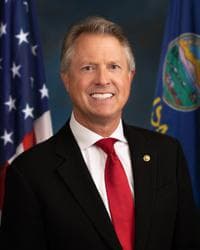

Roger Marshall

Roger Marshall

Republican · U.S. Senator for Kansas

75 sponsored · 331 cosponsored

Age 66 · In office since 2021, in Congress since 2017

Contact their office: (202) 224-4774 · 479A Russell Senate Office Building, Washington, DC 20510 · Official website

What they got done

Most bills never get a vote. These are the ones they wrote or backed that got somewhere.

Became law (6)

  • Roger Marshall (R-KS)

    Their bill

    Retire through Ownership Act

    S. 2403 Labor and Employment

    A Republican bill with 1 Democratic cosponsor. See the voting map.

    Became law

    The House voted 401–14 on Sep 16.

    This bill amends the Employee Retirement Income Security Act of 1974. The main purpose is to provide a clear definition of adequate consideration for certain closely held stock.

    Yes· 2 of 4

    • Scored +4

      Would people over 65 be better off under this?

      The act benefits retirees by clarifying the valuation process for employee stock ownership plans.

    • Scored +4

      Would retired people be better off under this?

      Improving the clarity of stock valuation for ESOPs supports more stable retirement transitions.

    The opposite

    • Scored -2

      Does this give the federal government more power?

      The bill restricts the expansion of the Secretary's regulatory authority.

  • Roger Marshall (R-KS)

    Their bill

    Whole Milk for Healthy Kids Act of 2025

    S. 222 Agriculture and Food

    A Republican bill with 5 Democratic cosponsors.

    Became law

    This bill aims to amend the Richard B. Russell National School Lunch Act. This legislation allows schools participating in the school lunch program to offer whole milk, whether organic or non-organic.

    Yes· 2 of 6

    • Scored +5

      Would children be better off under this?

      The bill increases the variety of milk options available to students and enhances food allergy safety training for schools.

    • Scored +5

      Would students be better off under this?

      Students benefit from expanded milk choices and improved food allergy safety protocols in their schools.

    No question was scored the opposite.

  • Susan Collins (R-ME)

    Cosponsored

    Kay Hagan Tick Reauthorization Act

    S. 2398 Health

    A Republican bill with 15 Democratic cosponsors.

    Became law

    This bill is designed to reauthorize specific programs related to vector-borne diseases. The legislation amends the Public Health Service Act to update the timeline for several provisions.

    Yes· 2 of 11

    • Scored +3

      Does this make the country readier for the next outbreak?

      The bill enhances support for health departments and regional centers that address vector-borne diseases, improving pandemic preparedness related to those diseases.

    • Scored +2

      Would children be better off under this?

      Preventing and treating vector-borne diseases has a small positive impact on children's health.

    No question was scored the opposite.

And 3 more on their Sponsored and Cosponsored pages.

Passed one chamber (7)

Halfway: the other chamber has to pass the same text before it can go to the President. One of these was stopped after it passed.

  • John Curtis (R-UT)

    Cosponsored

    Wildfire Emissions Prevention Act of 2026

    S. 5045 Environmental Protection

    A Republican bill with 4 Democratic cosponsors.

    Passed the Senate

    With no one objecting, no names recorded

    Now: kept ready for the floor instead of being sent to a committee · Oct 5

    This bill changes how air quality monitoring handles prescribed fires under the Clean Air Act. The bill includes prescribed fires in the definition of exceptional events.

    Yes· 2 of 9

    • Scored +5

      Does this better protect air, water and wildlife?

      The bill improves air quality management and smoke hazard mitigation through new grant programs and regulatory clarity.

    • Scored +4

      Would Native Americans be better off under this?

      The bill specifically includes cultural burning activities determined by Indian tribes in its definition of prescribed fire.

    No question was scored the opposite.

  • Ted Cruz (R-TX)

    Cosponsored

    Falun Gong and Victims of Forced Organ Harvesting Protection Act

    S. 4009 International Affairs

    A Republican bill with 5 Democratic cosponsors.

    Passed the Senate

    With no one objecting, no names recorded

    Now: kept ready for the floor instead of being sent to a committee · Oct 5

    This bill targets forced organ harvesting in the People's Republic of China. It requires the President to put sanctions on foreign people who take part in or help with forced organ harvesting in China.

    Yes· 2 of 5

    • Scored +8

      Does this protect the freedom to practise a religion?

      Protects practitioners of Falun Gong and others targeted for religious beliefs from forced organ harvesting.

    • Scored +7

      Would Asian Americans be better off under this?

      Specifically protects targeted groups in China, including Uyghurs and Falun Gong practitioners.

    The opposite

    • Scored -2

      Would business owners be better off under this?

      Potential legal risks for U.S. persons and entities interacting with sanctioned foreign property.

  • Eric Schmitt (R-MO)

    Cosponsored

    National Plan for Epilepsy Act

    S. 494 Health

    A Republican bill with 19 Democratic cosponsors.

    Passed the Senate

    With no one objecting, no names recorded

    Now: kept ready for the floor instead of being sent to a committee · Aug 10

    This bill directs the Secretary of Health and Human Services to review and update existing Federal programs related to epilepsy. This review covers research, prevention, early identification, diagnosis, and treatment.

    Yes· 2 of 4

    • Scored +5

      Would people with disabilities be better off under this?

      The bill focuses on improving diagnosis, treatment, and quality of life for those with epilepsy, a disabling condition.

    • Scored +5

      Does this expand the rights of people with disabilities?

      The bill aims to improve health outcomes, functionality, and quality of life for people living with epilepsy.

    No question was scored the opposite.

And 4 more on their Sponsored and Cosponsored pages.

Resolutions of theirs that were adopted (3)

A resolution is a chamber speaking for itself — a position, a rule or a tribute. Adopting it puts it into effect, but it is not a law.

Still waiting, of the 75 bills they wrote: 2 cleared committee and wait for a first vote, 68 are in committee. Committee is where most bills end, whoever writes them — silence there, not a vote, is the usual way a bill dies.

What their bills would do

Every bill is scored against plain yes-or-no questions. These count their bills — the ones they wrote and the ones they cosponsored — by how each question was answered: yes, or the opposite. Open one to see those bills, where each stands, and why it was scored that way. Scores are made by AI ().

Who their bills would affect

What else they would change

How they voted lately

Their latest votes that decided something, and what each measure would do.

  • U.S. Senate · Nov 20, 2026

    Bipartisan American Affordability and Jobs Act of 2026

    The vote on whether to pass the bill This is the real decision in this chamber. Passing here sends the bill to the other chamber, which must pass it too before it can go to the President.

    Their vote Yea

    This bill aims to accelerate energy projects and infrastructure development by reforming federal environmental reviews, permitting procedures, and court review rules.

    • Scored +5

      Would women be better off under this?

      By protecting settlement money from taxation, the bill provides greater financial security for women survivors of sexual violence.

  • U.S. Senate · Nov 19, 2026

    Directing the President, pursuant to section 5(c) of the War Powers Resolution, to remove United States Armed Forces from hostilities with Iran.

    The vote on whether to adopt the resolution A resolution is one chamber speaking for itself — setting its own rules, taking a position, honouring someone — and it never goes to the President. Agreeing to it is the whole decision.

    Their vote Nay

    This resolution directs the President to remove United States Armed Forces from hostilities with Iran. It uses the authority found under section 5(c) of the War Powers Resolution.

    • Scored +4

      Does this favour talking over confrontation abroad?

      Ending hostilities can pave the way for diplomatic resolutions between the US and Iran.

    • Scored -5

      Does this give the federal government more power?

      The bill limits the Executive branch's power to engage in military hostilities without Congressional approval.

  • U.S. Senate · Nov 18, 2026

    In the nature of a substitute.

    A vote on a proposed change to the bill A vote on one change, not on the bill. A bill can collect dozens of these, and losing one does not stop it.

    Their vote Yea

    This amendment amends the Internal Revenue Code of 1986 to exclude from gross income any damages, other than punitive damages, received on account of sexual acts or sexual contact.

Every vote they cast, and how often they missed one →

On the President’s nominees

The President chooses federal judges, cabinet secretaries, ambassadors and military officers, and the Senate decides whether each one gets the job. Most are confirmed by voice vote, which records no one’s position. In the 119th Congress (2025–2026) the Senate put 228 confirmations to a recorded vote, and confirmed every one.

Their votes to confirm, of 228 recorded votes

  • Yes: 226
  • No: None
  • Missed: 2

Those votes covered 596 nominees, because the Senate sometimes confirms many in a single vote.

How busy they have been

How many bills they have put their name to over time — volume, not results: most bills never get a vote.

Legislative activity over time