Bill · S. 5045· Senate(119-S-5045)
Wildfire Emissions Prevention Act of 2026
- Introduced
- 7/21/2026
- Last activity
- 10/5/2026 — Held at the desk.
- Sponsored by
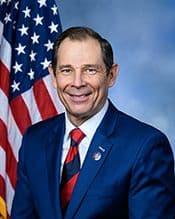
- John Curtis
- Cosponsors
- - 3 - 4
- Introduced
- Passed Senate
- Awaiting House
What this bill would do
This bill is called the Wildfire Emissions Prevention Act of 2026. It changes how air quality monitoring handles prescribed fires under the Clean Air Act. The bill includes prescribed fires in the definition of exceptional events. It requires the Environmental Protection Agency (EPA) to revise regulations to reduce the burden and cost for States to make exceptional event demonstrations. It also establishes a Smoke Ready Communities Program to provide competitive grants for addressing wildfire smoke hazards in community and school buildings. Finally, it sets rules for State petitions and timelines for EPA approval.
Yes· 3 of 9
Does this better protect air, water and wildlife?+5
The bill improves air quality management and smoke hazard mitigation through new grant programs and regulatory clarity.
Does this better protect public land such as parks and forests?+4
The bill facilitates prescribed fire as a tool for managing wildland fuels and reducing wildfire magnitude.
Would Native Americans be better off under this?+4
The bill specifically includes cultural burning activities determined by Indian tribes in its definition of prescribed fire.
The opposite
No question was scored the opposite.
Who it would affect, and how
Potential Positive Impacts for People
-
Reduced Regulatory Burdens for States: Under Section 2(a)(2), amending Section 319(b)(2)(B)(i)(I) of the Clean Air Act, the Administrator must revise regulations to reduce the cost and burden for States to demonstrate an exceptional event. This is positive because it helps local governments save resources when dealing with air quality rules related to prescribed fires.
-
Clearer Rules for Prescribed Fires: Under Section 2(a)(1), amending Section 319(b)(1)(A) of the Clean Air Act, prescribed fires and cultural burning activities by an Indian tribe are explicitly included in the definition of exceptional events. This is positive because it gives clear legal recognition to controlled burns used for land management and tribal traditions.
-
Automatic Approval Timelines for State Petitions: Under Section 2(a)(3), amending Section 319(b)(3)(B)(v) of the Clean Air Act, a State petition will be deemed approved if the Administrator does not act on it within one year. This is positive because it holds federal officials accountable and prevents state requests from sitting indefinitely.
-
Grants for Safer Community Buildings: Under Section 3(a), the Administrator may award competitive grants for assessing, preventing, controlling, or abating wildfire smoke hazards in community buildings, including school buildings. This is positive because it helps protect people, especially children, from dangerous smoke.
-
Cost-Share Waivers for Economically Distressed Communities: Under Section 3(c)(2), the Administrator may waive the normal cost-share requirement if a facility is located in an economically distressed community. This is positive because it ensures poorer areas are not left behind due to a lack of local matching funds.
Potential Negative Impacts for People
- Limitations on Grant Distribution: Under Section 3(d), not more than 25 percent of the available grant money may be awarded to recipients in any single State during each fiscal year. This might be considered negative because it restricts funding even if one State has a much higher need for wildfire smoke protection in its schools and community buildings than others.
Groups and Interests Ranking
Every group the model scored this bill for, from -10 to +10. Hover a score for the reason it gave.
- Environment Energy And Infrastructure
- Improves Environmental Protections+5Improves Public Land Management+4Improves Disaster Relief And F E M A+3
- Demographic And Interest Groups
- Good For Native Americans+4Good For Children+2Good For Low Income Households+2Good For Students+2
- Governance And Ideology
- Increase States Rights+3
- Education And Technology
- Increases Public School Funding+2
The version one chamber actually passed
What changed from Reported to Senate: No change to the wording. Only the printed details that record the bill’s progress, such as the heading and dates, are different.
- 10/5/2026
- Message on Senate action sent to the House.
- Held at the desk.
- Received in the House.
- 9/29/2026
- Passed/agreed to in Senate: Passed Senate without amendment by Unanimous Consent. (consideration: CR S5148-5150; text: CR S5149-5150)
- Passed Senate without amendment by Unanimous Consent. (consideration: CR S5148-5150; text: CR S5149-5150)
- 9/16/2026
- Committee on Environment and Public Works. Ordered to be reported without amendment favorably.
- Committee on Environment and Public Works. Reported by Senator Capito without amendment. Without written report.
- Placed on Senate Legislative Calendar under General Orders. Calendar No. 620.
- 9/15/2026
- 2 Cosponsors added.
- 7/21/2026
- Read twice and referred to the Committee on Environment and Public Works.
- 5 Cosponsors added.
- Introduced in Senate
 John Boozman
Republican · Arkansas
 Shelley Capito
Republican · West Virginia
 Ruben Gallego
Democrat · Arizona
 Mark Kelly
Democrat · Arizona
 Jeff Merkley
Democrat · Oregon
 Roger Marshall
Republican · Kansas
 Alex Padilla
Democrat · California