Bill · H.Con.Res. 93· House(119-HCONRES-93)
Directing the President, pursuant to section 5(c) of the War Powers Resolution, to remove United States Armed Forces from hostilities with Iran.
- Introduced
- 4/28/2026
- Last activity
- 9/16/2026 — Received in the Senate and referred to the Committee on Foreign Relations.
- Sponsored by
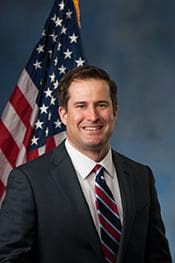
- Seth Moulton
- Cosponsors
- - 14 - 0
- Introduced
- Agreed to by the House
- In Senate committee
A concurrent resolution is how the House and the Senate settle something they do together, such as a budget plan or a joint session. It is adopted once both chambers agree to it, and that puts it into effect; it is not a law, so it does not go to the President.
What this bill would do
This resolution directs the President to remove United States Armed Forces from hostilities with Iran. It uses the authority found under section 5(c) of the War Powers Resolution. An exception is made for troops necessary to defend the U.S. or its allies from an imminent attack. This defense exception requires the President to fully comply with section 5(b) of the War Powers Resolution. The restriction applies unless there is an explicit declaration of war or a specific authorization for the use of military force against Iran passed by Congress.
Yes· 3 of 7
Does this favour talking over confrontation abroad?+4
Ending hostilities can pave the way for diplomatic resolutions between the US and Iran.
Does this reduce what is spent on the military?+3
Directing the removal of forces from hostilities generally reduces the cost of military operations.
Does this reduce what the federal government spends?+2
Removal of forces from active hostilities typically reduces operational military expenditures.
The opposite
Does this give the federal government more power?-5
The bill limits the Executive branch's power to engage in military hostilities without Congressional approval.
What Congress actually voted on
One recorded vote has been taken on this bill.
- The House: the vote on whether to adopt the resolutionPassed 220–204
A resolution is one chamber speaking for itself — setting its own rules, taking a position, honouring someone — and it never goes to the President. Agreeing to it is the whole decision.
09/15/2026 · Roll call 307 · recorded as “On Agreeing to the Resolution”
Who it would affect, and how
Potential Positive Impacts for People
- Increases Congressional Oversight: The resolution holds our elected officials accountable by using congressional power under section 5(c) of the War Powers Resolution to direct the removal of troops from unauthorized hostilities.
Potential Negative Impacts for People
- Limits Immediate Defense Actions: The text restricts the use of the Armed Forces against Iran unless explicitly authorized by war, specific force authorization, or when necessary to defend against an imminent attack under strict compliance rules, which could potentially constrain rapid military responses.
Groups and Interests Ranking
Every group the model scored this bill for, from -10 to +10. Hover a score for the reason it gave.
- National Security And Foreign Policy
- Improves Diplomatic Engagement+4Reduces Military Spending+3
- Economy And Finance
- Reduces Government Spending+2Improves Fiscal Responsibility+1Reduces National Debt+1
- Governance And Ideology
- Improves Government Transparency+2Increases Federal Power-5
- Demographic And Interest Groups
- Good For Young Adults+2
- 9/16/2026
- Received in the Senate and referred to the Committee on Foreign Relations.
- 9/15/2026
- Motion to reconsider laid on the table Agreed to without objection.
- Passed/agreed to in House: On agreeing to the resolution Agreed to by the Yeas and Nays: 220 - 204 (Roll no. 307). (text: CR H5609)
- On agreeing to the resolution Agreed to by the Yeas and Nays: 220 - 204 (Roll no. 307). (text: CR H5609)
- Considered as unfinished business. (consideration: CR H5826-5827)
- 9/14/2026
- POSTPONED PROCEEDINGS - At the conclusion of debate on H. Con. Res. 93, the Chair put the question on agreeing to the resolution and by voice vote, announced the noes had prevailed. Mr. Moulton demanded the yeas and nays and the Chair postponed further proceedings until a time to be announced.
- The previous question was ordered pursuant to a previous order of the House.
- DEBATE - The House proceeded with one hour of debate on H. Con. Res. 93.
- Considered pursuant to a previous order of the House (consideration: CR H5609-5615)
- Consideration initiated pursuant to a previous order of the House.
- ORDER OF PROCEDURE - Mr. Mast asked unanimous consent that, it be in order at any time to consider H. Con. Res. 93 in the House if called up by the chair of the Committee on Foreign Affairs or his designee; that the concurrent resolution be considered as read; and that the previous question be considered as ordered on the concurrent resolution to adoption without intervening motion except for one hour of debate equally divided and controlled by Representative Mast of Florida and Representative Moulton of Massachusetts or their respective designees. Agreed to without objection.
- 1 Cosponsor added.
- 6/10/2026
- 1 Cosponsor added.
- 6/9/2026
- 1 Cosponsor added.
- 4/30/2026
- 1 Cosponsor added.
- 4/29/2026
- 2 Cosponsors added.
- 4/28/2026
- Submitted in House
- Referred to the House Committee on Foreign Affairs.
- 8 Cosponsors added.
7 bills Congress.gov lists as related to this one — companions in the other chamber, earlier versions, and bills this one absorbed or was folded into.
- 119-HCONRES-40: Directing the President, pursuant to section 5(c) of the War Powers Resolution, to remove United States Armed Forces from hostilities with Iran.
- 119-HCONRES-75: Directing the President, pursuant to section 5(c) of the War Powers Resolution, to remove the United States Armed Forces from hostilities against the Islamic Republic of Iran.
- 119-HCONRES-86: Directing the President, pursuant to section 5(c) of the War Powers Resolution, to remove United States Armed Forces from hostilities with Iran.
- 119-HCONRES-89: Directing the President, pursuant to section 5(c) of the War Powers Resolution, to remove United States Armed Forces from hostilities with Iran.
- 119-HCONRES-103: Directing the President, pursuant to section 5(c) of the War Powers Resolution, to remove United States Armed Forces from hostilities with Iran.
- 119-HCONRES-110: Directing the President, pursuant to section 5(c) of the War Powers Resolution, to remove United States Armed Forces from hostilities with Iran.
- 119-HCONRES-117: Directing the President, pursuant to section 5(c) of the War Powers Resolution, to remove United States Armed Forces from hostilities with Iran.
 Jake Auchincloss
Democrat · Massachusetts
 Salud Carbajal
Democrat · California
 Jason Crow
Democrat · Colorado
 Jared Golden
Democrat · Maine
 Maggie Goodlander
Democrat · New Hampshire
 Chrissy Houlahan
Democrat · Pennsylvania
 Ted Lieu
Democrat · California
 Jimmy Panetta
Democrat · California
 Mike Quigley
Democrat · Illinois
 Patrick Ryan
Democrat · New York
 Robert Scott
Democrat · Virginia
 Mike Thompson
Democrat · California
 Derek Tran
Democrat · California
 Eugene Vindman
Democrat · Virginia