Bill · H.Con.Res. 40· House(119-HCONRES-40)
Directing the President, pursuant to section 5(c) of the War Powers Resolution, to remove United States Armed Forces from hostilities with Iran.
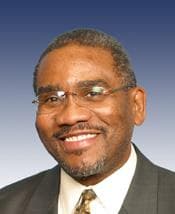
- Introduced
- 6/23/2025
- Last activity
- 4/16/2026 — Motion to reconsider laid on the table Agreed to without objection.
- Sponsored by
- Gregory Meeks
- Cosponsors
- - 90 - 0
- Introduced
- Failed
A concurrent resolution is how the House and the Senate settle something they do together, such as a budget plan or a joint session. It is adopted once both chambers agree to it, and that puts it into effect; it is not a law, so it does not go to the President.
What this bill would do
This resolution directs the President to remove United States Armed Forces from hostilities against Iran. It relies on section 5(c) of the War Powers Resolution to make this happen. The removal does not apply to military elements needed to defend the United States, its allies, or its partners from an imminent attack. To use forces for defense against an imminent attack, the President must fully comply with section 5(b) of the War Powers Resolution. Furthermore, the restriction does not apply if Congress explicitly authorizes the military action through a declaration of war or a specific authorization for the use of military force against Iran.
Yes· 3 of 4
Does this reduce what is spent on the military?+5
The resolution de-escalates active hostilities, which likely reduces the immediate scope of military engagement and associated costs.
Does this favour talking over confrontation abroad?+5
Removing troops from hostilities creates a more stable environment for potential diplomatic solutions.
Would veterans be better off under this, taking everything together?+5
Reducing active hostilities potentially reduces the risk of combat-related harm for service members.
The opposite
No question was scored the opposite.
What Congress actually voted on
One recorded vote has been taken on this bill.
- The House: the vote on whether to adopt the resolutionFailed 213–214
A resolution is one chamber speaking for itself — setting its own rules, taking a position, honouring someone — and it never goes to the President. Agreeing to it is the whole decision.
04/16/2026 · Roll call 114 · recorded as “On Agreeing to the Resolution”
Who it would affect, and how
Potential Positive Impacts for People
- Restricting Unauthorized Military Conflict: This resolution directs the President to remove United States Armed Forces from hostilities against Iran, which ensures that our elected officials in Congress are exercising their constitutional role in deciding when our troops are sent into conflict.
Potential Negative Impacts for People
- Potential Limits on Rapid Defense: The text allows forces to defend the U.S. or its allies from imminent attack only if the President fully complies with section 5(b) of the War Powers Resolution, which could potentially place bureaucratic hurdles in the way of rapid military decision-making during an emergency.
Groups and Interests Ranking
Every group the model scored this bill for, from -10 to +10. Hover a score for the reason it gave.
- National Security And Foreign Policy
- Improves Diplomatic Engagement+5Reduces Military Spending+5Improves International Alliances+3
- Demographic And Interest Groups
- Good For Veterans+5
- 4/16/2026
- Motion to reconsider laid on the table Agreed to without objection.
- Failed of passage/not agreed to in House On agreeing to the resolution Failed by the Yeas and Nays: 213 - 214, 1 Present (Roll no. 114).
- On agreeing to the resolution Failed by the Yeas and Nays: 213 - 214, 1 Present (Roll no. 114).
- The previous question was ordered pursuant to a previous order of the House.
- DEBATE - Pursuant to a previous order, the House proceeded with one hour of debate on H. Con. Res. 40.
- Considered pursuant to a previous order. (consideration: CR H2929-2937; text: CR H2929)
- Consideration initiated pursuant to a previous order.
- 4/15/2026
- ORDER OF PROCEDURE - Mr. Mast asked unanimous consent that it be in order at any time to consider H. Con. Res. 40 in the House if called up by the chair of the Committee on Foreign Affairs or his designee; that the concurrent resolution be considered as read; and that the previous question be considered as ordered on the concurrent resolution to adoption without intervening motion except for one hour of debate equally divided and controlled by Representative Mast of Florida and Representative Meeks of New York, or their respective designees. Agreed to without objection.
- 1 Cosponsor added.
- 4/14/2026
- 3 Cosponsors added.
- 4/9/2026
- 1 Cosponsor added.
- 3/4/2026
- 2 Cosponsors added.
- 2/23/2026
- 3 Cosponsors added.
- 8/5/2025
- 1 Cosponsor added.
- 7/23/2025
- 1 Cosponsor added.
- 7/15/2025
- 2 Cosponsors added.
- 7/14/2025
- 1 Cosponsor added.
- 7/10/2025
- 2 Cosponsors added.
- 7/2/2025
- 1 Cosponsor added.
- 6/30/2025
- 4 Cosponsors added.
- 6/27/2025
- 4 Cosponsors added.
- 6/26/2025
- 13 Cosponsors added.
- 6/25/2025
- 20 Cosponsors added.
- 6/24/2025
- 29 Cosponsors added.
- 6/23/2025
- Submitted in House
- Referred to the House Committee on Foreign Affairs.
- 2 Cosponsors added.
7 bills Congress.gov lists as related to this one — companions in the other chamber, earlier versions, and bills this one absorbed or was folded into.
- 119-HCONRES-75: Directing the President, pursuant to section 5(c) of the War Powers Resolution, to remove the United States Armed Forces from hostilities against the Islamic Republic of Iran.
- 119-HCONRES-86: Directing the President, pursuant to section 5(c) of the War Powers Resolution, to remove United States Armed Forces from hostilities with Iran.
- 119-HCONRES-89: Directing the President, pursuant to section 5(c) of the War Powers Resolution, to remove United States Armed Forces from hostilities with Iran.
- 119-HCONRES-93: Directing the President, pursuant to section 5(c) of the War Powers Resolution, to remove United States Armed Forces from hostilities with Iran.
- 119-HCONRES-103: Directing the President, pursuant to section 5(c) of the War Powers Resolution, to remove United States Armed Forces from hostilities with Iran.
- 119-HCONRES-110: Directing the President, pursuant to section 5(c) of the War Powers Resolution, to remove United States Armed Forces from hostilities with Iran.
- 119-HCONRES-117: Directing the President, pursuant to section 5(c) of the War Powers Resolution, to remove United States Armed Forces from hostilities with Iran.
 Gabe Amo
Democrat · Rhode Island
 Yassamin Ansari
Democrat · Arizona
 Julia Brownley
Democrat · California
 Ami Bera
Democrat · California
 Donald Beyer
Democrat · Virginia
 Nikki Budzinski
Democrat · Illinois
 Ed Case
Democrat · Hawaii
 Steve Cohen
Democrat · Tennessee
 Joe Courtney
Democrat · Connecticut
 Salud Carbajal
Democrat · California
 Sean Casten
Democrat · Illinois
 Angie Craig
Democrat · Minnesota
 Jason Crow
Democrat · Colorado
 Gilbert Cisneros
Democrat · California
 Troy Carter
Democrat · Louisiana
 Sheila Cherfilus-McCormick
Democrat · Florida
 Diana DeGette
Democrat · Colorado
 Rosa DeLauro
Democrat · Connecticut
 Lloyd Doggett
Democrat · Texas
 Suzan DelBene
Democrat · Washington
 Debbie Dingell
Democrat · Michigan
 Adriano Espaillat
Democrat · New York
 Sarah Elfreth
Democrat · Maryland
 Cleo Fields
Democrat · Louisiana
 Bill Foster
Democrat · Illinois
 Lizzie Fletcher
Democrat · Texas
 Al Green
Democrat · Texas
 Jimmy Gomez
Democrat · California
 Sylvia Garcia
Democrat · Texas
 Robert Garcia
Democrat · California
 Daniel Goldman
Democrat · New York
 Maggie Goodlander
Democrat · New Hampshire
 James Himes
Democrat · Connecticut
 Jared Huffman
Democrat · California
 Jahana Hayes
Democrat · Connecticut
 Glenn Ivey
Democrat · Maryland
 Henry Johnson
Democrat · Georgia
 Jonathan Jackson
Democrat · Illinois
 Julie Johnson
Democrat · Texas
 William Keating
Democrat · Massachusetts
 Raja Krishnamoorthi
Democrat · Illinois
 Sydney Kamlager-Dove
Democrat · California
 Teresa Leger Fernandez
Democrat · New Mexico
 John Larson
Democrat · Connecticut
 Stephen Lynch
Democrat · Massachusetts
 Mike Levin
Democrat · California
 Sam Liccardo
Democrat · California
 James McGovern
Democrat · Massachusetts
 Kweisi Mfume
Democrat · Maryland
 Gwen Moore
Democrat · Wisconsin
 Doris Matsui
Democrat · California
 Seth Moulton
Democrat · Massachusetts
 Seth Magaziner
Democrat · Rhode Island
 Kevin Mullin
Democrat · California
 John Mannion
Democrat · New York
 Kristen McDonald Rivet
Democrat · Michigan
 Sarah McBride
Democrat · Delaware
 Dave Min
Democrat · California
 Jerrold Nadler
Democrat · New York
 Richard Neal
Democrat · Massachusetts
 Joe Neguse
Democrat · Colorado
 Johnny Olszewski
Democrat · Maryland
 Nancy Pelosi
Democrat · California
 Chellie Pingree
Democrat · Maine
 Scott Peters
Democrat · California
 Jimmy Panetta
Democrat · California
 Chris Pappas
Democrat · New Hampshire
 Brittany Pettersen
Democrat · Colorado
 Mike Quigley
Democrat · Illinois
 Deborah Ross
Democrat · North Carolina
 Emily Randall
Democrat · Washington
 Robert Scott
Democrat · Virginia
 Adam Smith
Democrat · Washington
 Janice Schakowsky
Democrat · Illinois
 Linda Sánchez
Democrat · California
 Terri Sewell
Democrat · Alabama
 Greg Stanton
Democrat · Arizona
 Melanie Stansbury
Democrat · New Mexico
 Eric Sorensen
Democrat · Illinois
 Andrea Salinas
Democrat · Oregon
 Suhas Subramanyam
Democrat · Virginia
 Mike Thompson
Democrat · California
 Dina Titus
Democrat · Nevada
 Jill Tokuda
Democrat · Hawaii
 Derek Tran
Democrat · California
 Lauren Underwood
Democrat · Illinois
 Marc Veasey
Democrat · Texas
 Maxine Waters
Democrat · California
 Nikema Williams
Democrat · Georgia
 James Walkinshaw
Democrat · Virginia