
Shelley Capito (R-WV)· Nov 18, 2026
S.Amdt. 6883: In the nature of a substitute.
Adopted
6927

Lloyd Smucker (R-PA)
A Republican bill with 2 Democratic cosponsors · See all 3 cosponsors
Last activity — Message on Senate action sent to the House.
Passed both chambers, not yet sent to the President
Both the House and the Senate have passed it, though not necessarily the same text.
If the two chambers passed identical wording, the final copy is being prepared for the President. If they did not, one chamber must accept the other's version or the two negotiate a single one — nothing goes to the President until the text is identical.
Its path through Congress
The House by voice vote (members called out yes or no together): no member's position on it was recorded.
The Bipartisan American Affordability and Jobs Act of 2026 aims to accelerate energy projects and infrastructure development by reforming federal environmental reviews, permitting procedures, and court review rules. It sets stricter deadlines for environmental assessments and impact statements across several key federal agencies. The bill also modifies rules for transmission planning, clean water permits, endangered species consultations, and historic preservation reviews. Additionally, it contains provisions to address wildfire emissions and clean up brownfield sites. Finally, it excludes non-punitive damages received for sexual acts or sexual contact from gross income for tax purposes.
Would women be better off under this?
By protecting settlement money from taxation, the bill provides greater financial security for women survivors of sexual violence.
Does this narrow the gap between how men and women are treated?
The bill provides financial relief to survivors of sexual misconduct, which disproportionately affects women.
Would households on low incomes be better off under this?
Excluding damages from gross income provides more net financial support to low-income survivors.
No question was scored the opposite.
5 recorded votes have been taken on this bill. One of them decided something; the rest moved it along.
11/19/2026 · Roll call 270 · recorded as “On Passage of the Bill H.R. 2347”
11/09/2026 · Roll call 257 · recorded as “On Cloture on the Motion to Proceed H.R. 2347”
11/10/2026 · Roll call 258 · recorded as “On the Motion to Proceed H.R. 2347”
11/18/2026 · Roll call 266 · recorded as “On the Motion (Motion to Waive All Applicable Budgetary Discipline Re: H.R. 2347)”
11/18/2026 · Roll call 268 · recorded as “On the Cloture Motion H.R. 2347”
Tax Relief for Survivors: Division C, Section 3001 excludes non-punitive damages received on account of sexual acts or sexual contact from gross income, ensuring that victims do not have to pay federal income taxes on these settlements or awards.
Streamlined Economic Development: Division A, Title I, Section 1106 establishes firm deadlines for federal agencies to complete environmental assessments and environmental impact statements, which could reduce red tape and speed up the deployment of critical infrastructure and jobs.
Community Assistance Funding: Division A, Title VI, Section 1601 establishes the Smoke Ready Communities Program to provide competitive grants for the assessment, prevention, control, or abatement of wildfire smoke hazards in community and school buildings.
Brownfields Revitalization: Division A, Title VI, Section 1602 increases funding authorizations and grant limits for the cleanup and reuse of brownfield sites, which helps communities redevelop blighted properties and former military installations.
Shorter Windows for Legal Challenges: Division A, Title I, Section 1110 and Division A, Title III, Section 1304 shorten the statute of limitations to 150 days for filing claims seeking judicial review of certain authorizations and environmental reviews, which could burden individuals or groups seeking to challenge agency actions in court.
Reduced Public Input Timeframes: Division A, Title I, Section 1106 caps public comment periods for environmental impact statements at 45 to 60 days, potentially limiting the time everyday citizens and local communities have to review and comment on major federal projects.
Every group the model scored this bill for, from -10 to +10. Tap or hover a score for the reason it gave.
The changes one chamber made to the other chamber’s version, as it passed them
What changed from Placed on Calendar Senate: Almost all of the text was replaced in this version, so it reads as a new bill rather than as a set of changes.
In the queue for a floor vote, with no date set
Shelley Capito (R-WV)· Nov 18, 2026
Adopted
6927
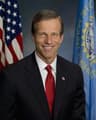
John Thune (R-SD)· Nov 18, 2026
Tabled
By voice vote, no names recorded
John Thune (R-SD)· Nov 18, 2026
Withdrawn
SA 6885 fell when SA 6884 tabled.
John Thune (R-SD)· Nov 18, 2026
Tabled
By voice vote, no names recorded
John Thune (R-SD)· Nov 18, 2026
Withdrawn
SA 6887 fell when SA 6886 tabled.
John Thune (R-SD)· Nov 11, 2026
Offered, and not voted on yet.
Considered by Senate. (consideration: CR S5567)
John Thune (R-SD)· Nov 11, 2026
Offered, and not voted on yet.
Considered by Senate. (consideration: CR S5567)
John Thune (R-SD)· Nov 11, 2026
Offered, and not voted on yet.
Considered by Senate. (consideration: CR S5567)
One bill Congress.gov lists as related to this one — companions in the other chamber, earlier versions, and bills this one absorbed or was folded into.

Democrat · New York

Democrat · Wisconsin

Republican · New York