Bill · S. 475· Senate(119-S-475)
Alternatives to PAIN Act
- Introduced
- 2/6/2025
- Last activity
- 2/6/2025 — Read twice and referred to the Committee on Finance.
- Sponsored by
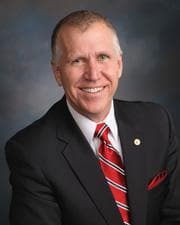
- Thomas Tillis
- Cosponsors
- - 17 - 18
- Introduced
- In Committee
What this bill would do
The "Alternatives to Prevent Addiction In the Nation Act" seeks to amend the Social Security Act regarding Medicare Part D. It aims to ensure easier access to specific non-opioid pain management drugs. For plan years starting January 1, 2026, the bill changes how these drugs are covered by removing deductibles and placing them on the lowest cost-sharing tier. The bill also targets specific drugs approved by the FDA for acute or postoperative pain that do not act on opioid receptors. Additionally, it prohibits insurance plans from using step therapy or prior authorization for these specific drugs.
Yes· 3 of 8
Does this lower the price of prescription medicines?+7
The bill lowers out-of-pocket costs for specific non-opioid pain management drugs by removing deductibles and placing them on the lowest cost-sharing tier.
Does this make health care easier to get in general?+6
The bill increases healthcare access by prohibiting prior authorization and step therapy for qualifying non-opioid pain management drugs.
Does this do more about addiction and overdose deaths?+5
The bill addresses the opioid crisis by providing financial and administrative incentives to use non-opioid alternatives for acute pain.
The opposite
No question was scored the opposite.
Who it would affect, and how
Potential Positive Impacts for People
-
Lower out-of-pocket costs for pain management: For plan years starting January 1, 2026, the deductible will not apply to qualifying non-opioid pain management drugs, and these drugs will be placed on the lowest cost-sharing tier (Section 2(a)(1)(A)(i-ii)).
-
Increased accessibility for low-income individuals: The bill applies these cost-sharing and deductible protections to low-income individuals under the Social Security Act (Section 2(b)(1)).
-
Removal of insurance hurdles: Prescription drug plans or MA-PD plans are prohibited from requiring prior authorization before a drug is provided (Section 3(1)(2)(A)(ii)).
-
Prevention of forced opioid use: The bill prohibits step therapy requirements that would force an individual to use an opioid before they can receive a qualifying non-opioid pain management drug (Section 3(1)(2)(A)(i)).
Potential Negative Impacts for People
- Strict eligibility requirements for drugs: To qualify for these benefits, a drug must have an FDA-approved label for postoperative or acute pain, must not act on opioid receptors, must have no therapeutically equivalent product sold in the U.S., and must have a monthly wholesale acquisition cost that does not exceed a specific threshold set by the Secretary (Section 2(a)(1)(B)).
Groups and Interests Ranking
Every group the model scored this bill for, from -10 to +10. Hover a score for the reason it gave.
- Healthcare
- Reduces Prescription Drug Costs+7Improves Healthcare Access+6Improves Opioid Crisis Response+5Increases Medicare Funding+3
- Demographic And Interest Groups
- Good For Seniors+5Good For Low Income Households+4Good For Veterans+2
- Social Issues And Justice
- Improves Poverty Reduction+2
- 5/20/2026
- 2 Cosponsors added.
- 3/19/2026
- 2 Cosponsors added.
- 2/3/2026
- 2 Cosponsors added.
- 12/1/2025
- 1 Cosponsor added.
- 11/19/2025
- 1 Cosponsor added.
- 10/7/2025
- 2 Cosponsors added.
- 6/10/2025
- 2 Cosponsors added.
- 4/10/2025
- 2 Cosponsors added.
- 4/9/2025
- 2 Cosponsors added.
- 3/12/2025
- 2 Cosponsors added.
- 2/20/2025
- 2 Cosponsors added.
- 2/6/2025
- Read twice and referred to the Committee on Finance.
- 16 Cosponsors added.
- Introduced in Senate
One bill Congress.gov lists as related to this one — companions in the other chamber, earlier versions, and bills this one absorbed or was folded into.
 John Boozman
Republican · Arkansas
 Marsha Blackburn
Republican · Tennessee
 Michael Bennet
Democrat · Colorado
 Richard Blumenthal
Democrat · Connecticut
 Cory Booker
Democrat · New Jersey
 Jim Banks
Republican · Indiana
 Ted Budd
Republican · North Carolina
 Katie Britt
Republican · Alabama
 Shelley Capito
Republican · West Virginia
 John Cornyn
Republican · Texas
 Christopher Coons
Democrat · Delaware
 Catherine Cortez Masto
Democrat · Nevada
 Steve Daines
Republican · Montana
 Tammy Duckworth
Democrat · Illinois
 Deb Fischer
Republican · Nebraska
 Ruben Gallego
Democrat · Arizona
 Mazie Hirono
Democrat · Hawaii
 Cindy Hyde-Smith
Republican · Mississippi
 Jon Husted
Republican · Ohio
 James Justice
Republican · West Virginia
 Amy Klobuchar
Democrat · Minnesota
 Mark Kelly
Democrat · Arizona
 Angus King
Independent · Maine
 Timothy Kaine
Democrat · Virginia
 John Kennedy
Republican · Louisiana
 Jerry Moran
Republican · Kansas
 Jeff Merkley
Democrat · Oregon
 Roger Marshall
Republican · Kansas
 David McCormick
Republican · Pennsylvania
 Jon Ossoff
Democrat · Georgia
 Alex Padilla
Democrat · California
 Adam Schiff
Democrat · California
 Jeanne Shaheen
Democrat · New Hampshire
 Tim Sheehy
Republican · Montana
 Raphael Warnock
Democrat · Georgia
 Mark Warner
Democrat · Virginia