Bill · S.Con.Res. 33· Senate(119-SCONRES-33)
A concurrent resolution setting forth the congressional budget for the United States Government for fiscal year 2026 and setting forth the appropriate budgetary levels for fiscal years 2027 through 2035.
- Introduced
- 4/21/2026
- Last activity
- 4/29/2026 — On agreeing to the resolution Agreed to by the Yeas and Nays: 215 - 211, 1 Present (Roll no. 143). (text: CR H3147-3146)
- Sponsored by
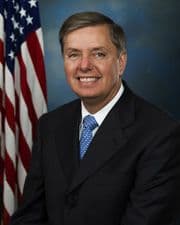
- Lindsey Graham
- Cosponsors
- None
- Introduced
- Agreed to by the Senate
- Agreed to by the House
A concurrent resolution is how the Senate and the House settle something they do together, such as a budget plan or a joint session. It is adopted once both chambers agree to it, and that puts it into effect; it is not a law, so it does not go to the President.
What this bill would do
This concurrent resolution establishes the budget framework for fiscal years 2026 through 2035. It sets recommended levels for federal revenues, new budget authority, outlays, deficits, and public debt. The resolution also outlines specific budgetary levels for major functional categories, such as National Defense and Social Security. Additionally, it provides instructions for reconciliation processes in both the House and the Senate. Finally, it establishes various reserve funds and rules for budgetary enforcement and adjustments.
Yes· 3 of 7
Does this tighten control of the border?+5
The bill includes reserve funds to support immigration enforcement and border security actions.
Would people over 65 be better off under this?+3
The bill maintains funding levels for Social Security.
Would veterans be better off under this, taking everything together?+3
The bill provides specific budget authority for Veterans Benefits and Services.
The opposite· 3 of 5
Does this reduce what the federal government owes?-10
The resolution projects significant increases in public debt over the ten-year period.
Does this make the government pay for what it commits to?-5
The bill projects significant deficits and rising public debt.
Does this make it easier for immigrants already here to become citizens?-5
The bill focuses on apprehension and deportation of certain illegal aliens.
What Congress actually voted on
3 recorded votes have been taken on this bill. 2 of them decided something; the rest moved it along.
- The Senate: the vote on whether to adopt the resolutionConcurrent Resolution Agreed to 50–48
A resolution is one chamber speaking for itself — setting its own rules, taking a position, honouring someone — and it never goes to the President. Agreeing to it is the whole decision.
04/23/2026 · Roll call 105 · recorded as “On the Concurrent Resolution S.Con.Res. 33”
- The House: the vote on whether to adopt the resolutionPassed 215–211
A resolution is one chamber speaking for itself — setting its own rules, taking a position, honouring someone — and it never goes to the President. Agreeing to it is the whole decision.
04/29/2026 · Roll call 143 · recorded as “On Agreeing to the Resolution”
Who it would affect, and how
Potential Positive Impacts for People
-
Social Security Support: The bill outlines specific revenue and outlay levels for the Federal Old-Age and Survivors Insurance Trust Fund and the Federal Disability Insurance Trust Fund (Section 1201).
-
National Defense Funding: The resolution sets recommended budget authority and outlay levels for National Defense across the ten-year period (Section 1102).
-
Veterans Benefits: The bill includes specific levels for budget authority and outlays dedicated to Veterans Benefits and Services (Section 1102).
-
Immigration Enforcement and Border Security: A reserve fund is established to support changes in immigration enforcement and border security policy undertaken by the President following Operation Metro Surge (Section 3002).
-
Targeted Deportation Funding: A deficit-neutral reserve fund is available for legislation relating to the apprehension and deportation of specific adult illegal aliens (Section 3003).
Potential Negative Impacts for People
-
Rising Public Debt: The resolution projects a significant increase in public debt, rising from $39,164,264,000,000 in fiscal year 2026 to $49,860,557,000,000 by fiscal year 2035 (Section 1101).
-
Consistent Deficits: The bill sets levels for annual deficits that continue through the decade (Section 1101).
Groups and Interests Ranking
Every group the model scored this bill for, from -10 to +10. Hover a score for the reason it gave.
- Economy And Finance
- Improves Economic Growth+1Reduces National Debt-10Improves Fiscal Responsibility-5Reduces Government Spending-1Reduces Inflation-1
- Demographic And Interest Groups
- Good For Seniors+3Good For Veterans+3Good For Low Income Households+2
- National Security And Foreign Policy
- Improves Veterans Benefits+3
- Social Issues And Justice
- Improves Border Security+5Improves Social Security+3Improves Pathway To Citizenship-5
| Updated | Bill | Title | Policy Area |
|---|---|---|---|
| 5 months ago | To establish a deficit-neutral reserve fund relating to extending the prohibition on Medicaid payments to abortion providers. | ||
| 5 months ago | To establish a deficit-neutral reserve fund relating to grocery costs. | ||
| 5 months ago | To create a point of order against reconciliation legislation that does not lower out-of-pocket health care costs while Americans struggle to make ends meet. | ||
| 5 months ago | To create a point of order against reconciliation legislation that would provide funding to Federal agencies that have unobligated funds from previous reconciliation bills. | ||
| 5 months ago | To create a point of order against reconciliation legislation that would not increase Federal funding for or participation in school meal programs. | ||
| 5 months ago | To create a point of order against reconciliation legislation fails to address the practice of insurance companies stepping between patients and their doctors to delay or deny access to care. | ||
| 5 months ago | To establish a deficit-neutral reserve fund relating to ensuring that consumers are protected from price increases associated with tariffs and the Iran war. | ||
| 5 months ago | To create a point of order against legislation that would not decrease home electricity bills. | ||
| 5 months ago | To reduce the price of prescription drugs in the United States by more than 50 percent by adopting Most Favored Nation drug pricing so that the American people pay no more for prescription drugs than Europeans or Canadians. | ||
| 5 months ago | To establish a deficit-neutral reserve fund relating to the impacts of hedge fund ownership of single-family homes and rent prices. |


- 4/29/2026
- Passed/agreed to in House: On agreeing to the resolution Agreed to by the Yeas and Nays: 215 - 211, 1 Present (Roll no. 143). (text: CR H3147-3146)
- On agreeing to the resolution Agreed to by the Yeas and Nays: 215 - 211, 1 Present (Roll no. 143). (text: CR H3147-3146)
- Considered as unfinished business. (consideration: CR H3168-3169)
- POSTPONED PROCEEDINGS - The Chair put the question on agreeing to S.Con.Res. 33 and pursuant to clause 10 of rule XX, the yeas and nays are ordered. Further proceedings were postponed.
- The previous question was ordered pursuant to the rule.
- DEBATE - The House proceeded with one hour of debate on S. Con. Res. 33.
- Rule provides for consideration of H.R. 7567, H.R. 2616, S. Con. Res. 33, S. 1318 and H.R. 1346. The resolution provides for consideration of H.R. 7567 under a structured rule and H.R. 2616, S. Con. Res. 33, S. 1318, and H.R. 1346 under a closed rule, with one hour of general debate on each measure. The resolution provides for one motion to recommit on H.R. 7567, H.R. 2616, and H.R. 1346, and one motion to commit on S. 1318.
- Considered under the provisions of rule H. Res. 1224. (consideration: CR H3147-3160)
- Rules Committee Resolution H. Res. 1224 Reported to House. Rule provides for consideration of H.R. 7567, H.R. 2616, S. Con. Res. 33, S. 1318 and H.R. 1346. The resolution provides for consideration of H.R. 7567 under a structured rule and H.R. 2616, S. Con. Res. 33, S. 1318, and H.R. 1346 under a closed rule, with one hour of general debate on each measure. The resolution provides for one motion to recommit on H.R. 7567, H.R. 2616, and H.R. 1346, and one motion to commit on S. 1318.
- 4/23/2026
- Passed/agreed to in Senate: Resolution agreed to in Senate with an amendment by Yea-Nay Vote. 50 - 48. Record Vote Number: 105.
- Resolution agreed to in Senate with an amendment by Yea-Nay Vote. 50 - 48. Record Vote Number: 105. (text: CR S1918-1924)
- Message on Senate action sent to the House.
- Held at the desk.
- Received in the House.
- 4/22/2026
- Considered by Senate. (consideration: CR S1867-1882, S1898-1924)
- 4/21/2026
- Submitted in Senate
- Referred to the Committee on the Budget.
- Senate Committee on the Budget discharged pursuant to Section 300 of the Congressional Budget Act.
- Placed on Senate Legislative Calendar under General Orders. Calendar No. 376.
- Motion to proceed to consideration of measure agreed to in Senate by Yea-Nay Vote. 52 - 46. Record Vote Number: 87.
- Measure laid before Senate by motion. (consideration: CR S1850-1851; text: CR S1859-1864)
3 bills Congress.gov lists as related to this one — companions in the other chamber, earlier versions, and bills this one absorbed or was folded into.
- 119-S-2: Secure America Act
- 119-HRES-1224: Providing for consideration of the bill (H.R. 7567) to provide for the reform and continuation of agricultural and other programs of the Department of Agriculture through fiscal year 2031, and for other purposes; providing for consideration of the bill (H.R. 2616) to require public elementary and middle schools that receive funds under the Elementary and Secondary Education Act of 1965 to obtain parental consent before changing a minor’s gender markers, pronouns, or preferred name on any school form or sex-based accommodations, including locker rooms or bathrooms; providing for consideration of the concurrent resolution (S. Con. Res. 33) setting forth the congressional budget for the United States Government for fiscal year 2026 and setting forth the appropriate budgetary levels for fiscal years 2027 through 2035; providing for consideration of the bill (S. 1318) to direct the American Battle Monuments Commission to establish a program to identify American-Jewish servicemembers buried in United States military cemeteries overseas under markers that incorrectly represent their religion and heritage, and for other purposes; providing for consideration of the bill (H.R. 1346) to amend the Clean Air Act with respect to the ethanol waiver for Reid Vapor Pressure under that Act, and for other purposes; and for other purposes.
- 119-SRES-458: A resolution extending the enforcement of certain budgetary points of order in the Senate.