 Bill · S. 852· Senate(119-S-852)
Richard L. Trumka Protecting the Right to Organize Act of 2025
- Introduced
- 3/5/2025
- Last activity
- 3/5/2025 — Read twice and referred to the Committee on Health, Education, Labor, and Pensions.
- Sponsored by
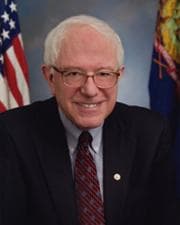
- Bernie Sanders
- Cosponsors
- - 1 - 44
- Introduced
- In Committee
What this bill would do
This bill, titled the "Richard L. Trumka Protecting the Right to Organize Act of 2025," seeks to amend the National Labor Relations Act, the Labor Management Relations Act of 1947, and the Labor-Management Reporting and Disclosure Act of 1959. It introduces new definitions for joint employers, employees, and supervisors to clarify labor rights. The legislation also expands the definition of unfair labor practices and establishes new procedures for collective bargaining and dispute resolution. Additionally, it updates penalties and enforcement mechanisms for employers who violate labor laws. Finally, it allows for certain fair share agreements and increases protections for workers' rights to organize and strike.
Yes· 3 of 5
Would union members be better off under this?+9
The bill significantly strengthens union bargaining power, strike protections, and the ability to collect fair share fees.
Does this strengthen the rights of workers to organise?+8
The bill expands protections for striking employees and strengthens the rights of workers to organize through enhanced penalties for unfair labor practices.
Would households on low incomes be better off under this?+6
The bill enhances worker protections and provides more robust remedies like back pay for employees.
The opposite
Would business owners be better off under this?-7
The bill imposes significant new civil penalties and increases the risk of personal liability for directors and officers.
Does this make it easier to run a small business?-5
The bill increases the potential financial liability and civil penalties for employers regarding labor violations.
Does this change how police departments operate?-1
The bill contains provisions that address labor law enforcement rather than police reform.
Who it would affect, and how
Potential Positive Impacts for People
-
Clarified Employment Status: The bill amends definitions to ensure individuals are considered employees rather than independent contractors unless they meet specific criteria regarding control and the nature of their work (Section 101).
-
Enhanced Strike Protections: It defines certain actions, such as permanently replacing striking employees or locking out employees to influence bargaining, as unfair labor practices (Section 104). It also clarifies that the duration or frequency of a strike does not make it unprotected (Section 110).
-
Stronger Remedies for Workers: The bill updates damages for unfair labor practices to include back pay without reduction for interim earnings, front pay, consequential damages, and liquidated damages equal to two times the amount awarded (Section 106).
-
Streamlined Collective Bargaining: It establishes a process for initial collective bargaining that includes mandatory timelines and a system for mediation and tripartite arbitration to settle disputes (Section s 104).
-
Expanded Rights to Electronic Communication: Employees are granted the right to use employer electronic communication devices and systems for activities protected under the Act, provided they have access to them for work (Section 104).
-
Increased Accountability for Employers: The bill implements civil penalties for employers who commit unfair labor practices, with penalties that can be doubled for repeat offenders (Section 109).
Potential Negative Impacts for People
-
Increased Liability for Employers: Employers may face significant civil penalties of up to $50,000 per violation, or up to $100,000 for repeat offenders, as well as potential personal liability for directors or officers (Section 109).
-
New Obligations for Employee Information: Employers are required to provide a detailed voter list, including names, addresses, and contact information, to labor organizations upon request during an election (Section 104).
-
Mandatory Arbitration Risks: The bill introduces a tripartite arbitration panel that can render binding decisions on labor disputes for a period of two years (Section 104).
-
Expanded Definition of Joint Employer: The new definition of "joint employer" considers both direct and indirect control, which may impact how companies manage shared control over employee terms and conditions (Section 101).
Groups and Interests Ranking
Every group the model scored this bill for, from -10 to +10. Hover a score for the reason it gave.
- Demographic And Interest Groups
- Good For Union Workers+9Good For Low Income Households+6Good For Urban Residents+1Good For Business Owners-7
- Economy And Finance
- Improves Union Protections+8Improves Small Business Support-5
- Governance And Ideology
- Improves Government Transparency+3
- Social Issues And Justice
- Improves Policing Reform-1
- 3/5/2025
- Read twice and referred to the Committee on Health, Education, Labor, and Pensions.
- 45 Cosponsors added.
- Introduced in Senate
One bill Congress.gov lists as related to this one — companions in the other chamber, earlier versions, and bills this one absorbed or was folded into.
 Angela Alsobrooks
Democrat · Maryland
 Tammy Baldwin
Democrat · Wisconsin
 Michael Bennet
Democrat · Colorado
 Richard Blumenthal
Democrat · Connecticut
 Cory Booker
Democrat · New Jersey
 Lisa Blunt Rochester
Democrat · Delaware
 Maria Cantwell
Democrat · Washington
 Christopher Coons
Democrat · Delaware
 Catherine Cortez Masto
Democrat · Nevada
 Richard Durbin
Democrat · Illinois
 Tammy Duckworth
Democrat · Illinois
 John Fetterman
Democrat · Pennsylvania
 Kirsten Gillibrand
Democrat · New York
 Ruben Gallego
Democrat · Arizona
 John Hickenlooper
Democrat · Colorado
 Mazie Hirono
Democrat · Hawaii
 Martin Heinrich
Democrat · New Mexico
 Maggie Hassan
Democrat · New Hampshire
 Amy Klobuchar
Democrat · Minnesota
 Mark Kelly
Democrat · Arizona
 Angus King
Independent · Maine
 Timothy Kaine
Democrat · Virginia
 Andy Kim
Democrat · New Jersey
 Ben Luján
Democrat · New Mexico
 Edward Markey
Democrat · Massachusetts
 Patty Murray
Democrat · Washington
 Christopher Murphy
Democrat · Connecticut
 Jeff Merkley
Democrat · Oregon
 Jon Ossoff
Democrat · Georgia
 Alex Padilla
Democrat · California
 Gary Peters
Democrat · Michigan
 John Reed
Democrat · Rhode Island
 Jacky Rosen
Democrat · Nevada
 Charles Schumer
Democrat · New York
 Adam Schiff
Democrat · California
 Jeanne Shaheen
Democrat · New Hampshire
 Brian Schatz
Democrat · Hawaii
 Tina Smith
Democrat · Minnesota
 Elissa Slotkin
Democrat · Michigan
 Chris Van Hollen
Democrat · Maryland
 Ron Wyden
Democrat · Oregon
 Raphael Warnock
Democrat · Georgia
 Peter Welch
Democrat · Vermont
 Sheldon Whitehouse
Democrat · Rhode Island
 Elizabeth Warren
Democrat · Massachusetts