

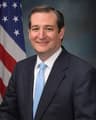
Brian Schatz

Brian Schatz

Democrat · U.S. Senator for Hawaii

68 sponsored · 339 cosponsored

Age 54 · In office since 2012

Contact their office: (202) 224-3934 · 722 Hart Senate Office Building, Washington, DC 20510 · Official website

What they got done

Most bills never get a vote. These are the ones they wrote or backed that got somewhere.

Became law (2)

  • Ted Cruz (R-TX)

    Cosponsored

    Illegal Red Snapper and Tuna Enforcement Act

    S. 283 Public Lands and Natural Resources

    A Republican bill with 1 Democratic cosponsor.

    Became law

    This legislation requires specific agency leaders to develop a standard methodology based on chemical analysis to identify the country of origin of seafood.

    Yes· 2 of 8

    • Scored +7

      Does this better protect air, water and wildlife?

      Directly combats illegal fishing which helps prevent overfishing and protects marine ecosystems.

    • Scored +5

      Does this strengthen ties with allied countries?

      Authorizes technical assistance and collaboration with other nations to combat illegal fishing and organized crime.

    No question was scored the opposite.

  • Katie Britt (R-AL)

    Cosponsored

    Lulu’s Law

    S. 1003 Science, Technology, Communications

    A Republican bill with 4 Democratic cosponsors. See the voting map.

    Became law

    The House voted 401–6 on May 20.

    This Act directs the Federal Communications Commission to take specific action regarding emergency notifications.

    Yes

    • Scored +5

      Does this improve help for people hit by a disaster?

      The expansion of wireless emergency alerts for shark attacks enhances public safety during natural or environmental emergencies.

    • Scored +2

      Does this give the federal government more power?

      The bill directs the FCC, a federal agency, to mandate new wireless emergency alert criteria.

    No question was scored the opposite.

Passed Congress — the President's turn (1)

Both chambers passed it. The President signs it into law or vetoes it, and a veto stands unless two-thirds of each chamber vote to pass it anyway. Everything Congress has sent the President →

Passed one chamber, waiting on the other (13)

Halfway: the other chamber has to pass the same text before it can go to the President.

  • Brian Schatz (D-HI)

    Their bill

    Unlocking Native Lands and Opportunities for Commerce and Key Economic Developments Act of 2025

    S. 3383 Native Americans

    A Democratic bill with 2 Republican cosponsors.

    Passed the Senate

    With no one objecting, no names recorded

    Now: kept ready for the floor instead of being sent to a committee · Oct 5

    This bill amends past laws to make improvements related to tribal leases and rights-of-way across Indian land.

    Yes· 2 of 10

    • Scored +5

      Would Native Americans be better off under this?

      Empowers Native American tribes with increased self-determination, local control, and streamlined land management.

    • Scored +3

      Would people in rural areas be better off under this?

      Promotes economic activity and infrastructure development in rural tribal areas.

    The opposite

    • Scored -2

      Does this better protect air, water and wildlife?

      Exempts the Secretary of the Interior's approval of tribal regulations from major federal environmental laws like NEPA and the ESA.

    • Scored -2

      Does this give the federal government more power?

      Retains oversight and discretionary enforcement/cancellation authority for the Secretary of the Interior over tribal land rights.

  • Brian Schatz (D-HI)

    Their bill

    A bill to amend the Native American Tourism and Improving Visitor Experience Act to authorize grants to Indian tribes, tribal organizations, and Native Hawaiian organizations, and for other purposes.

    S. 612 Native Americans

    A Democratic bill with 1 Republican cosponsor.

    Passed the Senate

    With no one objecting, no names recorded

    Now: kept ready for the floor instead of being sent to a committee · Dec 17

    This bill aims to amend the Native American Tourism and Improving Visitor Experience Act. It seeks to authorize various grant programs for Indian tribes, tribal organizations, and Native Hawaiian organizations.

    Yes· 2 of 13

    • Scored +7

      Would Native Americans be better off under this?

      The bill provides significant funding and grant authority specifically for Indian tribes and Native Hawaiian organizations.

    • Scored +6

      Does this narrow racial gaps in how people are treated?

      The bill promotes economic equity for Indian tribes and Native Hawaiian organizations through dedicated grant programs.

    No question was scored the opposite.

  • Ted Cruz (R-TX)

    Cosponsored

    Weather Research and Forecasting Innovation Reauthorization Act of 2026

    S. 3923 Public Lands and Natural Resources

    A Republican bill with 6 Democratic cosponsors.

    Passed the Senate

    With no one objecting, no names recorded

    Now: kept ready for the floor instead of being sent to a committee · Nov 12

    This bill aims to improve the weather research of the National Oceanic and Atmospheric Administration.

    Yes· 2 of 23

    • Scored +7

      Does this better protect air, water and wildlife?

      The bill enhances protections through better monitoring of algal blooms, wildfires, and landslides.

    • Scored +6

      Does this put more money into scientific research?

      The bill provides significant authorization for scientific research into fire weather and water observing systems.

    No question was scored the opposite.

And 10 more on their Sponsored and Cosponsored pages.

Resolutions of theirs that were adopted (3)

A resolution is a chamber speaking for itself — a position, a rule or a tribute. Adopting it puts it into effect, but it is not a law.

Still waiting, of the 68 bills they wrote: 5 cleared committee and wait for a first vote, 58 are in committee. Committee is where most bills end, whoever writes them — silence there, not a vote, is the usual way a bill dies.

What their bills would do

Every bill is scored against plain yes-or-no questions. These count their bills — the ones they wrote and the ones they cosponsored — by how each question was answered: yes, or the opposite. Open one to see those bills, where each stands, and why it was scored that way. Scores are made by AI ().

Who their bills would affect

What else they would change

How they voted lately

Their latest votes that decided something, and what each measure would do.

  • U.S. Senate · Nov 20, 2026

    Bipartisan American Affordability and Jobs Act of 2026

    The vote on whether to pass the bill This is the real decision in this chamber. Passing here sends the bill to the other chamber, which must pass it too before it can go to the President.

    Their vote Yea

    This bill aims to accelerate energy projects and infrastructure development by reforming federal environmental reviews, permitting procedures, and court review rules.

    • Scored +5

      Would women be better off under this?

      By protecting settlement money from taxation, the bill provides greater financial security for women survivors of sexual violence.

  • U.S. Senate · Nov 19, 2026

    Directing the President, pursuant to section 5(c) of the War Powers Resolution, to remove United States Armed Forces from hostilities with Iran.

    The vote on whether to adopt the resolution A resolution is one chamber speaking for itself — setting its own rules, taking a position, honouring someone — and it never goes to the President. Agreeing to it is the whole decision.

    Their vote Yea

    This resolution directs the President to remove United States Armed Forces from hostilities with Iran. It uses the authority found under section 5(c) of the War Powers Resolution.

    • Scored +4

      Does this favour talking over confrontation abroad?

      Ending hostilities can pave the way for diplomatic resolutions between the US and Iran.

    • Scored -5

      Does this give the federal government more power?

      The bill limits the Executive branch's power to engage in military hostilities without Congressional approval.

  • U.S. Senate · Nov 18, 2026

    In the nature of a substitute.

    A vote on a proposed change to the bill A vote on one change, not on the bill. A bill can collect dozens of these, and losing one does not stop it.

    Their vote Yea

    This amendment amends the Internal Revenue Code of 1986 to exclude from gross income any damages, other than punitive damages, received on account of sexual acts or sexual contact.

Every vote they cast, and how often they missed one →

On the President’s nominees

The President chooses federal judges, cabinet secretaries, ambassadors and military officers, and the Senate decides whether each one gets the job. Most are confirmed by voice vote, which records no one’s position. In the 119th Congress (2025–2026) the Senate put 228 confirmations to a recorded vote, and confirmed every one.

Their votes to confirm, of 228 recorded votes

  • Yes: 6
  • No: 219
  • Missed: 3

Those votes covered 595 nominees, because the Senate sometimes confirms many in a single vote.

The 5 most recent they voted against

How busy they have been

How many bills they have put their name to over time — volume, not results: most bills never get a vote.

Legislative activity over time