Bill · S. 554· Senate(119-S-554)
United States-Israel Defense Partnership Act of 2025
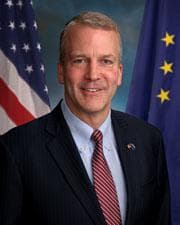
- Introduced
- 2/12/2025
- Last activity
- 2/12/2025 — Read twice and referred to the Committee on Foreign Relations.
- Sponsored by
- Dan Sullivan
- Cosponsors
- - 20 - 12
- Introduced
- In Committee
What this bill would do
The United States-Israel Defense Partnership Act of 2025 aims to strengthen defense cooperation between the United States and Israel. It establishes a new program specifically focused on countering unmanned systems through research, development, and deployment. The bill also extends and increases funding for existing anti-tunnel and unmanned aerial systems cooperation. Additionally, it authorizes a program for emerging technologies like artificial intelligence, cybersecurity, and robotics. Finally, the act directs assessments of integrated air and missile defense in the region covered by United States Central Command.
Yes· 3 of 7
Does this strengthen ties with allied countries?+7
The bill expands and strengthens the bilateral defense partnership between the United States and Israel.
Does this better protect the country from computer attacks?+5
The bill authorizes cooperation in cybersecurity to meet emerging defense challenges.
Does this put more money into scientific research?+5
The bill authorizes funding for joint research in artificial intelligence, quantum, and robotics.
The opposite
Does this reduce what the federal government spends?-2
The bill authorizes significant new annual appropriations for defense programs.
Who it would affect, and how
Potential Positive Impacts for People
-
Enhanced Security against Unmanned Threats: The establishment of the United States-Israel Counter-Unmanned Systems Program aims to develop and deploy advanced technologies to counter threats from unmanned systems (Section 3).
-
Development of Advanced Technologies: The bill promotes collaboration in emerging fields such as artificial intelligence, cybersecurity, robotics, quantum, and automation to meet defense challenges (Section 6).
-
Increased Operational Readiness: The program includes joint training exercises intended to enhance the operational readiness of personnel from both the United States and Israel (Section 3).
-
Strengthened Regional Defense: The bill directs an assessment to determine how to best strengthen and expand integrated air and missile defense in the region covered by United States Central Command (Section 10).
Potential Negative Impacts for People
-
Significant Financial Costs: The bill authorizes substantial amounts of money to be spent, including $150,000,000 annually for the Counter-Unmanned Systems Program and $50,000,000 annually for the Emerging Defense Technology Capabilities Program (Section 3 and Section 6).
-
Requirement for Cost Sharing: Under the emerging technology program, the memorandum of agreement must require the sharing of project costs between the United States and Israel (Section 6).
Groups and Interests Ranking
Every group the model scored this bill for, from -10 to +10. Hover a score for the reason it gave.
- National Security And Foreign Policy
- Improves International Alliances+7Improves Cybersecurity Defense+5Improves Veterans Benefits+1
- Education And Technology
- Increases Scientific Research Funding+5
- Demographic And Interest Groups
- Good For Business Owners+3Good For Veterans+1
- Economy And Finance
- Increases Job Creation+2Reduces Government Spending-2
- 12/9/2025
- 1 Cosponsor added.
- 9/30/2025
- 1 Cosponsor added.
- 9/17/2025
- 1 Cosponsor added.
- 9/15/2025
- 1 Cosponsor added.
- 9/11/2025
- 1 Cosponsor added.
- 7/28/2025
- 2 Cosponsors added.
- 6/10/2025
- 1 Cosponsor added.
- 5/22/2025
- 1 Cosponsor added.
- 5/20/2025
- 2 Cosponsors added.
- 5/19/2025
- 1 Cosponsor added.
- 5/6/2025
- 1 Cosponsor added.
- 5/5/2025
- 1 Cosponsor added.
- 4/2/2025
- 1 Cosponsor added.
- 3/26/2025
- 1 Cosponsor added.
- 3/24/2025
- 1 Cosponsor added.
- 3/11/2025
- 1 Cosponsor added.
- 3/4/2025
- 3 Cosponsors added.
- 3/3/2025
- 1 Cosponsor added.
- 2/26/2025
- 4 Cosponsors added.
- 2/20/2025
- 2 Cosponsors added.
- 2/12/2025
- Read twice and referred to the Committee on Foreign Relations.
- 4 Cosponsors added.
- Introduced in Senate
One bill Congress.gov lists as related to this one — companions in the other chamber, earlier versions, and bills this one absorbed or was folded into.
 Marsha Blackburn
Republican · Tennessee
 Richard Blumenthal
Democrat · Connecticut
 Cory Booker
Democrat · New Jersey
 Jim Banks
Republican · Indiana
 Ted Budd
Republican · North Carolina
 Mike Crapo
Republican · Idaho
 Susan Collins
Republican · Maine
 John Cornyn
Republican · Texas
 Tom Cotton
Republican · Arkansas
 Kevin Cramer
Republican · North Dakota
 Catherine Cortez Masto
Democrat · Nevada
 John Curtis
Republican · Utah
 Steve Daines
Republican · Montana
 John Fetterman
Democrat · Pennsylvania
 Chuck Grassley
Republican · Iowa
 Kirsten Gillibrand
Democrat · New York
 Ruben Gallego
Democrat · Arizona
 Josh Hawley
Republican · Missouri
 James Justice
Republican · West Virginia
 Timothy Kaine
Democrat · Virginia
 James Lankford
Republican · Oklahoma
 Lisa Murkowski
Republican · Alaska
 Markwayne Mullin
Republican · Oklahoma
 David McCormick
Republican · Pennsylvania
 Jon Ossoff
Democrat · Georgia
 Gary Peters
Democrat · Michigan
 Mike Rounds
Republican · South Dakota
 Jacky Rosen
Democrat · Nevada
 Pete Ricketts
Republican · Nebraska
 Rick Scott
Republican · Florida
 Ron Wyden
Democrat · Oregon
 Mark Warner
Democrat · Virginia