Bill · S. 5025· Senate(119-S-5025)
Lindsey O. Graham Sanctioning Russia Act of 2026
- Introduced
- 7/16/2026
- Last activity
- 7/16/2026 — Read twice and referred to the Committee on Banking, Housing, and Urban Affairs.
- Sponsored by
- Darline Graham
- Cosponsors
- - 41 - 21
- Introduced
- In Committee
What this bill would do
This bill is called the Lindsey O. Graham Sanctioning Russia Act of 2026. It aims to impose strict sanctions and other measures regarding the Russian Federation. The legislation mandates the blocking of property, travel bans, and financial restrictions on specific Russian officials and entities supporting the Russian government. It also prohibits certain financial transactions, investments, and energy exports involving Russia. Additionally, the bill increases duties on goods imported from Russia and on countries that purchase Russian crude oil or natural gas or facilitate sanctions evasion.
Yes
Does this strengthen ties with allied countries?+8
The bill strengthens alignment with international coalition partners through coordinated sanctions against the Russian Federation.
Does this give the federal government more power?+4
Grants the executive branch and federal agencies broad discretionary powers to implement and enforce strict international sanctions.
The opposite· 3 of 6
Does this make trade with other countries easier?-5
Imposes severe import prohibitions and heavy duty rates up to 500 percent, disrupting standard trade frameworks.
Does this reduce how much oil, gas and coal is produced?-4
Prohibits energy sector investments and exports related to Russia, impacting energy markets.
Is this likely to lower the price at the pump?-3
Sanctions on Russian energy and secondary duties on countries purchasing Russian oil could lead to higher fuel prices.
Who it would affect, and how
Potential Positive Impacts for People
- Humanitarian Protections: Section 114(a) ensures that sanctions and other measures will not apply to the conduct or facilitation of transactions for agricultural commodities, food, medicine, medical devices, or humanitarian assistance. This is positive because it protects the supply of vital life-saving goods and humanitarian aid for people in need.
Potential Negative Impacts for People
- Higher Import Duties and Potential Cost Increases: Section 112 increases the rate of duty for all goods imported into the United States from the Russian Federation to a rate of up to 500 percent ad valorem. Section 113 increases the rate of duty up to 100 percent ad valorem for goods imported from countries that continue to purchase Russian-origin crude oil or natural gas or facilitate sanctions evasion. These provisions could place financial burdens on individuals or groups in the United States if these higher duties lead to increased prices on imported goods.
Groups and Interests Ranking
Every group the model scored this bill for, from -10 to +10. Hover a score for the reason it gave.
- Environment Energy And Infrastructure
- Reduces Fossil Fuel Production-4Reduces Gas Prices-3
- Demographic And Interest Groups
- Good For Low Income Households-2Good For Middle Class Households-2
- Governance And Ideology
- Increases Federal Power+4
- National Security And Foreign Policy
- Improves International Alliances+8Improves International Trade-5
- Economy And Finance
- Reduces Inflation-2
- 8/6/2026
- 1 Cosponsor added.
- 7/21/2026
- 1 Cosponsor added.
- 7/16/2026
- Read twice and referred to the Committee on Banking, Housing, and Urban Affairs.
- 61 Cosponsors added.
- Introduced in Senate
3 bills Congress.gov lists as related to this one — companions in the other chamber, earlier versions, and bills this one absorbed or was folded into.
 Angela Alsobrooks
Democrat · Maryland
- Alan Armstrong
Republican · Oklahoma
 John Boozman
Republican · Arkansas
 Marsha Blackburn
Republican · Tennessee
 John Barrasso
Republican · Wyoming
 Michael Bennet
Democrat · Colorado
 Richard Blumenthal
Democrat · Connecticut
 Ted Budd
Republican · North Carolina
 Katie Britt
Republican · Alabama
 Susan Collins
Republican · Maine
 Shelley Capito
Republican · West Virginia
 John Cornyn
Republican · Texas
 Christopher Coons
Democrat · Delaware
 Tom Cotton
Republican · Arkansas
 Kevin Cramer
Republican · North Dakota
 Ted Cruz
Republican · Texas
 John Curtis
Republican · Utah
 Richard Durbin
Democrat · Illinois
 Steve Daines
Republican · Montana
 Tammy Duckworth
Democrat · Illinois
 Joni Ernst
Republican · Iowa
 Deb Fischer
Republican · Nebraska
 John Fetterman
Democrat · Pennsylvania
 Chuck Grassley
Republican · Iowa
 Kirsten Gillibrand
Democrat · New York
 John Hickenlooper
Democrat · Colorado
 Bill Hagerty
Republican · Tennessee
 Martin Heinrich
Democrat · New Mexico
 John Hoeven
Republican · North Dakota
 Cindy Hyde-Smith
Republican · Mississippi
 Jon Husted
Republican · Ohio
 James Justice
Republican · West Virginia
 Amy Klobuchar
Democrat · Minnesota
 Mark Kelly
Democrat · Arizona
 Angus King
Independent · Maine
 Timothy Kaine
Democrat · Virginia
 John Kennedy
Republican · Louisiana
 Cynthia Lummis
Republican · Wyoming
 James Lankford
Republican · Oklahoma
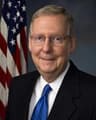 Mitch McConnell
Republican · Kentucky
 Jerry Moran
Republican · Kansas
 Lisa Murkowski
Republican · Alaska
 Bernie Moreno
Republican · Ohio
 David McCormick
Republican · Pennsylvania
 Gary Peters
Democrat · Michigan
 John Reed
Democrat · Rhode Island
 James Risch
Republican · Idaho
 Mike Rounds
Republican · South Dakota
 Jacky Rosen
Democrat · Nevada
 Pete Ricketts
Republican · Nebraska
 Adam Schiff
Democrat · California
 Jeanne Shaheen
Democrat · New Hampshire
 Tim Scott
Republican · South Carolina
 Brian Schatz
Democrat · Hawaii
 Dan Sullivan
Republican · Alaska
 Rick Scott
Republican · Florida
 Tim Sheehy
Republican · Montana
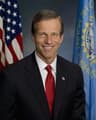 John Thune
Republican · South Dakota
 Tommy Tuberville
Republican · Alabama
 Thomas Tillis
Republican · North Carolina
 Chris Van Hollen
Democrat · Maryland
 Roger Wicker
Republican · Mississippi
 Sheldon Whitehouse
Democrat · Rhode Island