Bill · S. 401· Senate(119-S-401)
Fair Access to Banking Act
A bill to amend the Federal Reserve Act to prohibit certain financial service providers who deny fair access to financial services from using taxpayer funded discount window lending programs, and for other purposes.
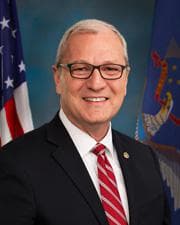
- Introduced
- 2/4/2025
- Last activity
- 2/4/2025 — Read twice and referred to the Committee on Banking, Housing, and Urban Affairs.
- Sponsored by
- Kevin Cramer
- Cosponsors
- - 46 - 0
- Introduced
- In Committee
What this bill would do
The Fair Access to Banking Act seeks to amend the Federal Reserve Act and other laws to ensure fair access to financial services. It targets large financial institutions—specifically those with more than $10,000,000,000 in total consolidated assets—that deny services based on subjective or political reasons rather than impartial risk-based standards. The bill prohibits such institutions from using taxpayer-funded discount window lending programs, the Automated Clearing House Network, or other privileges if they refuse to do business with people complying with the law. It also restricts payment card networks from inhibiting access based on political or reputational risks. Finally, it establishes requirements for banks to provide written justifications for denying services and creates a private right of action for victims.
Who it would affect, and how
Potential Positive Impacts for People
-
Ensuring Fair Treatment for Lawful Businesses: The bill aims to ensure that persons involved in legally operating but "politically unpopular" businesses receive fair access to financial services (Section 3, Subsection 4).
-
Preventing Subjective Denials: By requiring banks to use "quantitative, impartial risk-based standards" rather than "subjective, category-based evaluations," the bill seeks to prevent customers from being denied services based on political reasons, bias, or prejudice (Section 2, Subsection 3 and 5).
-
Providing Accountability via Written Justification: If a covered bank denies a financial service, it must provide a written justification explaining the specific basis for that denial (Section 8, Subsection b, Paragraph 1, Subclause D).
-
Empowering Individuals through Legal Action: The act allows individuals or businesses to commence civil actions against covered banks or credit unions that violate these requirements, allowing for the recovery of reasonable attorney's fees and treble damages (Section 8, Subsection c).
-
Restricting Unfair Practices in Payment Networks: The bill prohibits payment card networks from using contracts or penalties to inhibit a person's access to services based on political or reputational risk considerations (Section 5, Subsection b).
Potential Negative Impacts for People
-
Potential Burden on Large Financial Institutions: Banks, subsidiaries, and certain depository institutions with more than $10,000,000,000 in total consolidated assets face restrictions on using discount window lending programs and the Automated Clearing House Network if they do not comply with the act (Section 4 and Section 7).
-
Financial Penalties for Payment Networks: Payment card networks that violate the prohibition on inhibiting access due to political or reputational risks may be assessed civil penalties of up to 10 percent of the value of the services or products involved, not to be more than $10,000 per violation (Section 5, Subsection c).
- 7/27/2026
- 1 Cosponsor added.
- 10/23/2025
- 1 Cosponsor added.
- 9/30/2025
- 1 Cosponsor added.
- 5/8/2025
- 1 Cosponsor added.
- 2/19/2025
- 1 Cosponsor added.
- 2/6/2025
- 1 Cosponsor added.
- 2/4/2025
- Read twice and referred to the Committee on Banking, Housing, and Urban Affairs.
- 40 Cosponsors added.
- Introduced in Senate
One bill Congress.gov lists as related to this one — companions in the other chamber, earlier versions, and bills this one absorbed or was folded into.
 John Boozman
Republican · Arkansas
 Marsha Blackburn
Republican · Tennessee
 John Barrasso
Republican · Wyoming
 Jim Banks
Republican · Indiana
 Ted Budd
Republican · North Carolina
 Katie Britt
Republican · Alabama
 Mike Crapo
Republican · Idaho
 Shelley Capito
Republican · West Virginia
 John Cornyn
Republican · Texas
 Bill Cassidy
Republican · Louisiana
 Tom Cotton
Republican · Arkansas
 Ted Cruz
Republican · Texas
 John Curtis
Republican · Utah
 Steve Daines
Republican · Montana
 Joni Ernst
Republican · Iowa
 Deb Fischer
Republican · Nebraska
 Lindsey Graham
Republican · South Carolina
 Chuck Grassley
Republican · Iowa
- Darline Graham
Republican · South Carolina
 Bill Hagerty
Republican · Tennessee
 John Hoeven
Republican · North Dakota
 Cindy Hyde-Smith
Republican · Mississippi
 Josh Hawley
Republican · Missouri
 Jon Husted
Republican · Ohio
 Ron Johnson
Republican · Wisconsin
 James Justice
Republican · West Virginia
 John Kennedy
Republican · Louisiana
 Cynthia Lummis
Republican · Wyoming
 James Lankford
Republican · Oklahoma
 Mitch McConnell
Republican · Kentucky
 Jerry Moran
Republican · Kansas
 Markwayne Mullin
Republican · Oklahoma
 Roger Marshall
Republican · Kansas
 Bernie Moreno
Republican · Ohio
 David McCormick
Republican · Pennsylvania
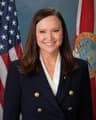 Ashley Moody
Republican · Florida
 James Risch
Republican · Idaho
 Pete Ricketts
Republican · Nebraska
 Tim Scott
Republican · South Carolina
 Dan Sullivan
Republican · Alaska
 Rick Scott
Republican · Florida
 Eric Schmitt
Republican · Missouri
 Tim Sheehy
Republican · Montana
 Tommy Tuberville
Republican · Alabama
 Thomas Tillis
Republican · North Carolina
 Roger Wicker
Republican · Mississippi