Bill · S. 292· Senate(119-S-292)
Educational Choice for Children Act of 2025

- Introduced
- 1/29/2025
- Last activity
- 1/29/2025 — Read twice and referred to the Committee on Finance.
- Sponsored by
- Bill Cassidy
- Cosponsors
- - 33 - 0
- Introduced
- In Committee
What this bill would do
The Educational Choice for Children Act of 2025 proposes to amend the Internal Revenue Code to provide tax credits for charitable donations to scholarship granting organizations. These organizations would provide scholarships for qualified elementary and secondary education expenses to eligible students. Individuals can claim a credit against their tax, while corporations can also receive a specific credit for their contributions. The bill establishes a volume cap of $10 billion for these credits starting in 2026. Additionally, scholarships received by students for qualified expenses would be excluded from their gross income.
Yes· 3 of 14
Does this make it easier to use public money at a school other than the local one?+8
The bill creates a system of scholarships that allows students to use funds for private or religious elementary and secondary schools.
Would students be better off under this?+6
The bill provides direct financial assistance through scholarships for various educational and instructional expenses.
Would children be better off under this?+5
The bill provides scholarships for elementary and secondary students to cover educational expenses and therapies.
The opposite
Does this reduce what the federal government spends?-1
The bill implements tax credits which reduce federal tax revenue.
Who it would affect, and how
Potential Positive Impacts for People
-
Tax Relief for Individual Donors: Individuals who are U.S. citizens or residents can receive a tax credit for their qualified contributions, limited to the greater of 10 percent of their adjusted gross income or $5,000 (Section 2, subsection a).
-
Tax Relief for Corporate Donors: Corporations can receive a tax credit for qualified contributions, limited to 5 percent of their taxable income (Section 2, subsection b).
-
Financial Support for Students: Eligible students, defined as those from households with incomes not exceeding 300 percent of the area median gross income, can receive scholarships for various expenses including tuition, books, and even educational therapies for disabilities (Section 2, subsection c).
-
Tax-Free Scholarship Income: Scholarships provided by these organizations for qualified education expenses are not included in the recipient's gross income (Section 4, subsection a).
-
Protection of Educational Autonomy: The bill includes provisions to ensure that scholarship granting organizations and private or religious schools maintain maximum freedom and are not subject to mandate or control by government entities (Section 5, subsection a).
Potential Negative Impacts for People
-
Limits on Tax Credits: The amount an individual can claim is capped at a specific dollar amount or a percentage of their income, which may limit the benefit for higher-income donors (Section 2, subsection b).
-
Limited Availability via Volume Cap: The total amount of the credit is subject to a $10,000,000,000 volume cap, and credits are allocated on a first-come, first-serve basis, which could mean the funds are exhausted during the year (Section 2, subsection b; Section 3, subsection a).
-
Restrictions on Contributions: Taxpayers cannot claim a charitable contribution deduction under section 170 for any contribution for which they are already receiving the tax credit (Section 2, subsection e).
-
Risk of Scholarship Loss due to Distribution Failures: If a scholarship granting organization fails to distribute its receipts according to the required amounts and deadlines, future contributions to that organization may not be treated as qualified contributions (Section 2, subsection c).
Groups and Interests Ranking
Every group the model scored this bill for, from -10 to +10. Hover a score for the reason it gave.
- Demographic And Interest Groups
- Good For Students+6Good For Children+5Good For Low Income Households+4Good For People With Disabilities+4Good For Business Owners+2Good For Middle Class Households+2Good For High Income Households+1
- Education And Technology
- Improves School Choice+8Improves College Affordability+1
- Social Issues And Justice
- Improves Disability Rights+3Improves Poverty Reduction+2
- Economy And Finance
- Reduces Middle Class Taxes+3Reduces Small Business Taxes+1Reduces Government Spending-1
- Governance And Ideology
- Increase States Rights+2
- 4/8/2025
- 1 Cosponsor added.
- 3/3/2025
- 1 Cosponsor added.
- 2/27/2025
- 1 Cosponsor added.
- 2/25/2025
- 1 Cosponsor added.
- 2/11/2025
- 1 Cosponsor added.
- 2/3/2025
- 1 Cosponsor added.
- 1/30/2025
- 1 Cosponsor added.
- 1/29/2025
- Read twice and referred to the Committee on Finance.
- 26 Cosponsors added.
- Introduced in Senate
2 bills Congress.gov lists as related to this one — companions in the other chamber, earlier versions, and bills this one absorbed or was folded into.
 John Boozman
Republican · Arkansas
 Marsha Blackburn
Republican · Tennessee
 John Barrasso
Republican · Wyoming
 Jim Banks
Republican · Indiana
 Ted Budd
Republican · North Carolina
 Katie Britt
Republican · Alabama
 Shelley Capito
Republican · West Virginia
 John Cornyn
Republican · Texas
 Tom Cotton
Republican · Arkansas
 Kevin Cramer
Republican · North Dakota
 Steve Daines
Republican · Montana
 Lindsey Graham
Republican · South Carolina
 Bill Hagerty
Republican · Tennessee
 Cindy Hyde-Smith
Republican · Mississippi
 Josh Hawley
Republican · Missouri
 Jon Husted
Republican · Ohio
 James Justice
Republican · West Virginia
 John Kennedy
Republican · Louisiana
 Cynthia Lummis
Republican · Wyoming
 Roger Marshall
Republican · Kansas
 Bernie Moreno
Republican · Ohio
 David McCormick
Republican · Pennsylvania
 Ashley Moody
Republican · Florida
 James Risch
Republican · Idaho
 Pete Ricketts
Republican · Nebraska
 Tim Scott
Republican · South Carolina
 Eric Schmitt
Republican · Missouri
 Tim Sheehy
Republican · Montana
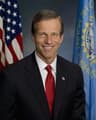 John Thune
Republican · South Dakota
 Tommy Tuberville
Republican · Alabama
 Thomas Tillis
Republican · North Carolina
 Roger Wicker
Republican · Mississippi
 Todd Young
Republican · Indiana