Bill · H.R. 817· House(119-HR-817)
Educational Choice for Children Act of 2025
To amend the Internal Revenue Code of 1986 to allow a credit against tax for charitable donations to nonprofit organizations providing education scholarships to qualified elementary and secondary students.
- Introduced
- 1/28/2025
- Last activity
- 1/28/2025 — Referred to the Committee on Ways and Means, and in addition to the Committee on Education and Workforce, for a period to be subsequently determined by the Speaker, in each case for consideration of such provisions as fall within the jurisdiction of the committee concerned.
- Sponsored by
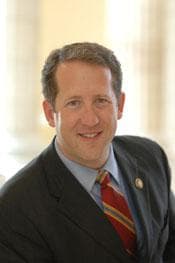
- Adrian Smith
- Cosponsors
- - 27 - 0
- Introduced
- In Committee
What this bill would do
The Educational Choice for Children Act of 2025 proposes to amend the Internal Revenue Code of 1986. It would allow individuals to claim a tax credit for charitable contributions made to nonprofit scholarship granting organizations. These organizations provide scholarships to qualified elementary and secondary students for various educational expenses. The bill includes specific limits on the amount of the credit and sets a total volume cap for the program. Additionally, the legislation aims to protect the autonomy of scholarship organizations and the privacy of private or religious schools from government control.
Yes· 3 of 10
Does this make it easier to use public money at a school other than the local one?+8
The bill creates a mechanism for tax-advantaged funding of scholarships for private, public, or religious schools.
Would students be better off under this?+7
The bill directly expands educational funding opportunities for eligible students through scholarships.
Would children be better off under this?+6
The bill provides financial support for elementary and secondary students through scholarships.
The opposite
Does this leave more decisions to the states?-2
The bill involves federal tax credits and federal oversight of volume caps and scholarship requirements.
Does this reduce what the federal government spends?-2
The bill creates a new tax credit, which reduces federal tax revenue.
Who it would affect, and how
Potential Positive Impacts for People
-
Tax Relief for Donors: Individuals making qualified contributions to scholarship granting organizations can receive a credit against their tax, which is limited to the greater of 10 percent of their adjusted gross income or $5,000 (Section 2(a)(1)).
-
Educational Support for Students: Eligible students, defined as those from households with income not exceeding 300 percent of the area median gross income, can receive scholarships for expenses including tuition, books, curriculum, and even educational therapies (Section 2(c)(1) and 2(c)(3)).
-
Tax-Free Scholarship Income: Scholarships provided by these organizations for qualified expenses are not included in the recipient's gross income (Section 3(a)).
-
Protection of Educational Autonomy: The bill prevents government entities from mandating or controlling the activities of scholarship granting organizations or private/religious schools (Section 4(a)(1) and 4(a)(2)).
-
Legal Standing for Parents: Parents of eligible students who receive scholarships have the right to intervene in court actions challenging the constitutionality of the Act (Section 4(a)(4)).
Potential Negative Impacts for People
-
Credit Limitations: The tax credit is subject to specific limits, meaning it cannot exceed 10 percent of the taxpayer's adjusted gross income or $5,000, and is also subject to a volume cap allocated by the Secretary (Section 2(b)(1)).
-
Volume Cap Restrictions: There is a total volume cap of $5,000,000,000 for the years 2025 through 2028, after which the cap is zero (Section 2(g)(1)).
-
Potential Reduction via State Credits: The amount of the federal credit can be reduced by any amount allowed as a credit on the taxpayer's State tax return for the same qualified contributions (Section 2(b)(3)).
-
Strict Requirements for Organizations: Scholarship granting organizations must undergo annual financial and compliance audits by an independent certified public accountant and must ensure no officer or board member has a felony conviction (Section 2(d)(1)).
Groups and Interests Ranking
Every group the model scored this bill for, from -10 to +10. Hover a score for the reason it gave.
- Demographic And Interest Groups
- Good For Students+7Good For Children+6Good For Low Income Households+5Good For Middle Class Households+3Good For Young Adults+2
- Education And Technology
- Improves School Choice+8Improves College Affordability+2
- Social Issues And Justice
- Improves Disability Rights+5Improves Poverty Reduction+3
- Governance And Ideology
- Increase States Rights-2
- Economy And Finance
- Reduces Middle Class Taxes+3Reduces Government Spending-2
- 1/28/2025
- Referred to the Committee on Ways and Means, and in addition to the Committee on Education and Workforce, for a period to be subsequently determined by the Speaker, in each case for consideration of such provisions as fall within the jurisdiction of the committee concerned.
- 27 Cosponsors added.
- Introduced in House
2 bills Congress.gov lists as related to this one — companions in the other chamber, earlier versions, and bills this one absorbed or was folded into.
 Rick Allen
Republican · Georgia
 Dan Crenshaw
Republican · Texas
 Mike Carey
Republican · Ohio
 Juan Ciscomani
Republican · Arizona
 Byron Donalds
Republican · Florida
 Neal Dunn
Republican · Florida
 Randy Feenstra
Republican · Iowa
 Scott Franklin
Republican · Florida
 Vince Fong
Republican · California
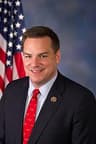 Richard Hudson
Republican · North Carolina
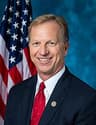 Kevin Hern
Republican · Oklahoma
 Mike Kelly
Republican · Pennsylvania
 Darin LaHood
Republican · Illinois
 Julia Letlow
Republican · Louisiana
 Michael Lawler
Republican · New York
 Nicole Malliotakis
Republican · New York
 John Moolenaar
Republican · Michigan
 Blake Moore
Republican · Utah
 Mariannette Miller-Meeks
Republican · Iowa
 Burgess Owens
Republican · Utah
 John Rose
Republican · Tennessee
 Maria Salazar
Republican · Florida
 Claudia Tenney
Republican · New York
 Joe Wilson
Republican · South Carolina
 Tim Walberg
Republican · Michigan
 Randy Weber
Republican · Texas
 Rudy Yakym
Republican · Indiana