Bill · S. 2295· Senate(119-S-2295)
Child Care for Working Families Act
- Introduced
- 7/15/2025
- Last activity
- 7/15/2025 — Read twice and referred to the Committee on Health, Education, Labor, and Pensions.
- Sponsored by
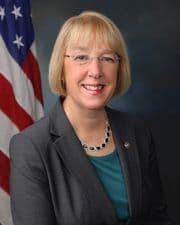
- Patty Murray
- Cosponsors
- - 41 - 0
- Introduced
- In Committee
What this bill would do
The Child Care for Working Families Act aims to increase the quality and supply of child care while lowering costs for families. It establishes an entitlement program for birth-through-five child care and early learning services and funds a universal preschool program. The bill also focuses on extending the duration of Head Start and Early Head Start services to include a full school day and year. These efforts are supported by significant federal appropriations for states, territories, and Tribal organizations. Additionally, the bill provides mechanisms for building an affordable early education system through provider grants.
Who it would affect, and how
Potential Positive Impacts for People
-
Lowered Costs for Families: The bill establishes a sliding fee scale for copayments, ensuring families earning up to 85 percent of the State median income pay no copayment for child care services (Section 101(f)(3)(F)(ii)(I)).
-
Increased Wages for Child Care Workers: The Act requires payment rates to ensure staff receive a living wage and wages equivalent to elementary educators with similar credentials and experience (Section s 101(f)(3)(A)(iv)(cc)).
-
Better Pay for Early Childhood Workers: Funding is authorized to help ensure that Head Start teachers and staff receive wages comparable to elementary educators in their state or, at a minimum, a living wage (Section 402(b)).
-
Improved Access for Underserved Groups: Provisions prioritize increasing the supply and quality of care for vulnerable populations, such as children with disabilities, children experiencing homelessness, and children in foster or kinship care (Section 101(f)(3)(I)).
-
Universal Preschool Access: The bill provides for a universal, high-quality, free, and inclusive preschool program for children aged 3 and 4 (Section 303(e)(2)(A)).
-
Increased Access to Consistent Education: Head Start agencies can receive grants to provide a full school day and a full school year of services, helping ensure children have access to consistent programming (Section 657C(a)(1)).
-
Support for Migrant Families: Migrant and seasonal Head Start agencies can access additional service hours to ensure their services are continuous (Section 657C(a)(2)).
-
Support for Provider Stability: Title II aims to promote stability in the child care sector by providing stable funding to help offset operating expenses (Section 201(1)).
-
Improved Program Quality: Agencies that already meet full-day and full-year requirements can apply for funds to enhance the quality of the services they provide to children (Section 657C(a)(3)).
-
Enhanced Facilities and Resources: Funds are available for facilities grants to support the remodeling, renovation, or construction of buildings (Section 101(h)(3)(B)(iii)), as well as for purchasing or maintaining facilities, buying classroom supplies, and providing professional development for staff (Section 657C(c)(1)).
Potential Negative Impacts for People
-
Restrictions on Religious Facilities: Funds for facility grants may not be used for buildings or facilities that are used primarily for sectarian instruction or religious worship (Section 101(h)(3)(B)(iii)(V)).
-
Strict Requirements for Providers: To be eligible for assistance, child care providers must prohibit the use of suspension, expulsion, and aversive behavioral interventions (Section 101(f)(3)(L)(i)).
-
Increased Financial Burden on Certain Providers: Providers must participate in a State's tiered system for recognizing and supporting quality, which involves specific requirements to meet higher quality standards (Section 101(f)(3)(B)).
-
No Expansion of Enrollment: While the bill provides money to extend hours, Head Start agencies are prohibited from using these specific grant funds to expand the number of children served in their programs (Section 657C(c)(3)).
- 9/2/2025
- 40 Cosponsors added.
- 7/15/2025
- Read twice and referred to the Committee on Health, Education, Labor, and Pensions.
- 3 Cosponsors added.
- Introduced in Senate
One bill Congress.gov lists as related to this one — companions in the other chamber, earlier versions, and bills this one absorbed or was folded into.
 Angela Alsobrooks
Democrat · Maryland
 Tammy Baldwin
Democrat · Wisconsin
 Michael Bennet
Democrat · Colorado
 Richard Blumenthal
Democrat · Connecticut
 Cory Booker
Democrat · New Jersey
 Lisa Blunt Rochester
Democrat · Delaware
 Maria Cantwell
Democrat · Washington
 Christopher Coons
Democrat · Delaware
 Catherine Cortez Masto
Democrat · Nevada
 Richard Durbin
Democrat · Illinois
 Tammy Duckworth
Democrat · Illinois
 John Fetterman
Democrat · Pennsylvania
 Kirsten Gillibrand
Democrat · New York
 Ruben Gallego
Democrat · Arizona
 John Hickenlooper
Democrat · Colorado
 Mazie Hirono
Democrat · Hawaii
 Martin Heinrich
Democrat · New Mexico
 Maggie Hassan
Democrat · New Hampshire
 Amy Klobuchar
Democrat · Minnesota
 Mark Kelly
Democrat · Arizona
 Angus King
Independent · Maine
 Timothy Kaine
Democrat · Virginia
 Andy Kim
Democrat · New Jersey
 Ben Luján
Democrat · New Mexico
 Edward Markey
Democrat · Massachusetts
 Christopher Murphy
Democrat · Connecticut
 Jeff Merkley
Democrat · Oregon
 Alex Padilla
Democrat · California
 Gary Peters
Democrat · Michigan
 John Reed
Democrat · Rhode Island
 Jacky Rosen
Democrat · Nevada
 Bernie Sanders
Independent · Vermont
 Charles Schumer
Democrat · New York
 Adam Schiff
Democrat · California
 Jeanne Shaheen
Democrat · New Hampshire
 Brian Schatz
Democrat · Hawaii
 Tina Smith
Democrat · Minnesota
 Elissa Slotkin
Democrat · Michigan
 Chris Van Hollen
Democrat · Maryland
 Ron Wyden
Democrat · Oregon
 Raphael Warnock
Democrat · Georgia
 Peter Welch
Democrat · Vermont
 Sheldon Whitehouse
Democrat · Rhode Island