Bill · S. 186· Senate(119-S-186)
No Taxpayer Funding for Abortion and Abortion Insurance Full Disclosure Act of 2025
- Introduced
- 1/22/2025
- Last activity
- 1/22/2025 — Read twice and referred to the Committee on Finance.
- Sponsored by
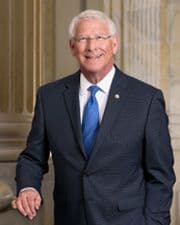
- Roger Wicker
- Cosponsors
- - 50 - 0
- Introduced
- In Committee
What this bill would do
The "No Taxpayer Funding for Abortion and Abortion Insurance Full Disclosure Act of 2025" seeks to prohibit the use of federal funds for abortions. It prohibits federal funds from being used for abortions or for health benefits plans that include abortion coverage. The bill also limits health care services provided by federal facilities or employees. It establishes exceptions for abortions resulting from rape or incest, and those needed to preserve the life of the mother. Additionally, the act modifies the Affordable Care Act regarding premium credits and cost-sharing reductions. Finally, it revises notice requirements for disclosing abortion coverage and related surcharges.
Yes
Does this make what the government does easier for the public to see?+3
The bill increases transparency by requiring health plans to disclose abortion coverage and specific surcharges.
Does this reduce what the federal government spends?+2
The bill reduces federal spending by prohibiting the use of federal funds for abortions and certain health plans.
Does this give the federal government more power?+2
The bill expands federal authority by prohibiting the use of federal funds for abortion-related healthcare across various programs.
The opposite· 3 of 19
Would women be better off under this?-7
The bill limits access to abortion services and reduces federal subsidies for health plans that include abortion coverage.
Does this make abortion easier to get?-7
The bill restricts access to abortion services through federal facilities, employees, and the loss of federal subsidies for related health plans.
Does this strengthen the Affordable Care Act?-5
The bill reduces support for the ACA by eliminating premium tax credits and cost-sharing reductions for plans that include abortion coverage.
Who it would affect, and how
Potential Positive Impacts for People
-
Exceptions for Medical Emergencies and Crime: The bill ensures that funding limitations do not apply to abortions performed to prevent a physical disorder, injury, or illness that places a woman in danger of death, nor to abortions resulting from rape or incest (Section 308).
-
Coverage for Medical Complications: The act allows for the treatment of infections, injuries, diseases, or disorders that result from or are exacerbated by an abortion (Section 307).
-
Transparency in Health Plan Coverage: The bill requires that the extent of abortion coverage in a qualified health plan be disclosed during enrollment and prominently displayed in marketing, advertising, or summary documents (Section 202(a)).
-
Clarity on Premium Costs: For qualified health plans that include abortion services, the bill requires the specific surcharge attributable to those services to be identified and disclosed separately (Section 202(a)).
Potential Negative Impacts for People
-
Loss of Federal Subsidies for Specific Health Plans: The bill prohibits the use of federal funds for health benefits coverage that includes abortion, which means individuals with such plans would not be eligible for refundable premium tax credits or cost-sharing reductions under the Affordable Care Act (Section 201(a)(1) and Section 302).
-
Restriction of Benefits for Small Employers: Under the new rules, the small employer health insurance expense credit would not apply to qualified health plans that include coverage for abortions (Section 201(a)(2)).
-
Limitations on Federal Health Services: Individuals receiving health care from facilities owned or operated by the Federal Government, or from individuals employed by the Federal Government, would be prohibited from receiving abortion services (Section 303).
-
Restrictions on Multi-State Plans: The bill mandates that multi-state qualified health plans offered on an Exchange cannot provide coverage for which the expenditure of federal funds is prohibited by this act (Section 201(b)).
Groups and Interests Ranking
Every group the model scored this bill for, from -10 to +10. Hover a score for the reason it gave.
- Demographic And Interest Groups
- Good For Women-7Good For Business Owners-4Good For Low Income Households-4Good For Middle Aged-3Good For Middle Class Households-3Good For Young Adults-3Good For African Americans-2Good For Asian Americans-2Good For Hispanic Americans-2Good For L G B T Q Community-2Good For Native Americans-2
- Healthcare
- Improves Abortion Access-7Increases Affordable Care Act Support-5Improves Healthcare Access-3Increases Medicaid Funding-2Reduces Private Insurance Premiums-2
- Economy And Finance
- Reduces Government Spending+2Improves Small Business Support-4Reduces Middle Class Taxes-3
- Governance And Ideology
- Improves Government Transparency+3Increases Federal Power+2
- Social Issues And Justice
- Improves Poverty Reduction-2
- 7/22/2026
- 1 Cosponsor added.
- 9/16/2025
- 1 Cosponsor added.
- 4/28/2025
- 1 Cosponsor added.
- 3/14/2025
- 1 Cosponsor added.
- 2/3/2025
- 1 Cosponsor added.
- 1/22/2025
- Read twice and referred to the Committee on Finance.
- 45 Cosponsors added.
- Introduced in Senate
One bill Congress.gov lists as related to this one — companions in the other chamber, earlier versions, and bills this one absorbed or was folded into.
 John Boozman
Republican · Arkansas
 Marsha Blackburn
Republican · Tennessee
 John Barrasso
Republican · Wyoming
 Jim Banks
Republican · Indiana
 Ted Budd
Republican · North Carolina
 Katie Britt
Republican · Alabama
 Mike Crapo
Republican · Idaho
 Shelley Capito
Republican · West Virginia
 John Cornyn
Republican · Texas
 Bill Cassidy
Republican · Louisiana
 Tom Cotton
Republican · Arkansas
 Kevin Cramer
Republican · North Dakota
 Ted Cruz
Republican · Texas
 John Curtis
Republican · Utah
 Steve Daines
Republican · Montana
 Joni Ernst
Republican · Iowa
 Deb Fischer
Republican · Nebraska
 Lindsey Graham
Republican · South Carolina
 Chuck Grassley
Republican · Iowa
- Darline Graham
Republican · South Carolina
 Bill Hagerty
Republican · Tennessee
 John Hoeven
Republican · North Dakota
 Cindy Hyde-Smith
Republican · Mississippi
 Josh Hawley
Republican · Missouri
 Jon Husted
Republican · Ohio
 Ron Johnson
Republican · Wisconsin
 James Justice
Republican · West Virginia
 John Kennedy
Republican · Louisiana
 Cynthia Lummis
Republican · Wyoming
 James Lankford
Republican · Oklahoma
 Mike Lee
Republican · Utah
 Mitch McConnell
Republican · Kentucky
 Jerry Moran
Republican · Kansas
 Markwayne Mullin
Republican · Oklahoma
 Roger Marshall
Republican · Kansas
 Bernie Moreno
Republican · Ohio
 David McCormick
Republican · Pennsylvania
 Ashley Moody
Republican · Florida
 James Risch
Republican · Idaho
 Mike Rounds
Republican · South Dakota
 Pete Ricketts
Republican · Nebraska
 Tim Scott
Republican · South Carolina
 Dan Sullivan
Republican · Alaska
 Rick Scott
Republican · Florida
 Eric Schmitt
Republican · Missouri
 Tim Sheehy
Republican · Montana
 John Thune
Republican · South Dakota
 Tommy Tuberville
Republican · Alabama
 Thomas Tillis
Republican · North Carolina
 Todd Young
Republican · Indiana