Bill · S. 1232· Senate(119-S-1232)
Workplace Violence Prevention for Health Care and Social Service Workers Act
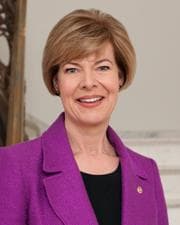
- Introduced
- 4/1/2025
- Last activity
- 4/1/2025 — Read twice and referred to the Committee on Health, Education, Labor, and Pensions.
- Sponsored by
- Tammy Baldwin
- Cosponsors
- - 31 - 0
- Introduced
- In Committee
What this bill would do
This bill directs the Secretary of Labor to create and implement occupational safety and health standards to prevent workplace violence. It specifically targets employers within the health care and social service sectors. The mandate requires these employers to develop and maintain comprehensive workplace violence prevention plans. The bill outlines a process involving an interim final standard followed by a formal proposed and final standard. It also includes specific requirements for risk assessments, employee training, and incident investigations. Finally, it amends the Social Security Act to apply these standards to certain facilities receiving Medicare funds.
Yes
Does this give the federal government more power?+5
The bill expands federal authority by mandating new occupational safety standards for specific industries.
The opposite
Would business owners be better off under this?-4
Employers face new administrative burdens, mandatory training, and recordkeeping requirements.
Who it would affect, and how
Potential Positive Impacts for People
-
Enhanced Worker Safety: The bill requires covered employers to develop and implement a comprehensive workplace violence prevention plan to protect health care and social service workers (Section 101(a)(1)(A)).
-
Meaningful Employee Involvement: Plans must be developed with the meaningful participation of direct care employees and their representatives (Section 103(1)(A)(i)).
-
Tailored Protection: Prevention plans must be specific to the unique conditions, hazards, and patient-specific risk factors of a particular facility or service (Section 103(1)(A)(ii)).
-
Comprehensive Risk Management: Employers are required to perform risk assessments that include environmental risk factors and patient-specific risks (Section 103(1)(B)(ii)).
-
Improved Response and Support: The standard requires procedures for incident response, providing medical care or first aid, and offering information about available trauma and related counseling (Section 103(1)(B)(iv)).
-
Mandatory Training: Employers must provide annual training and education to employees exposed to violence risks, including information on the plan and anti-retaliation policies (Section 103(3)(A)).
-
Protection Against Retaliation: Employers are required to adopt policies prohibiting discrimination or retaliation against employees for reporting violence or seeking assistance (Section 103(8)).
Potential Negative Impacts for People
-
Increased Administrative Requirements: Employers must maintain various records, such as violent incident logs and annual summaries, for at least five years (Section 103(4)(A)(i) and 103(4)(B)(v)).
-
Mandatory Reporting Obligations: Employers are required to submit annual summaries of incident logs to the Secretary (Section 103(4)(C)(i)).
-
Financial/Compliance Burden for Medicare Facilities: Certain hospitals and skilled nursing facilities that are not otherwise subject to the Occupational Safety and Health Act must comply with the new standard to receive Medicare funds (Section 201(a)(1)).
Groups and Interests Ranking
Every group the model scored this bill for, from -10 to +10. Hover a score for the reason it gave.
- Governance And Ideology
- Increases Federal Power+5
- Demographic And Interest Groups
- Good For Business Owners-4
- 7/14/2026
- 1 Cosponsor added.
- 1/12/2026
- 1 Cosponsor added.
- 9/2/2025
- 1 Cosponsor added.
- 7/28/2025
- 2 Cosponsors added.
- 7/22/2025
- 1 Cosponsor added.
- 7/9/2025
- 1 Cosponsor added.
- 6/11/2025
- 1 Cosponsor added.
- 6/3/2025
- 1 Cosponsor added.
- 5/7/2025
- 1 Cosponsor added.
- 4/30/2025
- 1 Cosponsor added.
- 4/28/2025
- 1 Cosponsor added.
- 4/1/2025
- Read twice and referred to the Committee on Health, Education, Labor, and Pensions.
- 20 Cosponsors added.
- Introduced in Senate
2 bills Congress.gov lists as related to this one — companions in the other chamber, earlier versions, and bills this one absorbed or was folded into.
 Angela Alsobrooks
Democrat · Maryland
 Michael Bennet
Democrat · Colorado
 Richard Blumenthal
Democrat · Connecticut
 Cory Booker
Democrat · New Jersey
 Christopher Coons
Democrat · Delaware
 Catherine Cortez Masto
Democrat · Nevada
 Richard Durbin
Democrat · Illinois
 Tammy Duckworth
Democrat · Illinois
 John Fetterman
Democrat · Pennsylvania
 Kirsten Gillibrand
Democrat · New York
 John Hickenlooper
Democrat · Colorado
 Martin Heinrich
Democrat · New Mexico
 Amy Klobuchar
Democrat · Minnesota
 Timothy Kaine
Democrat · Virginia
 Andy Kim
Democrat · New Jersey
 Ben Luján
Democrat · New Mexico
 Edward Markey
Democrat · Massachusetts
 Patty Murray
Democrat · Washington
 Jeff Merkley
Democrat · Oregon
 Alex Padilla
Democrat · California
 Gary Peters
Democrat · Michigan
 John Reed
Democrat · Rhode Island
 Bernie Sanders
Independent · Vermont
 Jeanne Shaheen
Democrat · New Hampshire
 Brian Schatz
Democrat · Hawaii
 Tina Smith
Democrat · Minnesota
 Elissa Slotkin
Democrat · Michigan
 Chris Van Hollen
Democrat · Maryland
 Raphael Warnock
Democrat · Georgia
 Peter Welch
Democrat · Vermont
 Sheldon Whitehouse
Democrat · Rhode Island
 Elizabeth Warren
Democrat · Massachusetts