Bill · H.R. 8541· House(119-HR-8541)
Long-Term Care Workforce Support Act
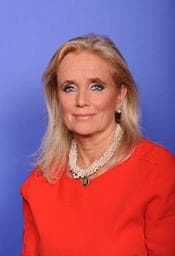
- Introduced
- 4/28/2026
- Last activity
- 4/28/2026 — Referred to the Committee on Energy and Commerce, and in addition to the Committees on Education and Workforce, Ways and Means, the Judiciary, House Administration, and Oversight and Government Reform, for a period to be subsequently determined by the Speaker, in each case for consideration of such provisions as fall within the jurisdiction of the committee concerned.
- Sponsored by
- Debbie Dingell
- Cosponsors
- - 13 - 0
- Introduced
- In Committee
What this bill would do
The Long-Term Care Workforce Support Act aims to bolster the direct care professional workforce to support older individuals and people with disabilities. It proposes increasing Medicaid reimbursement rates to improve compensation and retention for these essential workers. The bill establishes various grant programs for training, recruitment, and career advancement across diverse settings. It also includes provisions for workforce labor protections, such as wage theft prevention and fair scheduling. Additionally, the act seeks to improve workplace safety and access to job benefits like paid sick time. Finally, it establishes a national strategy to stabilize and grow the long-term care industry.
Yes· 3 of 26
Does this put more money into Medicaid, the health coverage for people on low incomes?+9
The bill increases the Federal medical assistance percentage by 10 percentage points for Medicaid long-term care services.
Would people with disabilities be better off under this?+7
The bill emphasizes improving services, professional development, and independence for people with disabilities.
Would people over 65 be better off under this?+6
The bill stabilizes the workforce required to provide essential long-term care for older individuals.
The opposite
Would business owners be better off under this?-5
Employers face new regulatory burdens, such as mandatory violence prevention plans and mandatory sick leave.
Does this make it easier to run a small business?-3
The bill imposes significant administrative requirements, including mandatory workplace violence prevention plans and recordkeeping, which increase costs for employers.
Who it would affect, and how
Potential Positive Impacts for People
-
Increased Compensation and Benefits: The bill seeks to increase Medicaid reimbursement rates to support higher pay, including hazard pay, overtime, and shift differentials for direct care professionals (Section 101). It also aims to provide essential benefits such as paid sick, family, and medical leave (Section 101; Section 332).
-
Improved Career Opportunities: Through various grant programs, the bill provides pathways for career advancement, professional development, and higher education opportunities for workers (Section 202; Section 206; Section 207).
-
Career Opportunities for Rural Youth: Grants will fund career exploration and technical education programs to bring awareness to health care careers for elementary and secondary students in underserved rural communities (Section (b)(1)).
-
Enhanced Workforce Training: The act authorizes grants to support workforce training, recruitment, and the creation of apprenticeship programs to build a qualified pipeline of professionals (Section 202; Section 214).
-
Improved Worker Well-being Assessment: The Secretary will develop a research-based tool to assess the well-being of direct care professionals, covering workplace culture, safety, and mental health (Section 221(a)(1) and (b)(2)).
-
National Training Standards: A new Commission will be established to develop industry-recognized, portable training standards for direct care professionals (Section 222(a)(2)).
-
Mental Health and Resiliency Support: The bill authorizes grants to establish or enhance programs dedicated to improving mental health, preventing suicide, and providing peer support for direct care professionals (Section 231(a)(1) and (3)).
-
Financial Assistance for Workers: States and tribes can use grants to provide wage subsidies, student loan repayment, tuition assistance, and help with childcare or transportation (Section 234(b)(1)).
-
Enhanced Labor Protections: Workers will receive specific protections, such as the right to written agreements detailing pay and schedules (Section 312), fair scheduling practices that require notice and compensation for canceled hours (Section 313), and guaranteed meal and rest breaks (Section 316).
-
Workplace Protections and Safety: The bill includes provisions for wage theft prevention and recovery (Section 302), fair scheduling practices (Section 313), and the prevention of workplace violence (Section 321).
-
Enhanced Workplace Safety: Employers must implement hazard prevention and engineering controls, such as security systems, alarm systems, and barrier protection, to correct hazards in a timely manner (Section 321(B)(iii)).
-
Improved Response to Violence: The bill requires procedures for medical care, first aid, and access to information regarding trauma and counseling following a violent incident (Section s321(B)(iv)).
-
Mandatory Safety Training: Employees are entitled to annual training regarding workplace violence hazards, reporting procedures, and employee rights (Section 321(B)(3)(A)).
-
Support for Victims of Violence: Paid sick time can be used to seek medical attention, obtain counseling, or take legal action related to domestic violence, sexual assault, or stalking (Section 332(b)(7)).
-
Guaranteed Paid Sick Leave: Direct care professionals earn paid sick time for physical or mental illness, medical care, and caring for family members (Section 332(b)).
-
Immediate Leave during Emergencies: During a declared public health emergency, employees can immediately use additional or accrued sick time (Section 332(c)(3)).
-
Support for Underserved Populations: The bill emphasizes increasing workforce diversity and providing specific support for rural areas, Indian tribes, and underserved urban communities (Section 206; Section 208; Section 215).
-
Protection for Recipients: The act makes permanent the option for Medicaid recipients of home and community-based services to be protected against spousal impoverishment (Section 103).
-
Compensation Advocacy: The creation of a National Strategy and Advisory Council aims to provide direct care professionals with a livable wage and improved compensation policies (Section 402(b)).
Potential Negative Impacts for People
-
State Compliance Requirements: To receive increased Medicaid funds, states must meet specific application requirements, including providing descriptions of implementation plans and assurances regarding the use of funds (Section 101).
-
Risk of Funding Reductions: The Secretary has the authority to reduce the increased Federal medical assistance percentage if a state fails to comply with the requirements of the act (Section 101).
-
Strict Use of Funds: Grant recipients are subject to specific rules, such as the requirement that funds supplement, rather than supplant, existing state funding levels (Section 101; Section 102; Section 204).
-
Financial Requirements for Grant Recipients: To be eligible for certain grants, entities may be required to provide recurring non-Federal contributions of at least 50 percent of the total operating costs (Section (c)(2)).
-
Burden of Data Collection: While the law states the Secretary should minimize it, the development of an assessment tool involves a data collection process for direct care professionals (Section s 221(d)).
-
Employer Obligations for Violence Prevention: Employers in covered facilities must develop, implement, and maintain specific, tailored workplace violence prevention plans (Section 323(a)(1)(A)).
-
Employment Restrictions on Leave: An employer is not required to permit a covered direct care professional to earn more than 56 hours of paid sick time in a single year, unless the employer chooses to do so (Section 332(a)(1)).
-
Wait Times for Leave Use: Unless a public health emergency is in effect, employees may have to wait up to 60 days after starting employment before they are entitled to use their earned paid sick time (Section s332(a)(3)).
-
Documentation Requirements: Employers may require a certification from a health care provider for sick time requests that cover more than three consecutive workdays (Section 332(e)(2)(A)(i)).
Groups and Interests Ranking
Every group the model scored this bill for, from -10 to +10. Hover a score for the reason it gave.
- Demographic And Interest Groups
- Good For People With Disabilities+7Good For Native Americans+6Good For Rural Residents+6Good For Seniors+6Good For Union Workers+6Good For Low Income Households+5Good For Women+5Good For Middle Class Households+4Good For Children+3Good For Hispanic Americans+3Good For Veterans+3Good For Business Owners-5
- Social Issues And Justice
- Improves Disability Rights+6Improves Racial Equity+5Improves Poverty Reduction+4Improves Affordable Housing+3Improves Pathway To Citizenship+3
- Healthcare
- Increases Medicaid Funding+9Improves Healthcare Access+5Improves Mental Health Access+5
- Economy And Finance
- Improves Union Protections+5Increases Minimum Wage+5Improves Economic Growth+2Reduces Middle Class Taxes+1Improves Small Business Support-3
- Education And Technology
- Improves College Affordability+5
- Environment Energy And Infrastructure
- Improves Rural Development+5
- Governance And Ideology
- Improves Government Transparency+3
- 9/2/2026
- 1 Cosponsor added.
- 8/3/2026
- 1 Cosponsor added.
- 7/27/2026
- 2 Cosponsors added.
- 7/6/2026
- 1 Cosponsor added.
- 6/2/2026
- 1 Cosponsor added.
- 5/14/2026
- 2 Cosponsors added.
- 5/13/2026
- 2 Cosponsors added.
- 5/12/2026
- 1 Cosponsor added.
- 5/11/2026
- 1 Cosponsor added.
- 4/28/2026
- Referred to the Committee on Energy and Commerce, and in addition to the Committees on Education and Workforce, Ways and Means, the Judiciary, House Administration, and Oversight and Government Reform, for a period to be subsequently determined by the Speaker, in each case for consideration of such provisions as fall within the jurisdiction of the committee concerned.
- 1 Cosponsor added.
- Introduced in House
2 bills Congress.gov lists as related to this one — companions in the other chamber, earlier versions, and bills this one absorbed or was folded into.
 Yassamin Ansari
Democrat · Arizona
 Judy Chu
Democrat · California
 Greg Casar
Democrat · Texas
 Danny Davis
Democrat · Illinois
 Jesús García
Democrat · Illinois
 Adelita Grijalva
Democrat · Arizona
 Jonathan Jackson
Democrat · Illinois
 John Larson
Democrat · Connecticut
 Doris Matsui
Democrat · California
 Eleanor Norton
Democrat · District of Columbia
 Lateefah Simon
Democrat · California
 Maxine Waters
Democrat · California
 Frederica Wilson
Democrat · Florida