Bill · H.R. 7767· House(119-HR-7767)
Make Billionaires Pay Their Fair Share Act
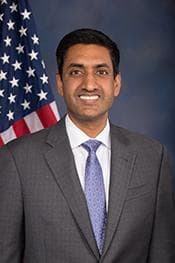
- Introduced
- 3/3/2026
- Last activity
- 3/3/2026 — Referred to the Committee on Ways and Means, and in addition to the Committees on Energy and Commerce, Financial Services, and Education and Workforce, for a period to be subsequently determined by the Speaker, in each case for consideration of such provisions as fall within the jurisdiction of the committee concerned.
- Sponsored by
- Ro Khanna
- Cosponsors
- - 7 - 0
- Introduced
- In Committee
What this bill would do
The Make Billionaires Pay Their Fair Share Act proposes an annual 5 percent tax on the net value of assets held by individuals or trusts with more than $1,000,000,000 in assets. The legislation implements several social programs, including affordability rebates, expanded Medicare coverage for dental, hearing, and vision services, and a child care entitlement program for families with children from birth through age five. It also establishes a $60,000 annual minimum salary for public school teachers and provides funding for the Housing Trust Fund. Additionally, the bill focuses on improving home and community-based services through planning grants and increased federal matching funds. The legislation also includes permanent extensions for Medicaid protections against spousal impoverishment and the "money follows the person" rebalancing demonstration.
Yes· 3 of 20
Does this raise taxes on the highest earners?+10
The bill imposes a 5 percent annual tax on individuals or trusts with net assets exceeding $1,000,000,000.
Would children be better off under this?+8
The bill funds high-quality child care and early learning services for children from birth through age five.
Would people over 65 be better off under this?+8
The bill expands Medicare coverage to include dental, hearing, and vision services.
The opposite
Would high-income households be better off under this?-7
The bill imposes a 5 percent annual tax on net assets exceeding $1,000,000,000.
Who it would affect, and how
Potential Positive Impacts for People
-
Wealth Tax on High-Net-Worth Individuals: An annual tax of 5 percent is imposed on individuals or trusts with assets exceeding $1,000,000,000 (Section 101).
-
Affordability Rebates: Taxpayers may receive rebates of $3,000 for themselves, $6,000 for joint returns, plus $3,000 for each dependent (Section 201).
-
Health Care Premium Tax Credits: The bill increases eligibility for premium tax credits through a sliding scale based on household income (Section 302).
-
Medicare Dental Coverage: Medicare enrollees would gain coverage for dental and oral health services, including preventive services, procedures like fillings or crowns, and dentures (Section 402).
-
Medicare Hearing Coverage: The bill provides coverage for hearing aid examination services and hearing aids for individuals with moderately severe, severe, or profound hearing loss (Section 403).
-
Medicare Vision Coverage: The bill expands coverage to include routine eye examinations and one pair of conventional eyeglasses or contact lenses (Section 404).
-
Child Care Entitlement: The bill establishes a program to provide high-quality child care services for eligible children under the age of six (Section 601).
-
Increased Teacher Compensation: Public elementary and secondary school teachers will be guaranteed a starting annual base salary of at least $60,000, which is intended to be a livable and competitive wage (Section 701).
-
Career Salary Growth for Educators: The bill ensures that teacher salaries increase regularly throughout a teacher's career based on their years of experience (Section 701 and Section 702).
-
Improved Home and Community-Based Services: States can receive increased federal medical assistance matching funds to improve access to services, reduce barriers, and expand behavioral health services (Section 802).
-
Support for Caregivers and Workers: The HCBS provisions aim to strengthen the workforce by updating qualification standards and providing training opportunities for direct care workers and family caregivers (Section 802).
-
Medicaid Protections: The bill provides a permanent extension of protections against spousal impoverishment for certain Medicaid recipients receiving home and community-based services (Section 805).
Potential Negative Impacts for People
-
Tax Burden on High-Asset Taxpayers: Individuals with net assets exceeding $1,000,000,000 would be subject to a 5 percent annual tax (Section 101).
-
Increased Tax for Covered Expatriates: Individuals who are covered expatriates and expatriate during the calendar year would face a tax rate of 60 percent (Section 2903).
-
Medicare Premium Adjustments: The bill includes provisions that affect the determination of monthly actuarial rates and premium subsidies for Medicare Part B (Section 405).
-
Vision Care Limitations: Coverage for vision services is limited to one routine eye examination every two-year period (Section 404).
-
Dental Coverage Limitations: Preventive services under the new Medicare coverage are limited to two oral exams, two cleanings, and one full-mouth series of x-rays per year (Section 402).
-
Restrictions on State Funding Flexibility: To receive increased federal funds, states must adhere to strict "maintenance of effort" requirements, which prevent them from reducing the amount, duration, or scope of existing services (Section 802).
-
Mandatory State Planning Requirements: States must develop and submit detailed improvement plans and meet specific benchmarks regarding service availability and expenditure percentages to remain eligible for funding (Section 802).
Groups and Interests Ranking
Every group the model scored this bill for, from -10 to +10. Hover a score for the reason it gave.
- Demographic And Interest Groups
- Good For Children+8Good For Seniors+8Good For Low Income Households+7Good For People With Disabilities+7Good For Retirees+7Good For Women+5Good For Middle Class Households+4Good For Union Workers+4Good For High Income Households-7
- Economy And Finance
- Increases Wealthy Taxes+10Improves Union Protections+5Increases Minimum Wage+5Improves Economic Growth+2
- Healthcare
- Increases Medicaid Funding+7Improves Healthcare Access+6Increases Affordable Care Act Support+6Improves Opioid Crisis Response+1
- Social Issues And Justice
- Improves Childcare Affordability+8Improves Affordable Housing+5Improves Poverty Reduction+5
- Governance And Ideology
- Improves Government Transparency+3
- 6/24/2026
- 1 Cosponsor added.
- 4/27/2026
- 1 Cosponsor added.
- 3/25/2026
- 5 Cosponsors added.
- 3/3/2026
- Referred to the Committee on Ways and Means, and in addition to the Committees on Energy and Commerce, Financial Services, and Education and Workforce, for a period to be subsequently determined by the Speaker, in each case for consideration of such provisions as fall within the jurisdiction of the committee concerned.
- Introduced in House
6 bills Congress.gov lists as related to this one — companions in the other chamber, earlier versions, and bills this one absorbed or was folded into.
- 119-HR-247: Health Care Affordability Act of 2025
- 119-HR-4849: Protecting Health Care and Lowering Costs Act of 2025
- 119-S-46: Health Care Affordability Act of 2025
- 119-S-939: Medicare Dental, Hearing, and Vision Expansion Act of 2025
- 119-S-2556: Protecting Health Care and Lowering Costs Act
- 119-S-3956: Make Billionaires Pay Their Fair Share Act
 Yassamin Ansari
Democrat · Arizona
 André Carson
Democrat · Indiana
 Al Green
Democrat · Texas
 Adelita Grijalva
Democrat · Arizona
 Robin Kelly
Democrat · Illinois
 Eleanor Norton
Democrat · District of Columbia
 Melanie Stansbury
Democrat · New Mexico