 Bill · S. 3956· Senate(119-S-3956)
Make Billionaires Pay Their Fair Share Act
- Introduced
- 3/2/2026
- Last activity
- 3/2/2026 — Read twice and referred to the Committee on Finance.
- Sponsored by
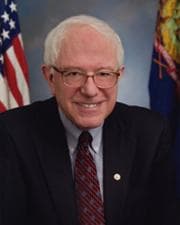
- Bernie Sanders
- Cosponsors
- - 0 - 1
- Introduced
- In Committee
What this bill would do
This bill, titled the "Make Billionaires Pay Their Fair Share Act," seeks to amend the Internal Revenue Code to impose a 5 percent annual tax on the net value of assets held by individuals or trusts exceeding $1,000,000,000. The legislation establishes several major federal programs focused on education and healthcare, such as expanding Medicare to include dental, hearing, and vision services. It also creates a national entitlement program for high-quality child care for children from birth through age five. Furthermore, the bill aims to ensure public school teachers receive a minimum annual base salary of $60,000 with inflation adjustments. Finally, it addresses housing and community services by increasing funding for the Housing Trust Fund and improving home and community-based services through Medicaid support.
Yes· 3 of 23
Does this put more money into public schools?+9
Provides massive appropriations to increase teacher salaries and improve public education investment.
Does this expand the rights of people with disabilities?+8
The bill greatly enhances support for home and community-based services for Medicaid-eligible individuals with disabilities.
Does this make child care cost less?+8
Significantly increases funding for childcare supply, quality, and accessibility for underserved populations.
The opposite· 3 of 5
Would high-income households be better off under this?-8
The bill imposes a significant 5 percent annual wealth tax on assets exceeding $1 billion.
Would people with substantial wealth be better off under this?-8
The new wealth tax specifically targets those with assets exceeding $1 billion.
Would the very wealthiest people be better off under this?-8
The wealth tax imposes a heavy annual burden on ultra-high net worth individuals.
Who it would affect, and how
Potential Positive Impacts for People
-
Tax Relief through Rebates: The bill implements "affordability rebates" which provide $3,000 for individuals or $6,000 for joint returns, plus $3,000 for each dependent (Section 201).
-
Improved Health Coverage: Medicare enrollees would gain coverage for dental and oral health services, such as cleanings and fillings (Section 402).
-
Expanded Hearing Care: The bill provides coverage for hearing aids and examination services for individuals with moderately severe, severe, or profound hearing loss (Section 403).
-
Increased Vision Care Access: Medicare would cover routine eye examinations and one pair of conventional eyeglasses or contact lenses every two years (Section 404).
-
Affordable Child Care: A new entitlement program would provide high-quality child care services for eligible children under age six (Section 601).
-
Support for Working Families: The child care program includes a sliding fee scale for copayments to help families access services (Section 601).
-
Housing Support: The bill authorizes appropriations for the Housing Trust Fund (Section 501).
-
Teacher Salary Increases: The bill seeks to ensure public school teachers earn a livable and competitive salary with a starting base of at least $60,000 (Section 701).
-
Inflation Protection for Teachers: For fiscal years 2032 and after, the minimum salary for teachers will be adjusted for inflation to maintain purchasing power (Section 702).
-
Support for Local Educators: States receiving funds must ensure teacher salaries increase throughout their careers and are commensurate with other college-s educated professionals in their region (Section 703).
-
Improved Home and Community-Based Services: The bill provides funding for states to develop improvement plans to address access barriers and enhance the availability of these services (Section 801).
-
Increased Medicaid Support: States that meet specific requirements can receive an increased Federal medical assistance percentage for home and community-based services (Section 802).
-
Caregiver and Workforce Support: The legislation includes provisions to strengthen the direct care workforce through better payment rates and training opportunities (Section 802).
-
Financial Protections for Families: The bill permanently extends Medicaid protections against spousal impoverishment for recipients of home and community-based services (Section 805).
Potential Negative Impacts for People
-
New Tax Burden on High-Net-Worth Individuals: Applicable taxpayers with net assets exceeding $1,000,000,000 will be subject to a 5 percent annual tax on the net value of those assets (Section 101).
-
Increased Tax Rate for Expatriates: Covered expatriates may face a tax rate of 60 percent for the calendar year in which they expatriate (Section 2903).
-
Medicare Premium Adjustments: The bill includes a phase-in process that adjusts monthly actuarial rates for Medicare Part B premiums to account for new dental coverage (Section 405).
-
Limitations on Medical Services: Dental coverage is subject to frequency limits, such as no more than two oral exams or two cleanings per year (Section 402(c)(3)).
-
Vision Care Limits: Coverage for vision services is limited to one routine eye examination every two-year period (Section 404(c)(2)).
-
State Funding Requirements: To receive allotments, states must increase their per-pupil expenditures or aggregate expenditures for public education (Section 703).
-
Restrictions on Educational Changes: States are prohibited from using increased education funding to increase average class sizes, reduce planning time, or require teachers to teach additional classes (Section 703).
-
Medicaid Maintenance of Effort: States participating in the HCBS improvement program are prohibited from reducing the amount, duration, or scope of existing services or reducing payment rates (Section 802).
-
Strict Compliance for Medicaid Funds: States must ensure they do not use new Federal funds to supplant their existing levels of state funding for home and community-based services (Section 802).
Groups and Interests Ranking
Every group the model scored this bill for, from -10 to +10. Hover a score for the reason it gave.
- Healthcare
- Improves Healthcare Access+7Increases Medicaid Funding+7Increases Medicare Funding+7Increases Affordable Care Act Support+5Improves Mental Health Access+3
- Social Issues And Justice
- Improves Childcare Affordability+8Improves Disability Rights+8Improves Affordable Housing+6Improves Poverty Reduction+6
- Demographic And Interest Groups
- Good For Children+8Good For Low Income Households+7Good For Retirees+6Good For Seniors+6Good For Students+6Good For Women+5Good For Middle Class Households+4Good For Rural Residents+4Good For Business Owners+3Good For Billionaires-8Good For High Income Households-8Good For High Net Worth Individuals-8Good For Ultra High Net Worth Individuals-8
- Education And Technology
- Increases Public School Funding+9
- Economy And Finance
- Increases Minimum Wage+5Reduces Middle Class Taxes+5Improves Small Business Support+4Increases Wealthy Taxes-8
- Governance And Ideology
- Increases Federal Power+2
- 3/26/2026
- 1 Cosponsor added.
- 3/2/2026
- Read twice and referred to the Committee on Finance.
- Introduced in Senate
6 bills Congress.gov lists as related to this one — companions in the other chamber, earlier versions, and bills this one absorbed or was folded into.
- 119-HR-247: Health Care Affordability Act of 2025
- 119-HR-4849: Protecting Health Care and Lowering Costs Act of 2025
- 119-HR-7767: Make Billionaires Pay Their Fair Share Act
- 119-S-46: Health Care Affordability Act of 2025
- 119-S-939: Medicare Dental, Hearing, and Vision Expansion Act of 2025
- 119-S-2556: Protecting Health Care and Lowering Costs Act
 Chris Van Hollen
Democrat · Maryland