Bill · H.R. 2004· House(119-HR-2004)
Tyler’s Law
- Introduced
- 3/10/2025
- Last activity
- 9/16/2026 — Received in the Senate. Read twice. Placed on Senate Legislative Calendar under General Orders. Calendar No. 625.
- Sponsored by
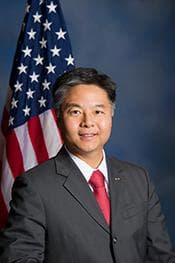
- Ted Lieu
- Cosponsors
- - 35 - 30
- Introduced
- Passed House
- Awaiting Senate
- On Senate calendar
What this bill would do
This bill is known as Tyler's Law. It directs the Secretary of Health and Human Services to complete a study within one year of the bill's enactment. The study will look at how often emergency departments test for fentanyl during an overdose, the costs of this testing, and the potential benefits and risks. It will also examine how fentanyl testing impacts patient privacy and the patient-physician relationship. Within six months of finishing the study, the Secretary must issue guidance on whether emergency departments should make fentanyl testing routine for overdose patients. This guidance must also cover how hospitals can ensure clinicians know which substances are in their routine drug tests and how testing affects future overdose risks and health outcomes.
Yes· 3 of 9
Does this do more about addiction and overdose deaths?+7
Specifically targets the identification of fentanyl in overdose cases to improve patient outcomes.
Would people in their twenties and thirties be better off under this?+3
Young adults are a high-risk demographic for opioid overdoses who may benefit from better diagnostics.
Would people in middle age be better off under this?+3
Middle-aged adults suffering from overdose may receive more accurate testing and guidance.
The opposite
Does this protect people from being watched or searched?-2
The bill identifies potential negative impacts on patient privacy and confidentiality of health information.
Who it would affect, and how
Potential Positive Impacts for People
-
Section 2(a): This section requires a study on how frequently emergency departments test for fentanyl, the costs, and the potential benefits and risks for patients. This is positive because it aims to understand the current landscape of overdose testing.
-
Section 2(b): This section requires the Secretary of Health and Human Services to issue guidance on whether emergency departments should make fentanyl testing a routine procedure for overdose patients. This could lead to clearer standards for patient care.
-
Section 2(b): This provision instructs on how hospitals can ensure clinicians know which substances are included in routine drug tests, regardless of whether fentanyl is tested for. This helps doctors be better informed about what their tests actually show.
Potential Negative Impacts for People
- Section 2(a): The text does not explicitly detail negative impacts, but the study must look at the risks of testing for patients and how testing may impact the confidentiality and privacy of personal health information and the patient-physician relationship.
Groups and Interests Ranking
Every group the model scored this bill for, from -10 to +10. Hover a score for the reason it gave.
- Demographic And Interest Groups
- Good For Middle Aged+3Good For Young Adults+3Good For High Income Households+2Good For Low Income Households+2Good For Middle Class Households+2
- Healthcare
- Improves Opioid Crisis Response+7Improves Healthcare Access+2Increases Research Funding+2
- Governance And Ideology
- Increases Federal Power+1Improves Privacy Rights-2
- 9/16/2026
- Received in the Senate. Read twice. Placed on Senate Legislative Calendar under General Orders. Calendar No. 625.
- 9/15/2026
- Motion to reconsider laid on the table Agreed to without objection.
- Passed/agreed to in House: On motion to suspend the rules and pass the bill Agreed to by voice vote.
- On motion to suspend the rules and pass the bill Agreed to by voice vote. (text: CR H5673)
- DEBATE - The House proceeded with forty minutes of debate on H.R. 2004.
- Considered under suspension of the rules. (consideration: CR H5673-5674)
- Mr. Guthrie moved to suspend the rules and pass the bill.
- 9/14/2026
- Reported by the Committee on Energy and Commerce. H. Rept. 119-817.
- Placed on the Union Calendar, Calendar No. 716.
- 7/21/2026
- Committee Consideration and Mark-up Session Held
- Ordered to be Reported by the Yeas and Nays: 46 - 0.
- 1 Cosponsor added.
- 7/20/2026
- Committee Consideration and Mark-up Session Held
- 7/15/2026
- 1 Cosponsor added.
- 7/14/2026
- 1 Cosponsor added.
- 7/13/2026
- 2 Cosponsors added.
- 6/29/2026
- 1 Cosponsor added.
- 6/25/2026
- Subcommittee Consideration and Mark-up Session Held
- Forwarded by Subcommittee to Full Committee by Voice Vote.
- 6/24/2026
- 2 Cosponsors added.
- 6/10/2026
- 1 Cosponsor added.
- 6/2/2026
- 1 Cosponsor added.
- 5/19/2026
- 1 Cosponsor added.
- 4/15/2026
- 2 Cosponsors added.
- 4/9/2026
- 2 Cosponsors added.
- 3/26/2026
- 1 Cosponsor added.
- 2/20/2026
- 2 Cosponsors added.
- 1/30/2026
- 2 Cosponsors added.
- 1/22/2026
- 1 Cosponsor added.
- 12/18/2025
- 1 Cosponsor added.
- 12/12/2025
- 3 Cosponsors added.
- 11/12/2025
- 1 Cosponsor added.
- 11/7/2025
- 1 Cosponsor added.
- 10/17/2025
- 2 Cosponsors added.
- 10/3/2025
- 2 Cosponsors added.
- 7/16/2025
- 1 Cosponsor added.
- 6/4/2025
- 1 Cosponsor added.
- 5/21/2025
- 2 Cosponsors added.
- 5/20/2025
- 1 Cosponsor added.
- 4/14/2025
- 1 Cosponsor added.
- 4/8/2025
- 1 Cosponsor added.
- 4/7/2025
- 1 Cosponsor added.
- 4/1/2025
- 2 Cosponsors added.
- 3/24/2025
- 3 Cosponsors added.
- 3/18/2025
- 2 Cosponsors added.
- 3/10/2025
- Referred to the Subcommittee on Health.
- Referred to the House Committee on Energy and Commerce.
- 19 Cosponsors added.
- Introduced in House
One bill Congress.gov lists as related to this one — companions in the other chamber, earlier versions, and bills this one absorbed or was folded into.
 Mark Alford
Republican · Missouri
 Gus Bilirakis
Republican · Florida
 Joyce Beatty
Democrat · Ohio
 Don Bacon
Republican · Nebraska
 Nanette Barragán
Democrat · California
 Troy Balderson
Republican · Ohio
 Nikki Budzinski
Democrat · Illinois
 Robert Bresnahan
Republican · Pennsylvania
 Angie Craig
Democrat · Minnesota
 Dan Crenshaw
Republican · Texas
 Sheila Cherfilus-McCormick
Democrat · Florida
 Juan Ciscomani
Republican · Arizona
 Monica De La Cruz
Republican · Texas
 Debbie Dingell
Democrat · Michigan
 Neal Dunn
Republican · Florida
 Sharice Davids
Democrat · Kansas
 Madeleine Dean
Democrat · Pennsylvania
 Gabe Evans
Republican · Colorado
 Brian Fitzpatrick
Republican · Pennsylvania
 Russell Fry
Republican · South Carolina
 Randy Fine
Republican · Florida
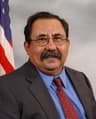 Raúl Grijalva
Democrat · Arizona
 Josh Gottheimer
Democrat · New Jersey
 Chrissy Houlahan
Democrat · Pennsylvania
 Robin Kelly
Democrat · Illinois
 Raja Krishnamoorthi
Democrat · Illinois
 Young Kim
Republican · California
 Sydney Kamlager-Dove
Democrat · California
 Timothy Kennedy
Democrat · New York
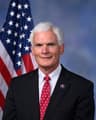 Robert Latta
Republican · Ohio
 Michael Lawler
Republican · New York
 Greg Landsman
Democrat · Ohio
 Daniel Meuser
Republican · Pennsylvania
 Carol Miller
Republican · West Virginia
 Mariannette Miller-Meeks
Republican · Iowa
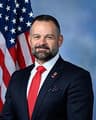 Cory Mills
Republican · Florida
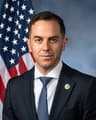 Robert Menendez
Democrat · New Jersey
 Jennifer McClellan
Democrat · Virginia
 Ryan Mackenzie
Republican · Pennsylvania
 Tim Moore
Republican · North Carolina
 Sarah McBride
Democrat · Delaware
 Eleanor Norton
Democrat · District of Columbia
 Joe Neguse
Democrat · Colorado
 Zachary Nunn
Republican · Iowa
 Jay Obernolte
Republican · California
 Alexandria Ocasio-Cortez
Democrat · New York
 August Pfluger
Republican · Texas
 Scott Peters
Democrat · California
 Chris Pappas
Democrat · New Hampshire
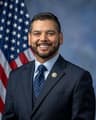 Raul Ruiz
Democrat · California
 John Rutherford
Republican · Florida
 Janice Schakowsky
Democrat · Illinois
 Darren Soto
Democrat · Florida
 Thomas Suozzi
Democrat · New York
 Kim Schrier
Democrat · Washington
 Dina Titus
Democrat · Nevada
 Paul Tonko
Democrat · New York
 Lori Trahan
Democrat · Massachusetts
 David Valadao
Republican · California
 Marc Veasey
Democrat · Texas
 Gabe Vasquez
Democrat · New Mexico
 Joe Wilson
Republican · South Carolina
 Debbie Wasserman Schultz
Democrat · Florida
 Randy Weber
Republican · Texas
 Rudy Yakym
Republican · Indiana