Bill · H.R. 1421· House(119-HR-1421)
Make American Flags in America Act of 2025
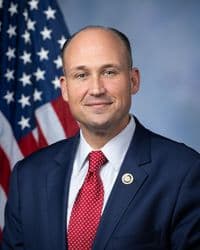
- Introduced
- 2/18/2025
- Last activity
- 2/18/2025 — Referred to the Committee on the Judiciary, and in addition to the Committee on Energy and Commerce, for a period to be subsequently determined by the Speaker, in each case for consideration of such provisions as fall within the jurisdiction of the committee concerned.
- Sponsored by
- Nicholas Langworthy
- Cosponsors
- - 36 - 17
- Introduced
- In Committee
What this bill would do
The "Make American Flags in America Act of 2025" requires certain United States flags to be manufactured entirely within the United States. Under this bill, Federal agencies would be prohibited from displaying or procuring any flag that was not 100 percent manufactured in the United States from domestic articles, materials, or supplies. This requirement applies to various entities including Executive agencies, military departments, and the Government of the District of Columbia. The rule for procuring flags begins 90 days after enactment, while the rule for displaying them begins two years after enactment. Additionally, the bill directs the Federal Trade Commission to conduct a study on country-of-origin labeling for United States flags.
Yes· 3 of 7
Is this likely to create jobs?+3
The requirement for 100 percent domestic manufacturing and materials likely stimulates demand for domestic manufacturing jobs.
Does this give people more protection from unfair business practices?+3
The bill directs the FTC to study and recommend improvements to the enforcement of country-of-origin labeling.
Would business owners be better off under this?+3
Domestic manufacturers and material suppliers will benefit from guaranteed federal demand.
The opposite
Does this reduce what the federal government spends?-1
Mandating a strict 100 percent domestic standard for all materials may increase the cost of procurement for federal agencies compared to cheaper imported alternatives.
Who it would affect, and how
Potential Positive Impacts for People
-
Strict Domestic Manufacturing Standards: The bill defines "made in the United States" as 100 percent manufactured in the U.S. from materials that are also 100 percent produced in the U.S. (Section 2(a)(3)). This ensures that the entire supply chain for these flags is domestic.
-
Enhanced Oversight of Labeling: The Chair of the Federal Trade Commission is required to conduct a study to assess the enforcement of country-of-origin labeling for flags (Section 3(a)). This study aims to identify how many fines are imposed and the percentage of repeat violations (Section 3(a)(2)-(3)).
-
Recommendations for Better Enforcement: The Federal Trade Commission must submit a report containing recommendations to improve the enforcement scheme and its deterrent effect regarding flag labeling (Section 3(b)).
Potential Negative Impacts for People
-
Procurement Restrictions for Federal Agencies: Federal agencies are prohibited from using appropriated funds to procure any flag not made entirely in the United States (Section 2(a)(b)).
-
Display Restrictions on Federal Property: Federal agencies are prohibited from displaying any flag that was not made entirely in the United States on Federal property (Section 2(a)(a)). This restriction takes effect two years after the Act is enacted (Section 2(c)(1)).
Groups and Interests Ranking
Every group the model scored this bill for, from -10 to +10. Hover a score for the reason it gave.
- Economy And Finance
- Improves Consumer Protection+3Increases Job Creation+3Improves Economic Growth+2Improves Small Business Support+2Reduces Government Spending-1
- Demographic And Interest Groups
- Good For Business Owners+3Good For Union Workers+3
- Governance And Ideology
- Improves Government Transparency+2
- 6/18/2026
- 1 Cosponsor added.
- 6/9/2026
- 1 Cosponsor added.
- 5/21/2026
- 1 Cosponsor added.
- 4/30/2026
- 1 Cosponsor added.
- 4/28/2026
- 1 Cosponsor added.
- 4/27/2026
- 2 Cosponsors added.
- 4/22/2026
- 1 Cosponsor added.
- 4/15/2026
- 1 Cosponsor added.
- 4/13/2026
- 1 Cosponsor added.
- 2/25/2026
- 1 Cosponsor added.
- 2/23/2026
- 1 Cosponsor added.
- 2/12/2026
- 1 Cosponsor added.
- 1/8/2026
- 1 Cosponsor added.
- 12/16/2025
- 1 Cosponsor added.
- 11/25/2025
- 1 Cosponsor added.
- 10/3/2025
- 1 Cosponsor added.
- 7/2/2025
- 1 Cosponsor added.
- 6/30/2025
- 2 Cosponsors added.
- 6/27/2025
- 1 Cosponsor added.
- 6/17/2025
- 1 Cosponsor added.
- 6/3/2025
- 2 Cosponsors added.
- 4/28/2025
- 2 Cosponsors added.
- 4/8/2025
- 1 Cosponsor added.
- 3/21/2025
- 2 Cosponsors added.
- 3/10/2025
- 1 Cosponsor added.
- 2/21/2025
- 3 Cosponsors added.
- 2/18/2025
- Referred to the Committee on the Judiciary, and in addition to the Committee on Energy and Commerce, for a period to be subsequently determined by the Speaker, in each case for consideration of such provisions as fall within the jurisdiction of the committee concerned.
- 20 Cosponsors added.
- Introduced in House
One bill Congress.gov lists as related to this one — companions in the other chamber, earlier versions, and bills this one absorbed or was folded into.
 Robert Aderholt
Republican · Alabama
 Andy Biggs
Republican · Arizona
 Troy Balderson
Republican · Ohio
 Tim Burchett
Republican · Tennessee
 Eric Burlison
Republican · Missouri
 Tom Barrett
Republican · Michigan
 Mike Collins
Republican · Georgia
 Donald Davis
Democrat · North Carolina
 Christopher Deluzio
Democrat · Pennsylvania
 Brad Finstad
Republican · Minnesota
 Valerie Foushee
Democrat · North Carolina
 Russell Fry
Republican · South Carolina
 H. Griffith
Republican · Virginia
 Josh Gottheimer
Democrat · New Jersey
 Andrew Garbarino
Republican · New York
 Clay Higgins
Republican · Louisiana
 Josh Harder
Democrat · California
 Harriet Hageman
Republican · Wyoming
 Mark Harris
Republican · North Carolina
 Thomas Kean
Republican · New Jersey
 Jennifer Kiggans
Republican · Virginia
 Timothy Kennedy
Democrat · New York
 Julia Letlow
Republican · Louisiana
 Anna Paulina Luna
Republican · Florida
 Laurel Lee
Republican · Florida
 Michael Lawler
Republican · New York
 Greg Landsman
Democrat · Ohio
 John Moolenaar
Republican · Michigan
 Lucy McBath
Democrat · Georgia
 Ryan Mackenzie
Republican · Pennsylvania
 Tim Moore
Republican · North Carolina
 Troy Nehls
Republican · Texas
 Ralph Norman
Republican · South Carolina
 David Rouzer
Republican · North Carolina
 Chip Roy
Republican · Texas
 Michael Rulli
Republican · Ohio
 Josh Riley
Democrat · New York
 Christopher Smith
Republican · New Jersey
 Elise Stefanik
Republican · New York
 Thomas Suozzi
Democrat · New York
 W. Steube
Republican · Florida
 Paul Tonko
Democrat · New York
 Claudia Tenney
Republican · New York
 Shri Thanedar
Democrat · Michigan
 Derek Tran
Democrat · California
 Jefferson Van Drew
Republican · New Jersey
 Gabe Vasquez
Democrat · New Mexico
 Eugene Vindman
Democrat · Virginia
 Daniel Webster
Republican · Florida
 Randy Weber
Republican · Texas
 Bonnie Watson Coleman
Democrat · New Jersey
 Tony Wied
Republican · Wisconsin
 George Whitesides
Democrat · California