Bill · S. 844· Senate(119-S-844)
Faster Labor Contracts Act
- Introduced
- 3/4/2025
- Last activity
- 3/4/2025 — Read twice and referred to the Committee on Health, Education, Labor, and Pensions.
- Sponsored by
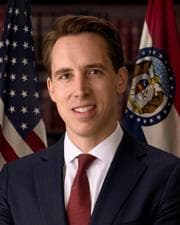
- Josh Hawley
- Cosponsors
- - 2 - 15
- Introduced
- In Committee
What this bill would do
This bill is known as the Faster Labor Contracts Act. It aims to speed up the time it takes for newly organized workers and their employers to reach their first contract. Right now, negotiations often drag on for well over a year, which usually benefits employers who want to wear down the workers. The bill forces both sides to start bargaining quickly after a union is voted in. If they cannot agree on a contract after a set amount of time, the dispute goes to mediation and eventually to a binding arbitration panel to settle the terms. It also requires a government report to track how long these initial contracts take to complete in the future.
Yes· 3 of 6
Would union members be better off under this?+8
The bill provides a structured, expedited path to securing a first contract through mediation and binding arbitration.
Does this strengthen the rights of workers to organise?+7
The bill expedites the collective bargaining process and ensures current wages and benefits are maintained while negotiating a new contract.
Would households on low incomes be better off under this?+3
The bill helps workers secure binding agreements on wages and benefits more rapidly.
The opposite
No question was scored the opposite.
Who it would affect, and how
Potential Positive Impacts for People
-
Faster start to negotiations: Under Section 3, amending Section 8(d)(3)(A) of the National Labor Relations Act, parties must meet and begin collective bargaining within 10 days of receiving a written request from a newly recognized or certified labor organization. This ensures that the process kicks off promptly instead of stalling right at the start.
-
Mandatory mediation and dispute resolution: Under Section 3, amending Section 8(d)(3)(B) and (C) of the National Labor Relations Act, if parties fail to reach an agreement after 90 days of bargaining, they can bring in the Federal Mediation and Conciliation Service. If mediation fails after 30 days, the dispute goes to a 3-person arbitration panel that makes a binding decision for a period of 2 years. This provision prevents endless stalemates and guarantees that workers will eventually get a contract.
-
Protection of current wages and hours: Under Section 3, amending Section 8(d)(1) of the National Labor Relations Act, employers are required to maintain current wages, hours, and terms and conditions of employment pending an agreement. This protects workers from sudden negative changes while they are waiting for their first contract to be finalized.
Potential Negative Impacts for People
- Loss of direct control over contract terms: Under Section 3, amending Section 8(d)(3)(C) of the National Labor Relations Act, if the arbitration panel is used, a majority of the 3-person panel renders a binding decision settling the dispute if the employer and workers cannot agree. This means an outside panel can ultimately dictate the wages, benefits, and working conditions for up to 2 years without a mutually agreed-upon compromise between the employer and the workers.
Groups and Interests Ranking
Every group the model scored this bill for, from -10 to +10. Hover a score for the reason it gave.
- Demographic And Interest Groups
- Good For Union Workers+8Good For Low Income Households+3Good For Middle Class Households+3
- Economy And Finance
- Improves Union Protections+7
- Governance And Ideology
- Improves Government Transparency+3
- Social Issues And Justice
- Improves Poverty Reduction+2
- 9/22/2026
- 1 Cosponsor added.
- 6/15/2026
- 1 Cosponsor added.
- 4/22/2026
- 1 Cosponsor added.
- 3/19/2026
- 2 Cosponsors added.
- 12/18/2025
- 1 Cosponsor added.
- 12/16/2025
- 1 Cosponsor added.
- 10/30/2025
- 1 Cosponsor added.
- 10/16/2025
- 1 Cosponsor added.
- 9/29/2025
- 1 Cosponsor added.
- 9/18/2025
- 1 Cosponsor added.
- 5/21/2025
- 1 Cosponsor added.
- 4/7/2025
- 1 Cosponsor added.
- 3/4/2025
- Read twice and referred to the Committee on Health, Education, Labor, and Pensions.
- 4 Cosponsors added.
- Introduced in Senate
One bill Congress.gov lists as related to this one — companions in the other chamber, earlier versions, and bills this one absorbed or was folded into.
 Michael Bennet
Democrat · Colorado
 Richard Blumenthal
Democrat · Connecticut
 Cory Booker
Democrat · New Jersey
 Lisa Blunt Rochester
Democrat · Delaware
 Catherine Cortez Masto
Democrat · Nevada
 Kirsten Gillibrand
Democrat · New York
 Ruben Gallego
Democrat · Arizona
 Maggie Hassan
Democrat · New Hampshire
 Mark Kelly
Democrat · Arizona
 Timothy Kaine
Democrat · Virginia
 Jeff Merkley
Democrat · Oregon
 Roger Marshall
Republican · Kansas
 Bernie Moreno
Republican · Ohio
 Jon Ossoff
Democrat · Georgia
 Gary Peters
Democrat · Michigan
 Jacky Rosen
Democrat · Nevada
 Elissa Slotkin
Democrat · Michigan