
A Democratic bill with 18 Democratic cosponsors · See all 19 cosponsors
Last activity — Read twice and referred to the Committee on the Judiciary.
In committee
Introduced and handed to a committee in the chamber it started in.
The committee holds it, and most bills are never heard from again. A hearing or a committee vote would be news; silence is the usual outcome, and it kills the bill without anyone voting against it.
Its path through Congress
- Introduced
- In Committee
What this bill would do
The Born in the USA Act aims to prevent the use of federal funds to implement Executive Order 14160. This Executive Order involves prohibiting government departments and agencies from recognizing the citizenship of certain children born in the United States. The bill argues that such an order is unconstitutional under the 14th Amendment and previous Supreme Court rulings. By passing this act, Congress seeks to ensure that no money is spent on carrying out that specific order or any similar future policies.
Yes· 3 of 5
- Scored +5
Would children be better off under this?
The bill protects the citizenship rights of children born in the United States.
- Scored +5
Would immigrants be better off under this?
The bill ensures that children of resident aliens retain their constitutional right to citizenship upon birth.
- Scored +5
Does this make it easier for immigrants already here to become citizens?
The bill prevents the government from refusing to recognize the citizenship of children born in the United States.
The opposite
- Scored -2
Does this give the federal government more power?
The bill limits the President's ability to use executive orders to alter citizenship standards.
- Scored -1
Does this reduce what the federal government spends?
The bill prohibits the use of federal funds to implement the policies mandated by Executive Order 14160.
Who it would affect, and how
Potential Positive Impacts for People
-
Protection of Birthright Citizenship: The bill seeks to ensure that the citizenship of certain children born in the United States remains recognized by the government (Section 2).
-
Preventing Unconstitutional Policy Implementation: By prohibiting the use of funds, the bill stops the execution of Executive Order 14160, which the text describes as flagrantly and clearly unconstitutional (Section 2).
Potential Negative Impacts for People
- No negative impacts are explicitly stated in the text provided.
Groups and Interests Ranking
Every group the model scored this bill for, from -10 to +10. Tap or hover a score for the reason it gave.
- Demographic And Interest Groups
- Would children be better off under this? — The bill protects the citizenship rights of children born in the United States. Would immigrants be better off under this? — The bill ensures that children of resident aliens retain their constitutional right to citizenship upon birth. Would Hispanic Americans be better off under this? — The bill protects the birthright citizenship of children, which disproportionately impacts Hispanic communities. Would households on low incomes be better off under this? — The bill protects the legal status of children who may belong to low-income immigrant families.
- Social Issues And Justice
- Does this make it easier for immigrants already here to become citizens? — The bill prevents the government from refusing to recognize the citizenship of children born in the United States.
- Governance And Ideology
- Does this give the federal government more power? — The bill limits the President's ability to use executive orders to alter citizenship standards.
- Economy And Finance
- Does this reduce what the federal government spends? — The bill prohibits the use of federal funds to implement the policies mandated by Executive Order 14160.
- 12/18/2025
- 1 Cosponsor added.
- 12/15/2025
- 2 Cosponsors added.
- 7/9/2025
- 1 Cosponsor added.
- 6/30/2025
- 1 Cosponsor added.
- 4/3/2025
- 1 Cosponsor added.
- 3/26/2025
- 2 Cosponsors added.
- 3/14/2025
- 1 Cosponsor added.
- 2/20/2025
- Read twice and referred to the Committee on the Judiciary.
- 10 Cosponsors added.
- Introduced in Senate
One bill Congress.gov lists as related to this one — companions in the other chamber, earlier versions, and bills this one absorbed or was folded into.
 Richard Blumenthal
Democrat · Connecticut
 Cory Booker
Democrat · New Jersey
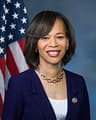 Lisa Blunt Rochester
Democrat · Delaware
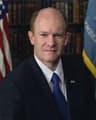 Christopher Coons
Democrat · Delaware
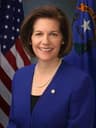 Catherine Cortez Masto
Democrat · Nevada
 Richard Durbin
Democrat · Illinois
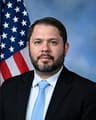 Ruben Gallego
Democrat · Arizona
 Mark Kelly
Democrat · Arizona
 Edward Markey
Democrat · Massachusetts
 Jeff Merkley
Democrat · Oregon
 Alex Padilla
Democrat · California
 Bernie Sanders
Independent · Vermont
 Adam Schiff
Democrat · California
 Jeanne Shaheen
Democrat · New Hampshire
 Brian Schatz
Democrat · Hawaii
 Elissa Slotkin
Democrat · Michigan
 Chris Van Hollen
Democrat · Maryland
 Peter Welch
Democrat · Vermont
 Sheldon Whitehouse
Democrat · Rhode Island