Bill · S. 364· Senate(119-S-364)
Hearing Protection Act
- Introduced
- 2/3/2025
- Last activity
- 2/3/2025 — Read twice and referred to the Committee on Finance.
- Sponsored by
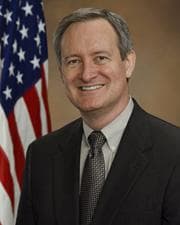
- Mike Crapo
- Cosponsors
- - 39 - 0
- Introduced
- In Committee
What this bill would do
The "Hearing Protection Act" aims to amend the Internal Revenue Code of 1986 to remove silencers from the legal definition of firearms. It changes how silencers are treated regarding registration and licensing requirements. The bill establishes new marking requirements for licensed importers and manufacturers of silencers. It also preempts certain state laws that tax or require registration of silencers. Additionally, the bill mandates the destruction of existing silencer registration and transfer records held by the Attorney General. Finally, it imposes a 10 percent tax on firearm silencers or mufflers.
Yes· 3 of 4
Would gun owners be better off under this?+8
The bill is highly positive for gun owners by removing federal registration and licensing requirements for silencers.
Does this protect the right to own guns?+7
The bill expands Second Amendment practical application by removing federal registration and licensing requirements for silencers.
Does this protect people from being watched or searched?+4
The bill improves privacy by mandating the destruction of silencer registration and transfer records.
The opposite· 3 of 4
Does this put more limits on buying or owning guns?-5
The bill reduces gun control measures by removing silencers from the legal definition of firearms and destroying existing records.
Does this leave more decisions to the states?-4
The bill reduces state rights by preempting state laws regarding the taxation or registration of silencers.
Does this give the government more power to monitor people inside the country?-3
The bill reduces domestic surveillance by requiring the destruction of existing silencer registration and transfer records.
Who it would affect, and how
Potential Positive Impacts for People
-
Removal of State Restrictions: Under Section 4, the bill would prevent states or political subdivisions from imposing certain taxes, marking, recordkeeping, or registration requirements on firearm silencers.
-
Destruction of Existing Records: According to Section 5, the Attorney General would be required to destroy existing silencer registrations, transfer applications, and maker applications within 356 days of the Act's enactment.
-
Simplified Licensing Requirements: Section 3 specifies that individuals acquiring or possessing a firearm silencer in accordance with chapter 44 of title 18, United States Code, would meet registration and licensing requirements of the National Firearms Act.
Potential Negative Impacts for People
-
New Federal Tax: Section 7 adds "Firearm silencers or firearm mufflers" to the list of articles taxable at 10 percent under the Internal Revenue Code of 1986.
-
New Marking Requirements: Under Section 6, licensed importers and manufacturers are required to identify silencers or mufflers with a serial number engraved or cast on the outer tube or primary structure, unless a variance is granted by the Attorney General.
Groups and Interests Ranking
Every group the model scored this bill for, from -10 to +10. Hover a score for the reason it gave.
- Demographic And Interest Groups
- Good For Gun Owners+8Good For Business Owners+3
- National Security And Foreign Policy
- Increases Domestic Surveillance-3
- Governance And Ideology
- Improves Privacy Rights+4Increase States Rights-4Increases Federal Power-2
- Social Issues And Justice
- Improves Second Amendment Protections+7Improves Gun Control Measures-5
- 9/17/2026
- 2 Cosponsors added.
- 9/15/2026
- 1 Cosponsor added.
- 7/29/2026
- 2 Cosponsors added.
- 10/23/2025
- 1 Cosponsor added.
- 6/12/2025
- 1 Cosponsor added.
- 6/2/2025
- 1 Cosponsor added.
- 3/25/2025
- 2 Cosponsors added.
- 2/27/2025
- 1 Cosponsor added.
- 2/3/2025
- Read twice and referred to the Committee on Finance.
- 28 Cosponsors added.
- Introduced in Senate
One bill Congress.gov lists as related to this one — companions in the other chamber, earlier versions, and bills this one absorbed or was folded into.
 John Boozman
Republican · Arkansas
 Marsha Blackburn
Republican · Tennessee
 Jim Banks
Republican · Indiana
 Ted Budd
Republican · North Carolina
 Katie Britt
Republican · Alabama
 Shelley Capito
Republican · West Virginia
 John Cornyn
Republican · Texas
 Bill Cassidy
Republican · Louisiana
 Tom Cotton
Republican · Arkansas
 Kevin Cramer
Republican · North Dakota
 Ted Cruz
Republican · Texas
 John Curtis
Republican · Utah
 Steve Daines
Republican · Montana
 Joni Ernst
Republican · Iowa
 Deb Fischer
Republican · Nebraska
 Lindsey Graham
Republican · South Carolina
 John Hoeven
Republican · North Dakota
 Cindy Hyde-Smith
Republican · Mississippi
 Josh Hawley
Republican · Missouri
 Jon Husted
Republican · Ohio
 Ron Johnson
Republican · Wisconsin
 James Justice
Republican · West Virginia
 John Kennedy
Republican · Louisiana
 Cynthia Lummis
Republican · Wyoming
 James Lankford
Republican · Oklahoma
 Mike Lee
Republican · Utah
 Jerry Moran
Republican · Kansas
 Markwayne Mullin
Republican · Oklahoma
 Roger Marshall
Republican · Kansas
 Bernie Moreno
Republican · Ohio
 James Risch
Republican · Idaho
 Mike Rounds
Republican · South Dakota
 Pete Ricketts
Republican · Nebraska
 Dan Sullivan
Republican · Alaska
 Rick Scott
Republican · Florida
 Tim Sheehy
Republican · Montana
 Thomas Tillis
Republican · North Carolina
 Roger Wicker
Republican · Mississippi
 Todd Young
Republican · Indiana