Bill · H.R. 9877· House(119-HR-9877)
Health Equity and Accountability Act of 2026
- Introduced
- 7/22/2026
- Last activity
- 7/22/2026 — Referred to the Committee on Energy and Commerce, and in addition to the Committees on Ways and Means, Agriculture, Oversight and Government Reform, Education and Workforce, the Judiciary, the Budget, Veterans' Affairs, Natural Resources, Armed Services, Homeland Security, Financial Services, Transportation and Infrastructure, and Foreign Affairs, for a period to be subsequently determined by the Speaker, in each case for consideration of such provisions as fall within the jurisdiction of the committee concerned.
- Sponsored by
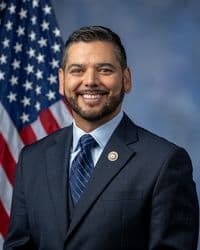
- Raul Ruiz
- Cosponsors
- - 26 - 0
- Introduced
- In Committee
What this bill would do
The Health Equity and Accountability Act of 2026 aims to improve the health and well-being of minority individuals in the United States. The bill focuses on strengthening health data collection, expanding access to culturally and linguistically appropriate health services, and diversifying the health care workforce. It also includes provisions to reduce barriers to health care access, improve health outcomes for women, children, and families, and address high-impact minority diseases. Additionally, the legislation seeks to improve mental health services, address social determinants of health, and protect civil rights in health care.
Yes· 3 of 97
Would children be better off under this?+10
The bill extensively benefits children through universal school meals, pediatric care, and trauma prevention.
Would households on low incomes be better off under this?+10
The bill greatly benefits low-income households through Medicaid expansion, nutrition assistance, and poverty reduction.
Would Black Americans be better off under this?+10
The bill specifically targets racial health disparities, maternal mortality, and civil rights for Black Americans.
The opposite· 3 of 11
Does this reduce what the federal government spends?-6
The bill significantly increases government spending through new grant programs and appropriations.
Does this tighten control of the border?-5
The bill restricts immigration enforcement actions at sensitive locations and expands healthcare for noncitizens.
Does this reduce what the federal government owes?-4
The bill increases national spending and authorizations significantly across various health programs.
Who it would affect, and how
Potential Positive Impacts for People
-
Section 1001 requires federally supported health programs to collect and report data disaggregated by race, ethnicity, sex, primary language, sexual orientation, disability status, gender identity, age, and socioeconomic status. This helps identify and address specific health disparities in communities.
-
Section 2003 and Section 2007 ensure that health programs receiving Federal funds provide free and prompt language assistance services, including trained interpreters and translated documents, to individuals with limited English proficiency.
-
Section 4003 removes citizenship and immigration barriers to ensure that children, pregnant persons, and lawfully present individuals can access necessary health care and nutrition assistance.
-
Section 4106 establishes the Medicare Cost Assistance Program to help low-income beneficiaries pay for Medicare premiums, coinsurance, and deductibles, and expands access to low-income prescription drug subsidies.
-
Section 4251 expands coverage of dental and oral health services under Medicare and Medicaid, helping to improve access to essential dental care for beneficiaries.
Potential Negative Impacts for People
- There are no explicit provisions within the text of the bill that outline negative consequences or burdens for individuals or groups of people in the United States.
Groups and Interests Ranking
Every group the model scored this bill for, from -10 to +10. Hover a score for the reason it gave.
- Demographic And Interest Groups
- Good For African Americans+10Good For Asian Americans+10Good For Children+10Good For Hispanic Americans+10Good For Immigrants+10Good For L G B T Q Community+10Good For Low Income Households+10Good For Native Americans+10Good For People With Disabilities+10Good For Rural Residents+10Good For Students+10Good For Women+10Good For Retirees+9Good For Seniors+9Good For Veterans+9Good For Young Adults+9Good For Farmers+8Good For Middle Aged+8Good For Middle Class Households+8Good For Urban Residents+8Good For Men+7Good For Union Workers+7Good For Business Owners+6Good For White Americans+6Good For Tipped Workers+5Good For High Income Households+2Good For Billionaires+1Good For High Net Worth Individuals+1Good For Ultra High Net Worth Individuals+1Good For Gun Owners-2
- Healthcare
- Improves Healthcare Access+10Improves Mental Health Access+10Increases Medicaid Funding+10Increases Research Funding+10Improves Opioid Crisis Response+9Improves Veterans Healthcare+9Increases Affordable Care Act Support+9Increases Medicare Funding+9Reduces Prescription Drug Costs+9Improves Abortion Access+8Improves Pandemic Preparedness+8Reduces Private Insurance Premiums+8Reduces Hospital Costs+7
- Social Issues And Justice
- Improves Gender Equality+10Improves L G B T Q Rights+10Improves Racial Equity+10Improves Disability Rights+9Improves Affordable Housing+8Improves Childcare Affordability+8Improves Pathway To Citizenship+7Reduces Homelessness+7Improves Gun Control Measures+6Improves Policing Reform+6Improves Criminal Sentencing Reform+5Improves Freedom Of Speech+5Improves Social Security+5Improves Religious Freedom+4Improves Voting Access+3Improves Voting Rights+2Improves Border Security-5Improves Second Amendment Protections-2
- Economy And Finance
- Improves Consumer Protection+8Increases Corporate Taxes+8Increases Job Creation+7Increases Wealthy Taxes+7Improves Small Business Support+6Reduces Middle Class Taxes+6Improves Economic Growth+5Reduces Small Business Taxes+5Increases Minimum Wage+4Reduces Capital Gains Tax+3Improves Union Protections+2Increases Unemployment Benefits+2Reduces Government Spending-6Reduces National Debt-4Improves Fiscal Responsibility-3Reduces Inflation-2
- Governance And Ideology
- Improves Due Process+8Improves Government Transparency+8Improves Privacy Rights+8Increases Federal Power+6Improves Interstate Commerce+5Increase States Rights+4Improves Electoral Process+3Reduces Lobbying+2Improves Campaign Finance Reform+1
- Education And Technology
- Increases Public School Funding+9Improves College Affordability+8Improves Student Loan Relief+8Increases Big Tech Regulation+6Improves School Choice+3
- Environment Energy And Infrastructure
- Improves Environmental Protections+8Improves Disaster Relief And F E M A+7Improves Public Land Management+5Reduces Carbon Emissions+5Improves Public Transit+4Increases Renewable Energy Investment+4Improves Roads And Bridges+3Reduces Fossil Fuel Production-2Reduces Gas Prices-1
- National Security And Foreign Policy
- Increases Foreign Aid+6Improves Cybersecurity Defense+5Improves International Alliances+5Improves Diplomatic Engagement+4Improves International Trade+2Increases Counter Terrorism Funding+2Increases Domestic Surveillance-3Reduces Military Spending-2
- 7/22/2026
- Referred to the Committee on Energy and Commerce, and in addition to the Committees on Ways and Means, Agriculture, Oversight and Government Reform, Education and Workforce, the Judiciary, the Budget, Veterans' Affairs, Natural Resources, Armed Services, Homeland Security, Financial Services, Transportation and Infrastructure, and Foreign Affairs, for a period to be subsequently determined by the Speaker, in each case for consideration of such provisions as fall within the jurisdiction of the committee concerned.
- 26 Cosponsors added.
- Introduced in House
16 bills Congress.gov lists as related to this one — companions in the other chamber, earlier versions, and bills this one absorbed or was folded into.
- 119-HR-1518: New Era of Preventing End-Stage Kidney Disease Act
- 119-HR-1585: Conrad State 30 and Physician Access Reauthorization Act
- 119-HR-1667: Acupuncture for Our Seniors Act of 2025
- 119-HR-1750: HEARD Act of 2025
- 119-HR-2884: Anti-Racism in Public Health Act of 2025
- 119-HR-2957: STRONG Support for Children Act of 2025
- 119-HR-3316: Stop Mental Health Stigma in Our Communities Act of 2025
- 119-HR-3534: Mental Health in Schools Excellence Program Act of 2025
- 119-S-455: Protecting Sensitive Locations Act
- 119-S-709: Conrad State 30 and Physician Access Reauthorization Act
- 119-S-721: Sickle Cell Disease Comprehensive Care Act
- 119-S-1489: Anti-Racism in Public Health Act of 2025
- 119-S-1689: Stop Mental Health Stigma in Our Communities Act of 2025
- 119-S-1895: Mental Health Excellence in Schools Act
- 119-S-1914: Andrew Kearse Accountability for Denial of Medical Care Act of 2025
- 119-S-5066: Health Equity and Accountability Act of 2026
 Pete Aguilar
Democrat · California
 Suzanne Bonamici
Democrat · Oregon
 Judy Chu
Democrat · California
 Troy Carter
Democrat · Louisiana
 Adriano Espaillat
Democrat · New York
 Maxwell Frost
Democrat · Florida
 Jesús García
Democrat · Illinois
 Adelita Grijalva
Democrat · Arizona
 Jahana Hayes
Democrat · Connecticut
 Pablo Hernández
Democrat · Puerto Rico
 Jonathan Jackson
Democrat · Illinois
 Robin Kelly
Democrat · Illinois
 Ted Lieu
Democrat · California
 Gwen Moore
Democrat · Wisconsin
 Grace Meng
Democrat · New York
 Christian Menefee
Democrat · Texas
 Analilia Mejia
Democrat · New Jersey
 Eleanor Norton
Democrat · District of Columbia
 Ayanna Pressley
Democrat · Massachusetts
 Delia Ramirez
Democrat · Illinois
 Emily Randall
Democrat · Washington
 Andrea Salinas
Democrat · Oregon
 Jill Tokuda
Democrat · Hawaii
 Shri Thanedar
Democrat · Michigan
 Nydia Velázquez
Democrat · New York
 Frederica Wilson
Democrat · Florida