Bill · H.R. 2957· House(119-HR-2957)
STRONG Support for Children Act of 2025
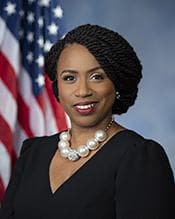
- Introduced
- 4/17/2025
- Last activity
- 4/17/2025 — Referred to the House Committee on Energy and Commerce.
- Sponsored by
- Ayanna Pressley
- Cosponsors
- - 3 - 0
- Introduced
- In Committee
What this bill would do
The STRONG Support for Children Act of 2025 seeks to amend the Public Health Service Act to address childhood trauma. It establishes a grant program for the Secretary to support data analysis and implementation of programs aimed at preventing and mitigating adverse childhood experiences. These funds are intended to identify specific geographic areas in need and facilitate early intervention strategies for children and their families. Additionally, the bill creates care coordination grants to assist children aged 0 through 5 and their caregivers. These efforts focus on connecting community members to essential services like mental health, housing, and nutrition.
Yes· 3 of 27
Would children be better off under this?+9
The bill is specifically designed to prevent and mitigate childhood trauma and improve outcomes for children.
Would households on low incomes be better off under this?+7
The bill targets assistance toward low-income individuals and addresses economic insecurity.
Would LGBTQ people be better off under this?+7
The bill explicitly protects and supports the well-being of LGBTQ children and families.
The opposite
No question was scored the opposite.
Who it would affect, and how
Potential Positive Impacts for People
-
Support for high-risk communities: The bill uses data analysis to identify specific geographic areas, such as census tracts, that face high rates of poverty, food insecurity, and poor public health outcomes (Section 2, subsection c, 1, A).
-
Improved access to essential services: Grants will facilitate outreach for various supports, including home visiting programs, parenting education, substance use prevention, mental health care, and housing assistance (Section 2, subsection c, 2).
-
Protection for vulnerable populations: The bill specifically mentions supporting the health and well-being of lesbian, gay, bisexual, transgender, and intersex children and their families (Section 2, subsection c, 2, K).
-
Enhanced care coordination for young children: The bill establishes grants to expand care coordination services for children aged 0 through 5 and their caregivers, including prenatal people (Section 3, subsection a).
-
Increased accessibility of services: Care coordination services must be provided in accessible settings, such as mobile settings, to reach low-income individuals and those in rural areas (Section 3, subsection g, 2, A).
-
Protection of rights and dignity: The bill mandates that assistance be provided regardless of an individual's ability to pay, health condition, immigration status, sexual orientation, gender identity, or past involvement in the criminal legal system (Section 2, subsection h).
Potential Negative Impacts for People
-
Restrictions on fund usage for existing services: Under certain conditions, the Secretary may not award a grant for a service if it is already available through a State's Medicaid plan (Section 2, subsection d, 1).
-
Prohibition on using data for individual decisions: Data analysis methods must not be used to inform individual case decisions, such as child removal or placement (Section s, subsection i, 1; Section 3, subsection 4, A).
-
Prohibition on mandatory participation: The bill prohibits requiring individuals or families to participate in any service or program as a condition of receiving a benefit they are otherwise eligible for (Section 2, subsection i, 2; Section 3, subsection 4, B).
Groups and Interests Ranking
Every group the model scored this bill for, from -10 to +10. Hover a score for the reason it gave.
- Demographic And Interest Groups
- Good For Children+9Good For L G B T Q Community+7Good For Low Income Households+7Good For Native Americans+6Good For Women+5Good For Immigrants+4Good For Rural Residents+4Good For Students+3
- Social Issues And Justice
- Improves L G B T Q Rights+7Improves Affordable Housing+5Improves Gender Equality+5Improves Poverty Reduction+5Improves Racial Equity+5Reduces Homelessness+5Improves Childcare Affordability+4Improves Policing Reform+3
- Healthcare
- Improves Healthcare Access+6Improves Mental Health Access+5Increases Research Funding+4Improves Opioid Crisis Response+3
- Education And Technology
- Improves Internet Access+3Increases Scientific Research Funding+3Improves Data Privacy+2Increases Public School Funding+2
- Governance And Ideology
- Improves Government Transparency+3Improves Privacy Rights+2
- Environment Energy And Infrastructure
- Improves Rural Development+3
- 4/17/2025
- Referred to the House Committee on Energy and Commerce.
- 3 Cosponsors added.
- Introduced in House
One bill Congress.gov lists as related to this one — companions in the other chamber, earlier versions, and bills this one absorbed or was folded into.
 Eleanor Norton
Democrat · District of Columbia
 Rashida Tlaib
Democrat · Michigan
 Shri Thanedar
Democrat · Michigan