Bill · H.R. 8791· House(119-HR-8791)
IGNITE HBCU Excellence Act
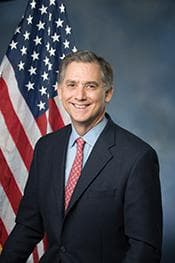
- Introduced
- 5/13/2026
- Last activity
- 5/13/2026 — Referred to the House Committee on Education and Workforce.
- Sponsored by
- J. Hill
- Cosponsors
- - 19 - 20
- Introduced
- In Committee
What this bill would do
This bill, known as the "IGNITE HBCU Excellence Act," aims to provide long-term improvements to Historically Black Colleges and Universities. It authorizes the Secretary of Education to award competitive grants to eligible entities for campus facility improvements, technology, and infrastructure. The legislation prioritizes institutions with significant needs, such as those facing environmental risks or those with limited capacity to raise funds. Grant funds can be used for projects including construction, modernization, and the installation of high-speed broadband. Additionally, the bill includes provisions for the repayment of certain closed loan agreements.
Yes· 3 of 13
Would Black Americans be better off under this?+9
The bill specifically funds the long-term improvement of Historically Black Colleges and Universities.
Does this narrow racial gaps in how people are treated?+8
The bill provides targeted infrastructure, technology, and financial relief specifically for Historically Black Colleges and Universities.
Does this get reliable internet to more people?+7
The bill provides funds to install or upgrade high-speed broadband infrastructure on campuses.
The opposite
No question was scored the opposite.
Who it would affect, and how
Potential Positive Impacts for People
-
Improved Campus Safety and Health: Grants can be used to reduce risks to the health, welfare, and safety of students, staff, faculty, and guests by addressing critical conditions such as water safety, electrical systems, and security (Section 2(b)(3) and Section 5(b)(2)(C)).
-
Enhanced Learning Environments: Funding can modernize instructional laboratories and provide access to high-speed broadband to support digital and technology-based learning (Section 3(a)(1)(A) and Section 3(a)(6)).
-
Economic and Workforce Opportunities: The bill allows for the development of facilities that support job creation, entrepreneurship, and workforce development hubs aligned with regional labor market needs (Section 3(a)(1)(G)).
-
Support for Small Businesses: The Act encourages the use of contracts from small business concerns owned and controlled by veterans and qualified HUBZone small businesses (Section 4).
-
Debt Relief for Institutions: The Secretary is required to repay the outstanding balance of certain covered closed loan agreements when a disbursement is received (Section 6(a)).
Potential Negative Impacts for People
-
Prohibited Use of Funds for Specific Facilities: Grant funds cannot be used for facilities that are primarily used for athletic contests or exhibitions where admission is charged to the public (Section 3(b)(2)).
-
Restrictions on Maintenance Types: Funds are prohibited from being used for routine and predictable maintenance costs, minor repairs, or utility bills (Section 3(b)(1)).
-
Security Risk Restrictions: Funds may not be used for any communications equipment or service that poses a risk to national security (Section 3(b)(3)).
Groups and Interests Ranking
Every group the model scored this bill for, from -10 to +10. Hover a score for the reason it gave.
- Demographic And Interest Groups
- Good For African Americans+9Good For Students+6Good For Low Income Households+5Good For Veterans+5
- Education And Technology
- Improves Internet Access+7Increases Scientific Research Funding+6Improves College Affordability+4
- Economy And Finance
- Improves Small Business Support+6Increases Job Creation+5
- Social Issues And Justice
- Improves Racial Equity+8
- Environment Energy And Infrastructure
- Improves Roads And Bridges+5
- National Security And Foreign Policy
- Improves Cybersecurity Defense+4
- Governance And Ideology
- Improves Government Transparency+3
- 7/27/2026
- 2 Cosponsors added.
- 7/21/2026
- 2 Cosponsors added.
- 7/16/2026
- 2 Cosponsors added.
- 7/2/2026
- 2 Cosponsors added.
- 6/22/2026
- 4 Cosponsors added.
- 6/15/2026
- 4 Cosponsors added.
- 6/8/2026
- 2 Cosponsors added.
- 6/4/2026
- 2 Cosponsors added.
- 6/3/2026
- 2 Cosponsors added.
- 6/2/2026
- 8 Cosponsors added.
- 5/26/2026
- 2 Cosponsors added.
- 5/21/2026
- 2 Cosponsors added.
- 5/13/2026
- Referred to the House Committee on Education and Workforce.
- 5 Cosponsors added.
- Introduced in House
One bill Congress.gov lists as related to this one — companions in the other chamber, earlier versions, and bills this one absorbed or was folded into.
 Alma Adams
Democrat · North Carolina
 Rick Allen
Republican · Georgia
 Sanford Bishop
Democrat · Georgia
 Stephanie Bice
Republican · Oklahoma
 Joyce Beatty
Democrat · Ohio
 Andy Barr
Republican · Kentucky
 James Baird
Republican · Indiana
 Janelle Bynum
Democrat · Oregon
 James Clyburn
Democrat · South Carolina
 Yvette Clarke
Democrat · New York
 Byron Donalds
Republican · Florida
 Donald Davis
Democrat · North Carolina
 Lloyd Doggett
Democrat · Texas
 Valerie Foushee
Democrat · North Carolina
 Shomari Figures
Democrat · Alabama
 Adelita Grijalva
Democrat · Arizona
 Richard Hudson
Republican · North Carolina
 Jahana Hayes
Democrat · Connecticut
 David Kustoff
Republican · Tennessee
 Ted Lieu
Democrat · California
 Michael Lawler
Republican · New York
 Carol Miller
Republican · West Virginia
 Lucy McBath
Democrat · Georgia
 Gregory Murphy
Republican · North Carolina
 Richard McCormick
Republican · Georgia
 Morgan McGarvey
Democrat · Kentucky
 Nathaniel Moran
Republican · Texas
 LaMonica McIver
Democrat · New Jersey
 Ryan Mackenzie
Republican · Pennsylvania
 Tim Moore
Republican · North Carolina
 Eleanor Norton
Democrat · District of Columbia
 Ayanna Pressley
Democrat · Massachusetts
 David Rouzer
Republican · North Carolina
 Terri Sewell
Democrat · Alabama
 Michael Turner
Republican · Ohio
 Glenn Thompson
Republican · Pennsylvania
 Derrick Van Orden
Republican · Wisconsin
 Nikema Williams
Democrat · Georgia
 Bruce Westerman
Republican · Arkansas