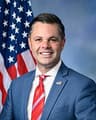
A Republican bill with 29 Democratic cosponsors · See all 57 cosponsors
Last activity — Placed on the Union Calendar, Calendar No. 784.
Cleared committee, waiting for its first floor vote
A committee approved it and it is on the calendar of the chamber it started in.
This is further than most bills get, and still no promise of a vote: the calendar is a queue, and the majority leadership decides what is called. A bill can sit here until the Congress ends.
Its path through Congress
- Introduced
- On Calendar
What this bill would do
This bill establishes a Task Force for Recognizing and Averting Payment Scams, also known as the TRAPS Act. The Secretary of the Treasury must set up this task force within 90 days of the bill's enactment. The group will include government officials, financial experts, technology representatives, and victim advocates. Their main job is to study payment scams, figure out ways to stop them, and issue strategic and legislative recommendations. The task force is required to submit a report within one year, followed by annual updates, and will eventually shut down three years after that initial report.
Yes· 3 of 23
- Scored +8
Does this give people more protection from unfair business practices?
Establishes a comprehensive task force to study, prevent, and educate consumers against payment scams.
- Scored +7
Would people over 65 be better off under this?
Seniors are often primary targets for the types of payment scams this act seeks to prevent.
- Scored +7
Would retired people be better off under this?
Retirees are frequently targeted by sophisticated payment and digital scams.
The opposite
No question was scored the opposite.
How the text last changed
Reported in House (11/24/2026), compared with Introduced in House. Each change is on the Text tab.
The newer version of the bill adjusts the name, composition, and specific duties of the Task Force for Recognizing and Averting Payment Scams, which the Secretary of the Treasury must still establish within 90 days of enactment. It specifies new mandatory members from various government agencies and sets rules for additional appointed representatives, including credit unions, community banks, technology firms, and victim representatives. The updated text modifies what the task force must examine and report on, such as developing strategic recommendations to mitigate scams and disrupt them in process. Finally, it alters the termination timeline, stating the task force will end 3 years after submitting its initial report rather than 3 years after the previously referenced subsection.
Who it would affect, and how
Potential Positive Impacts for People
-
Better Protection and Education for Consumers: Section 3(e)(5) requires the task force to coordinate with the Financial Literacy and Education Commission. This could help everyday people better identify, avoid, and report payment scams, while also promoting support services for victims.
-
Focus on Disrupting Scams to Save Money: Section 3(e)(1)(B) directs the task force to develop strategic recommendations to disrupt payment scams while they are still in process. This could directly limit financial losses for people targeted by fraudsters.
-
Representation for Victims and Experts: Section 3(b)(2) ensures that the task force includes representatives for victims, scam support networks, community banks, credit unions, and experts in artificial intelligence and consumer protection. This brings diverse, real-world voices to the table to help protect everyday individuals.
Potential Negative Impacts for People
- Uncompensated Service Burden: Section 3(f) states that members of the task force shall serve without compensation, other than what they may already receive as employees of the United States. While not a direct burden on everyday citizens, this could place an unpaid time and labor burden on the non-government representatives, such as victim support members and consumer organization representatives, who participate in the task force.
Groups and Interests Ranking
Every group the model scored this bill for, from -10 to +10. Tap or hover a score for the reason it gave.
- Demographic And Interest Groups
- Would retired people be better off under this? — Retirees are frequently targeted by sophisticated payment and digital scams. Would people over 65 be better off under this? — Seniors are often primary targets for the types of payment scams this act seeks to prevent. Would business owners be better off under this? — Directly addresses business email compromise and other corporate payment scams. Would households on low incomes be better off under this? — Prevents financial losses that are more devastating to those with limited resources. Would middle-income households be better off under this? — Provides better protections and education against digital fraud. Would people in middle age be better off under this? — Protects a wide range of adult users from financial fraud. Would students be better off under this? — Students are high-volume users of electronic payment intermediaries. Would people in their twenties and thirties be better off under this? — Young adults are frequent users of the digital payment platforms targeted by scams. Would billionaires be better off under this? — Reduces risk of large-scale fraudulent transfers. Would high-income households be better off under this? — Reduces the risk of financial fraud across all income levels. Would people with substantial wealth be better off under this? — Reduces risk of large-scale fraudulent transfers. Would the very wealthiest people be better off under this? — Reduces risk of large-scale fraudulent transfers.
- Economy And Finance
- Does this give people more protection from unfair business practices? — Establishes a comprehensive task force to study, prevent, and educate consumers against payment scams. Does this make it easier to run a small business? — Specifically addresses business email compromise scams which frequently target small businesses. Is this likely to grow the economy? — Reducing payment scams protects consumer assets and increases trust in digital payment systems.
- Governance And Ideology
- Does this make what the government does easier for the public to see? — Requires the task force to make its report and annual updates publicly available online. Does this leave more decisions to the states? — Requires consultation with State, local, and Tribal agencies. Does this give the federal government more power? — Creates a new federal task force led by the Treasury Secretary.
- National Security And Foreign Policy
- Does this better protect the country from computer attacks? — Addresses malicious advertisements, pop-ups, and digital payment network vulnerabilities. Does this strengthen ties with allied countries? — Task force is required to assess how international jurisdictions prevent payment scams.
- Education And Technology
- Does this give people more control over their personal data? — Combatting spoofing and malicious websites inherently involves improving digital security and privacy. Does this put more rules on large technology companies? — Includes representatives from tech platforms to identify and recommend ways to stop scams.
- Social Issues And Justice
- Is this likely to lift people out of poverty? — Preventing financial scams helps low-income individuals avoid devastating financial losses.
A committee approved it and sent it to the floor
What changed from Introduced in House
The newer version of the bill adjusts the name, composition, and specific duties of the Task Force for Recognizing and Averting Payment Scams, which the Secretary of the Treasury must still establish within 90 days of enactment. It specifies new mandatory members from various government agencies and sets rules for additional appointed representatives, including credit unions, community banks, technology firms, and victim representatives. The updated text modifies what the task force must examine and report on, such as developing strategic recommendations to mitigate scams and disrupt them in process. Finally, it alters the termination timeline, stating the task force will end 3 years after submitting its initial report rather than 3 years after the previously referenced subsection.
Each change
- Section 2 updates the formal name of the task force to include "for Recognizing and Averting" instead of "on".
- Section 3(a) clarifies that the Secretary of the Treasury shall establish the task force.
- Section 3(b)(1) changes how government members of the task force are listed, adding specific leadership titles (such as the Director of the Bureau of Consumer Financial Protection and Chairmen of various commissions), replacing the Department of Justice with the Attorney General, and adding the Undersecretary of the Treasury for Terrorism and Financial Crimes while removing the Department of Justice as a general entity.
- Section 3(b)(2) changes the appointed financial institution representatives from a general group to specifically require 3 representatives with scam-combating expertise, including at least 1 credit union representative and at least 1 community bank representative.
- Section 3(b)(2) also adds specific required representatives from consumer protection organizations, technology firms, telecommunications industry associations, payment service providers, and artificial intelligence financial crime experts, while removing previous specific slots for credit unions, community banks, consumer groups, and tech/online platform associations.
- Section 3(b)(2) allows the Secretary to appoint up to 5 additional representatives periodically to address expertise gaps or novel threats.
- Section 3(b) renumbers the terms of appointment and vacancy rules as paragraphs (3) and (4).
- Section 3(c) adjusts the task force's purpose to focus on cross-sector recommendations and consultations with scam-victim support stakeholders and industry participants.
- Section 3(e) reorganizes the duties of the task force, removing the evaluation of best practices for spoofed calls and texts as a separate standalone duty and moving those methods into specific scam types reviewed, while adding duties to develop strategic recommendations to disrupt scams in process, evaluate information sharing and law enforcement efforts, promote victim support, and determine if regulatory changes would help prevent scams.
- Section 3(f) modifies compensation rules to apply to members serving without compensation other than their normal government employee pay.
- Section 3(g) updates the contents of the required reports and annual updates, changing references from strategies to strategic recommendations and adding requirements to cover cooperation among Federal, State, local, and Tribal authorities.
- Section 3(i) changes the termination date (sunset) of the task force to be 3 years after submitting the initial report under subsection (g)(1) instead of subsection (h)(1).
Written by an AI model from a comparison of this version’s text with the one before it, not by a person. .
- 11/24/2026
- Reported (Amended) by the Committee on Financial Services. H. Rept. 119-889.
- Placed on the Union Calendar, Calendar No. 784.
- 10/13/2026
- 1 Cosponsor added.
- 10/5/2026
- 1 Cosponsor added.
- 9/24/2026
- 1 Cosponsor added.
- 9/16/2026
- Committee Consideration and Mark-up Session Held
- Ordered to be Reported (Amended) by the Yeas and Nays: 49 - 0.
- 9/14/2026
- 1 Cosponsor added.
- 9/10/2026
- 1 Cosponsor added.
- 7/13/2026
- 1 Cosponsor added.
- 6/23/2026
- 1 Cosponsor added.
- 6/15/2026
- 1 Cosponsor added.
- 6/10/2026
- 1 Cosponsor added.
- 6/2/2026
- 1 Cosponsor added.
- 4/28/2026
- 2 Cosponsors added.
- 4/20/2026
- 1 Cosponsor added.
- 4/16/2026
- 1 Cosponsor added.
- 4/14/2026
- 1 Cosponsor added.
- 4/9/2026
- 2 Cosponsors added.
- 3/26/2026
- 2 Cosponsors added.
- 3/25/2026
- 2 Cosponsors added.
- 3/18/2026
- 1 Cosponsor added.
- 3/17/2026
- 6 Cosponsors added.
- 3/4/2026
- 1 Cosponsor added.
- 2/20/2026
- 1 Cosponsor added.
- 2/10/2026
- 2 Cosponsors added.
- 2/2/2026
- 1 Cosponsor added.
- 1/7/2026
- 1 Cosponsor added.
- 12/19/2025
- 1 Cosponsor added.
- 12/18/2025
- 1 Cosponsor added.
- 12/9/2025
- 1 Cosponsor added.
- 11/19/2025
- 1 Cosponsor added.
- 10/31/2025
- 1 Cosponsor added.
- 10/24/2025
- 1 Cosponsor added.
- 10/17/2025
- 2 Cosponsors added.
- 9/30/2025
- 1 Cosponsor added.
- 9/26/2025
- 4 Cosponsors added.
- 9/18/2025
- 1 Cosponsor added.
- 9/17/2025
- 1 Cosponsor added.
- 9/15/2025
- 1 Cosponsor added.
- 9/11/2025
- 1 Cosponsor added.
- 9/10/2025
- 2 Cosponsors added.
- 9/2/2025
- 1 Cosponsor added.
- 8/19/2025
- 2 Cosponsors added.
- 8/8/2025
- Referred to the House Committee on Financial Services.
- 1 Cosponsor added.
- Introduced in House
One bill Congress.gov lists as related to this one — companions in the other chamber, earlier versions, and bills this one absorbed or was folded into.
 Gabe Amo
Democrat · Rhode Island
 Vern Buchanan
Republican · Florida
 Suzanne Bonamici
Democrat · Oregon
 Joyce Beatty
Democrat · Ohio
 Andy Barr
Republican · Kentucky
 Ami Bera
Democrat · California
 Donald Beyer
Democrat · Virginia
 Don Bacon
Republican · Nebraska
 Janelle Bynum
Democrat · Oregon
 J. Correa
Democrat · California
 Jason Crow
Democrat · Colorado
 Donald Davis
Democrat · North Carolina
 Christopher Deluzio
Democrat · Pennsylvania
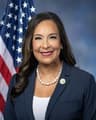 Monica De La Cruz
Republican · Texas
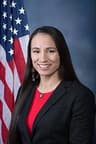 Sharice Davids
Democrat · Kansas
 Gabe Evans
Republican · Colorado
 Virginia Foxx
Republican · North Carolina
 Brian Fitzpatrick
Republican · Pennsylvania
 Adelita Grijalva
Democrat · Arizona
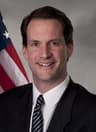 James Himes
Democrat · Connecticut
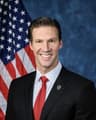 Pat Harrigan
Republican · North Carolina
 William Keating
Democrat · Massachusetts
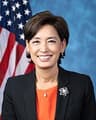 Young Kim
Republican · California
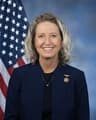 Jennifer Kiggans
Republican · Virginia
 Frank Lucas
Republican · Oklahoma
 Barry Loudermilk
Republican · Georgia
 Michael Lawler
Republican · New York
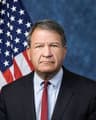 George Latimer
Democrat · New York
 Nicole Malliotakis
Republican · New York
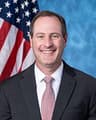 Tracey Mann
Republican · Kansas
 Daniel Meuser
Republican · Pennsylvania
 Seth Magaziner
Democrat · Rhode Island
 Tim Moore
Republican · North Carolina
 Dave Min
Democrat · California
 Joe Neguse
Democrat · Colorado
 Brittany Pettersen
Democrat · Colorado
 Jamie Raskin
Democrat · Maryland
 Josh Riley
Democrat · New York
 Maria Salazar
Republican · Florida
 Pete Sessions
Republican · Texas
 Brad Sherman
Democrat · California
 Christopher Smith
Republican · New Jersey
 David Scott
Democrat · Georgia
 Adrian Smith
Republican · Nebraska
 Terri Sewell
Democrat · Alabama
 Darren Soto
Democrat · Florida
 Bryan Steil
Republican · Wisconsin
 Andrea Salinas
Democrat · Oregon
 William Timmons
Republican · South Carolina
 Derek Tran
Democrat · California
 David Valadao
Republican · California
 Jefferson Van Drew
Republican · New Jersey
 Eugene Vindman
Democrat · Virginia
 Robert Wittman
Republican · Virginia
 Randy Weber
Republican · Texas
 Roger Williams
Republican · Texas
 James Walkinshaw
Democrat · Virginia