Bill · H.R. 10377· House(119-HR-10377)
MAGA Act
- Introduced
- 9/15/2026
- Last activity
- 9/15/2026 — Referred to the Committee on the Judiciary, and in addition to the Committee on Oversight and Government Reform, for a period to be subsequently determined by the Speaker, in each case for consideration of such provisions as fall within the jurisdiction of the committee concerned.
- Sponsored by
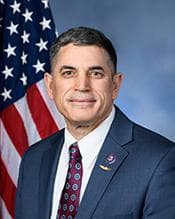
- Andrew Clyde
- Cosponsors
- - 42 - 0
- Introduced
- In Committee
What this bill would do
This bill, known as the MAGA Act, changes how people are counted for dividing up seats in the House of Representatives by leaving out noncitizens. It orders the Secretary of Commerce to recalculate the 2020 census data using only U.S. citizens and requires the President to submit a revised apportionment to Congress. The legislation also forces future decennial censuses, starting in 2030, to include a specific question about the citizenship or residency status of everyone in a household. Additionally, the bill sets up strict rules for federal courts to handle any legal challenges to this law very quickly, including using three-judge panels and allowing direct appeals to the Supreme Court. Finally, it gives federal courts original jurisdiction over legal challenges and allows cases filed in state courts to be moved to federal court.
Yes
Does this give the federal government more power?+6
The bill increases federal authority by requiring federal courts to handle challenges via expedited three-judge panels and allowing removal of state-level cases to federal court.
Does this make what the government does easier for the public to see?+4
The bill requires the Secretary of Commerce to make disaggregated population data by citizenship and residency status publicly available after decennial censuses.
The opposite
Would immigrants be better off under this?-8
The bill excludes noncitizens from congressional apportionment and mandates reporting citizenship or legal status on census questionnaires, which may deter participation and reduce political representation.
Would people in cities be better off under this?-5
Urban areas with high noncitizen populations may lose congressional representation under the revised apportionment rules.
Who it would affect, and how
Potential Positive Impacts for People
- Section 4: This section requires future decennial censuses to include clear options for respondents to indicate citizenship, U.S. nationality, lawful alien status, or unlawful alien status, and requires the Secretary of Commerce to make this disaggregated data publicly available. This could be seen as positive for transparency, as it provides the public with detailed information regarding the population breakdown by citizenship and residency status in each state.
Potential Negative Impacts for People
-
Section 2 and Section 3: These sections exclude noncitizens from the population base used for congressional apportionment and require a revised apportionment of Representatives based only on U.S. citizens. For individuals and groups living in areas with high noncitizen populations, this could be viewed as a negative outcome because it may reduce their state's political representation and voting power in Congress.
-
Section 4: By requiring individuals to report whether they are lawfully or unlawfully residing in the United States on a government census questionnaire, this provision could create fear or reluctance among immigrant communities to participate in the census, potentially leading to inaccurate population counts.
Groups and Interests Ranking
Every group the model scored this bill for, from -10 to +10. Hover a score for the reason it gave.
- Demographic And Interest Groups
- Good For Immigrants-8Good For Urban Residents-5
- Governance And Ideology
- Increases Federal Power+6Improves Government Transparency+4
- 9/15/2026
- Referred to the Committee on the Judiciary, and in addition to the Committee on Oversight and Government Reform, for a period to be subsequently determined by the Speaker, in each case for consideration of such provisions as fall within the jurisdiction of the committee concerned.
- 42 Cosponsors added.
- Introduced in House
 Lauren Boebert
Republican · Colorado
 Andy Barr
Republican · Kentucky
 Andy Biggs
Republican · Arizona
 Eric Burlison
Republican · Missouri
 Josh Brecheen
Republican · Oklahoma
 Sheri Biggs
Republican · South Carolina
 Earl Carter
Republican · Georgia
 Michael Cloud
Republican · Texas
 Ben Cline
Republican · Virginia
 Mike Collins
Republican · Georgia
 Elijah Crane
Republican · Arizona
 Byron Donalds
Republican · Florida
 Warren Davidson
Republican · Ohio
 Russ Fulcher
Republican · Idaho
 Randy Fine
Republican · Florida
 Clay Fuller
Republican · Georgia
 Paul Gosar
Republican · Arizona
 Brandon Gill
Republican · Texas
 Andy Harris
Republican · Maryland
 Clay Higgins
Republican · Louisiana
 Diana Harshbarger
Republican · Tennessee
 Wesley Hunt
Republican · Texas
 Anna Paulina Luna
Republican · Florida
 Tom McClintock
Republican · California
 Mary Miller
Republican · Illinois
 Barry Moore
Republican · Alabama
 Richard McCormick
Republican · Georgia
 Riley Moore
Republican · West Virginia
 Troy Nehls
Republican · Texas
 Ralph Norman
Republican · South Carolina
 Andrew Ogles
Republican · Tennessee
 Scott Perry
Republican · Pennsylvania
 Gary Palmer
Republican · Alabama
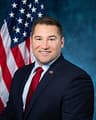 Guy Reschenthaler
Republican · Pennsylvania
 Chip Roy
Republican · Texas
 Marlin Stutzman
Republican · Indiana
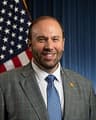 Jason Smith
Republican · Missouri
 Pete Stauber
Republican · Minnesota
 Keith Self
Republican · Texas
 Thomas Tiffany
Republican · Wisconsin
 Beth Van Duyne
Republican · Texas
 Tony Wied
Republican · Wisconsin