Bill · S. 5028· Senate(119-S-5028)
Ratepayer Protection Act
- Introduced
- 7/16/2026
- Last activity
- 7/16/2026 — Read twice and referred to the Committee on Energy and Natural Resources.
- Sponsored by
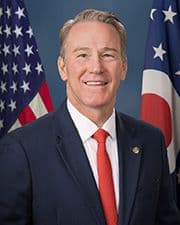
- Jon Husted
- Cosponsors
- - 16 - 0
- Introduced
- In Committee
What this bill would do
This bill is known as the Ratepayer Protection Act. It amends the Public Utility Regulatory Policies Act of 1978 to create a new Federal standard for large-load customers. These large-load customers are defined as non-residential electric consumers that run facilities for information technology infrastructure, data storage, and computational applications with a peak electric demand of 100 megawatts or more at a single site or campus. The bill requires that utility rates for these large-load customers cover the full, incremental cost of any upgrades needed to serve them. Utilities must also require these large-load customers to provide financial assurances or contributions before making any necessary upgrades. Finally, the legislation sets timelines for State regulatory authorities and nonregulated electric utilities to consider and determine this new standard.
Yes· 3 of 6
Does this give people more protection from unfair business practices?+6
Everyday electric ratepayers are protected from absorbing the high infrastructure costs associated with massive data and computing centers.
Would households on low incomes be better off under this?+5
Protects lower-income households from electricity rate hikes caused by utility upgrades for large tech facilities.
Would middle-income households be better off under this?+5
Shields middle-class ratepayers from absorbing the incremental costs of massive new commercial grid upgrades.
The opposite
Would business owners be better off under this?-2
Imposes stricter financial assurance and cost-recovery rules specifically targeting very large load commercial operations.
Who it would affect, and how
Potential Positive Impacts for People
-
Protection from upgrade costs: Section 2(a), adding section 111(d)(22)(B) to the Public Utility Regulatory Policies Act of 1978, ensures that electric rates charged to large-load customers are designed to recover the full, incremental cost of generation, transmission, or distribution upgrades necessary to serve them, even if the customer terminates their contract or stops purchasing energy. This is positive because it helps ensure everyday people are not stuck paying the bill for power grid upgrades built just for massive data centers.
-
Upfront financial security: Section 2(a), adding section 111(d)(22)(C) to the Public Utility Regulatory Policies Act of 1978, requires electric utilities to demand financial assurances or contributions from large-load customers to cover the cost of upgrades before the utility makes any generation, transmission, or distribution upgrades. This is positive because it holds big tech and data centers financially accountable upfront rather than risking public money or leaving local communities holding the bag.
Potential Negative Impacts for People
- Based on the provided text, there are no explicit negative consequences or burdens identified for individuals or groups of people in the United States.
Groups and Interests Ranking
Every group the model scored this bill for, from -10 to +10. Hover a score for the reason it gave.
- Economy And Finance
- Improves Consumer Protection+6Improves Fiscal Responsibility+4
- Demographic And Interest Groups
- Good For Low Income Households+5Good For Middle Class Households+5Good For Business Owners-2
- Education And Technology
- Increases Big Tech Regulation+4
- Governance And Ideology
- Increases Federal Power+2
- 9/28/2026
- 1 Cosponsor added.
- 9/24/2026
- 2 Cosponsors added.
- 9/23/2026
- 4 Cosponsors added.
- 9/22/2026
- 4 Cosponsors added.
- 9/17/2026
- 4 Cosponsors added.
- 9/14/2026
- 1 Cosponsor added.
- 7/16/2026
- Read twice and referred to the Committee on Energy and Natural Resources.
- Introduced in Senate
One bill Congress.gov lists as related to this one — companions in the other chamber, earlier versions, and bills this one absorbed or was folded into.
- Alan Armstrong
Republican · Oklahoma
 Katie Britt
Republican · Alabama
 Susan Collins
Republican · Maine
 John Cornyn
Republican · Texas
 Tom Cotton
Republican · Arkansas
 Joni Ernst
Republican · Iowa
 Deb Fischer
Republican · Nebraska
- Darline Graham
Republican · South Carolina
 Bill Hagerty
Republican · Tennessee
 John Hoeven
Republican · North Dakota
 John Kennedy
Republican · Louisiana
 Roger Marshall
Republican · Kansas
 Ashley Moody
Republican · Florida
 Pete Ricketts
Republican · Nebraska
 Tommy Tuberville
Republican · Alabama
 Todd Young
Republican · Indiana