Bill · S. 2534· Senate(119-S-2534)
Veteran Families Health Services Act of 2025
- Introduced
- 7/30/2025
- Last activity
- 7/30/2025 — Read twice and referred to the Committee on Veterans' Affairs.
- Sponsored by
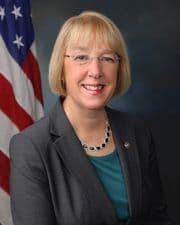
- Patty Murray
- Cosponsors
- - 22 - 0
- Introduced
- In Committee
What this bill would do
The Veteran Families Health Services Act of 2025 aims to improve reproductive assistance for members of the Armed Forces, veterans, and their families. It directs the Department of Defense to provide fertility treatment, counseling, and preservation procedures to service members. The bill also requires the Department of Veterans Affairs to offer fertility treatment, counseling, and adoption assistance to certain veterans. Additionally, it establishes procedures for cryopreservation of genetic material and promotes coordination between the Department of Defense and the Department of Veterans Affairs. The legislation also seeks to facilitate research into reproduction and infertility.
Yes· 3 of 9
Would veterans be better off under this, taking everything together?+9
The bill provides substantial new reproductive and adoption-related benefits specifically for veterans.
Does this increase the pay, pensions or support veterans receive?+8
The bill significantly expands veteran benefits to include fertility treatment, counseling, and adoption assistance.
Does this make health care easier to get in general?+7
The bill expands access to fertility treatment, counseling, and adoption assistance for service members and veterans.
The opposite
No question was scored the opposite.
Who it would affect, and how
Potential Positive Impacts for People
-
Fertility Treatment for Service Members: The Secretary of Defense must make fertility treatment and counseling available to members of the Armed Forces and their spouses, partners, or gestational surrogates, regardless of sex, gender identity, or marital status (Section 102).
-
Protection After Injury or Illness: Procedures will be established to retrieve reproductive genetic material as soon as medically appropriate for members whose fertility may be jeopardized by an injury or illness sustained while on active duty (Section 103).
-
Proactive Preservation: Service members are provided the opportunity to undergo the retrieval, testing, and storage of reproductive genetic material prior to deployment to combat zones or hazardous duty assignments (Section 104).
-
Cost-Free Storage: The Department of Defense shall provide the storage of reproductive genetic material at no cost to the member until one year after their retirement, separation, or release from the Armed Forces (Section 104).
-
Fertility Assistance for Veterans: The Secretary of Veterans Affairs is required to furnish fertility treatment and counseling for the benefit of covered veterans and their families (Section 202).
-
Adoption Assistance: The Secretary may pay amounts to assist covered veterans in the adoption of children, regardless of their sex, gender identity, sexual orientation, or marital status (Section 203).
-
Research and Information: The bill facilitates research conducted by the Department of Defense and the Department of Health and Human Services to improve reproductive health care for veterans (Section 205).
Potential Negative Impacts for People
-
Financial Responsibility for Storage: After a one-year period following a member's departure from the military, individuals must bear the cost themselves if they choose to continue cryopreservation and storage through the Secretary (Section 104).
-
Limitations on In Vitro Fertilization: For those receiving in vitro fertilization, the Secretary may limit the treatment to no more than three completed oocyte retrievals (Section 102 and Section 202).
-
Lack of Surrogacy Support: The Secretary is not required to find or certify a gestational surrogate or connect a member with a donor for reproductive genetic material (Section 102 and Section 202).
-
Responsibility for Disputes: Issues or disputes regarding the ownership or use of reproductive genetic material are the sole responsibility of the veteran and their partner or surrogate, and the Secretary will not be involved in these disputes (Section 202).
Groups and Interests Ranking
Every group the model scored this bill for, from -10 to +10. Hover a score for the reason it gave.
- Demographic And Interest Groups
- Good For Veterans+9Good For Women+6Good For Low Income Households+4
- Healthcare
- Improves Healthcare Access+7Increases Research Funding+5
- Social Issues And Justice
- Improves L G B T Q Rights+6Improves Gender Equality+5
- National Security And Foreign Policy
- Improves Veterans Benefits+8
- Education And Technology
- Increases Scientific Research Funding+4
- 10/7/2025
- 1 Cosponsor added.
- 9/8/2025
- 2 Cosponsors added.
- 7/30/2025
- Read twice and referred to the Committee on Veterans' Affairs.
- 21 Cosponsors added.
- Introduced in Senate
One bill Congress.gov lists as related to this one — companions in the other chamber, earlier versions, and bills this one absorbed or was folded into.
 Tammy Baldwin
Democrat · Wisconsin
 Richard Blumenthal
Democrat · Connecticut
 Cory Booker
Democrat · New Jersey
 Catherine Cortez Masto
Democrat · Nevada
 Tammy Duckworth
Democrat · Illinois
 Kirsten Gillibrand
Democrat · New York
 Ruben Gallego
Democrat · Arizona
 John Hickenlooper
Democrat · Colorado
 Martin Heinrich
Democrat · New Mexico
 Amy Klobuchar
Democrat · Minnesota
 Mark Kelly
Democrat · Arizona
 Angus King
Independent · Maine
 Timothy Kaine
Democrat · Virginia
 Jeff Merkley
Democrat · Oregon
 Alex Padilla
Democrat · California
 Jacky Rosen
Democrat · Nevada
 Bernie Sanders
Independent · Vermont
 Charles Schumer
Democrat · New York
 Jeanne Shaheen
Democrat · New Hampshire
 Tina Smith
Democrat · Minnesota
 Ron Wyden
Democrat · Oregon
 Peter Welch
Democrat · Vermont
 Sheldon Whitehouse
Democrat · Rhode Island
 Elizabeth Warren
Democrat · Massachusetts