Bill · H.R. 4855· House(119-HR-4855)
Veteran Families Health Services Act of 2025
- Introduced
- 8/1/2025
- Last activity
- 12/19/2025 — Referred to the Subcommittee on Health.
- Sponsored by
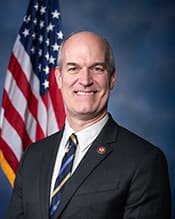
- Rick Larsen
- Cosponsors
- - 19 - 0
- Introduced
- In Committee
What this bill would do
The Veteran Families Health Services Act of 2025 aims to improve reproductive assistance for members of the Armed Forces, veterans, and their families. It directs the Department of Defense to provide fertility treatment, counseling, and preservation services, including procedures after injury or illness. The bill also mandates the cryopreservation and storage of reproductive genetic material for active duty members facing certain deployments or hazardous assignments. Additionally, the legislation expands benefits to veterans through fertility treatment, counseling, and adoption assistance. Finally, it requires coordination between the Department of Defense and the Department of Veterans Affairs to ensure continuity of care.
Yes· 3 of 6
Would veterans be better off under this, taking everything together?+8
The bill provides comprehensive new reproductive and adoption assistance for veterans.
Does this increase the pay, pensions or support veterans receive?+8
The bill significantly expands health benefits for veterans to include fertility treatment and adoption assistance.
Does this make health care easier to get in general?+7
The bill expands access to fertility treatment, counseling, and adoption assistance for service members and veterans.
The opposite
No question was scored the opposite.
Who it would affect, and how
Potential Positive Impacts for People
-
Access to Fertility Treatment: The Secretary of Defense must make fertility treatment and counseling available to members of the Armed Forces and their spouses, partners, or gestational surrogates, regardless of sex, gender identity, or marital status (Section 102(a)).
-
Protection Against Injury-Related Fertility Loss: The Department of Defense must establish procedures to retrieve reproductive genetic material as soon as medically appropriate for members whose fertility may be jeopardized by an injury or illness incurred while serving (Section 103(a)).
-
Support for High-Risk Assignments: Active duty members can access the retrieval, testing, and cryopreservation of reproductive genetic material at no cost prior to combat deployments or hazardous assignments (Section 104(a)).
-
Continuity of Care: The bill ensures that members of the Armed Forces can continue receiving services without interruption during a permanent change of station (Section 105(3)), and ensures veterans can continue services if they move to different geographic locations (Section 204(3)).
-
Financial Support for Genetic Material: If a member or veteran cannot provide their own genetic material, the Secretary shall pay or reimburse the reasonable costs of procuring donated material (Section 102(b) and Section 202(b)(1)).
-
Adoption Assistance for Veterans: The Secretary may pay amounts to assist covered veterans in the adoption of one or more children (Section 203(a)).
Potential Negative Impacts for People
-
Personal Financial Responsibility for Long-term Storage: After one year following retirement or separation from the military, individuals must pay their own costs to continue the cryopreservation and storage of their reproductive genetic material (Section 104(b)(2)(A)).
-
Legal and Ownership Risks: For veterans, issues or disputes regarding the ownership, use, or disposition of reproductive genetic material are the sole responsibility of the veteran and the private facility, as the Department's role is limited to furnishing treatment (Section 202(d)).
-
Limited Scope of Support: For veterans, the Secretary is not required to find or certify a gestational surrogate or connect a veteran with reproductive genetic material from a donor (Section 202(e)(1)).
-
Limited Maternity Care: The Secretary is not required to furnish maternity care to a covered veteran, spouse, partner, or gestational surrogate beyond what is already authorized by law (Section 202(e)(2)).
Groups and Interests Ranking
Every group the model scored this bill for, from -10 to +10. Hover a score for the reason it gave.
- Demographic And Interest Groups
- Good For Veterans+8Good For Women+5
- Healthcare
- Improves Healthcare Access+7Increases Research Funding+5
- National Security And Foreign Policy
- Improves Veterans Benefits+8
- Social Issues And Justice
- Improves L G B T Q Rights+6
- 12/19/2025
- Referred to the Subcommittee on Health.
- 10/8/2025
- 1 Cosponsor added.
- 8/29/2025
- 2 Cosponsors added.
- 8/8/2025
- 1 Cosponsor added.
- 8/5/2025
- 3 Cosponsors added.
- 8/1/2025
- Referred to the Committee on Veterans' Affairs, and in addition to the Committee on Armed Services, for a period to be subsequently determined by the Speaker, in each case for consideration of such provisions as fall within the jurisdiction of the committee concerned.
- 12 Cosponsors added.
- Introduced in House
One bill Congress.gov lists as related to this one — companions in the other chamber, earlier versions, and bills this one absorbed or was folded into.
 Danny Davis
Democrat · Illinois
 Suzan DelBene
Democrat · Washington
 Josh Gottheimer
Democrat · New Jersey
 Sylvia Garcia
Democrat · Texas
 Chrissy Houlahan
Democrat · Pennsylvania
 Sara Jacobs
Democrat · California
 Raja Krishnamoorthi
Democrat · Illinois
 John Larson
Democrat · Connecticut
 Mike Levin
Democrat · California
 James McGovern
Democrat · Massachusetts
 Seth Moulton
Democrat · Massachusetts
 Seth Magaziner
Democrat · Rhode Island
 Eleanor Norton
Democrat · District of Columbia
 Deborah Ross
Democrat · North Carolina
 Delia Ramirez
Democrat · Illinois
 Brad Sherman
Democrat · California
 Linda Sánchez
Democrat · California
 Marilyn Strickland
Democrat · Washington
 Dina Titus
Democrat · Nevada