Bill · S. 1756· Senate(119-S-1756)
Conscience Protection Act of 2025
- Introduced
- 5/14/2025
- Last activity
- 3/19/2026 — Committee on Health, Education, Labor, and Pensions. Hearings held.
- Sponsored by
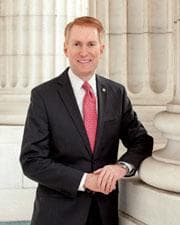
- James Lankford
- Cosponsors
- - 23 - 0
- Introduced
- In Committee
What this bill would do
This bill amends the Public Health Service Act to prohibit the Federal Government, States, local governments, and any entities receiving Federal financial assistance from discriminating against health care entities that decline to provide, perform, refer for, pay for, or sponsor abortions or abortion coverage. It strengthens the implementation and enforcement of Federal conscience laws by directing the Office for Civil Rights of the Department of Health and Human Services to receive and promptly investigate complaints of violations. The bill authorizes the Secretary of Health and Human Services to terminate Federal financial assistance to individuals or entities that fail to comply with these conscience laws. Additionally, the legislation creates a private right of action, allowing the Attorney General or any adversely affected party to bring a civil action in court for actual or threatened violations without needing to exhaust administrative remedies first. Courts are required to grant appropriate relief in these civil actions, including injunctive relief, declaratory relief, compensatory damages against governmental entities, and reasonable attorneys' fees for prevailing plaintiffs. The bill also includes a severability clause ensuring that if any part of the Act is found unconstitutional, the remaining provisions will stay in effect.
Yes
Does this protect the freedom to practise a religion?+8
The bill provides strong protections for the rights of conscience and religious beliefs of health care entities.
Does this give the federal government more power?+5
The bill expands the authority of the Secretary of HHS to regulate and induce compliance through termination of funds.
Does this leave more decisions to the states?+4
The bill protects the ability of states to operate according to their own laws regarding conscience rights.
The opposite
Does this make abortion easier to get?-7
The bill specifically protects the rights of health care entities to decline participation in abortion services, which may limit accessibility.
Would women be better off under this?-6
By protecting entities that do not participate in abortion, the bill may reduce access to these services for women.
Who it would affect, and how
Potential Positive Impacts for People
-
Protection of Personal Convictions: The bill prevents the Federal Government, States, local governments, and any entity receiving Federal financial assistance from penalizing, retaliating against, or discriminating against health care entities and individuals—such as doctors, nurses, pharmacists, and hospitals—that choose not to participate in abortions, abortion referrals, or abortion coverage (Section 3, inserting Section 245A(a)). This ensures that medical professionals and organizations do not have to abandon their religious, moral, ethical, or medical beliefs to stay in their profession.
-
Ability to Defend Rights in Court: The legislation establishes a private right of action allowing individuals or entities adversely affected by a violation of Federal conscience laws to sue in court without needing to exhaust administrative remedies first (Section 4, inserting Section 245C(a), (b)(2), and (c)). This gives victims of discrimination a direct way to defend their conscience rights and seek justice, including money damages and legal fees, even against State governmental entities (Section 4, inserting Section 245C(d)(1) and (e)).
Potential Negative Impacts for People
-
Potential Loss of Federal Funding for States and Programs: The Secretary of Health and Human Services is required to induce compliance with Federal conscience laws by terminating, in whole or in part, any Federal financial assistance provided to any individual, entity, or State or local government that fails to comply (Section 4, inserting Section 245B(c)(1)). This could result in the loss of critical Federal funds for healthcare programs and services within a State if a violation occurs.
-
Financial and Legal Burdens on Public and Private Entities: The bill allows any adversely affected party to bring a civil lawsuit against health care entities, including State and local governmental entities, for actual or threatened violations of Federal conscience laws, and courts must award compensatory damages and reasonable attorneys' fees to a prevailing plaintiff (Section 4, inserting Section 245C(b)(2), (d)(1), and (e)). This exposes healthcare systems, local governments, and taxpayers to potential costly litigation, monetary payouts, and legal fees.
Groups and Interests Ranking
Every group the model scored this bill for, from -10 to +10. Hover a score for the reason it gave.
- Governance And Ideology
- Increases Federal Power+5Increase States Rights+4
- Social Issues And Justice
- Improves Religious Freedom+8
- Healthcare
- Improves Abortion Access-7
- Demographic And Interest Groups
- Good For Women-6
- 3/19/2026
- Committee on Health, Education, Labor, and Pensions. Hearings held.
- 1/28/2026
- 1 Cosponsor added.
- 12/17/2025
- 1 Cosponsor added.
- 10/21/2025
- 3 Cosponsors added.
- 10/8/2025
- 2 Cosponsors added.
- 7/29/2025
- 1 Cosponsor added.
- 5/14/2025
- Read twice and referred to the Committee on Health, Education, Labor, and Pensions.
- 15 Cosponsors added.
- Introduced in Senate
One bill Congress.gov lists as related to this one — companions in the other chamber, earlier versions, and bills this one absorbed or was folded into.
 John Boozman
Republican · Arkansas
 Marsha Blackburn
Republican · Tennessee
 Jim Banks
Republican · Indiana
 Ted Budd
Republican · North Carolina
 Mike Crapo
Republican · Idaho
 John Cornyn
Republican · Texas
 Kevin Cramer
Republican · North Dakota
 Steve Daines
Republican · Montana
 Joni Ernst
Republican · Iowa
 Deb Fischer
Republican · Nebraska
 John Hoeven
Republican · North Dakota
 Cindy Hyde-Smith
Republican · Mississippi
 Josh Hawley
Republican · Missouri
 John Kennedy
Republican · Louisiana
 Cynthia Lummis
Republican · Wyoming
 Mike Lee
Republican · Utah
 Markwayne Mullin
Republican · Oklahoma
 David McCormick
Republican · Pennsylvania
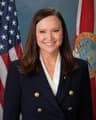 Ashley Moody
Republican · Florida
 James Risch
Republican · Idaho
 Mike Rounds
Republican · South Dakota
 Pete Ricketts
Republican · Nebraska
 Todd Young
Republican · Indiana