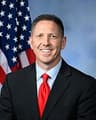
Josh Brecheen (R-OK)
Expressing the sense of the House of Representatives that the sermon given by the Right Reverend Mariann Edgar Budde at the National Prayer Service on January 21st, 2025, at the National Cathedral was a display of political activism and condemning its distorted message.
A Republican resolution with 22 Republican cosponsors · See all 22 cosponsors
Last activity — Referred to the House Committee on Oversight and Government Reform.
In committee
Introduced and handed to a committee in the chamber it started in.
The committee holds it, and most bills are never heard from again. A hearing or a committee vote would be news; silence is the usual outcome, and it kills the bill without anyone voting against it.
Its path through Congress
- Introduced
- In Committee
A House resolution is the House speaking for itself: stating a position, honouring someone, or setting its own rules. Adopting it is the whole process. Once the House agrees to it, it is officially the House's word; it is not a law, so the Senate and the President have no part in it.
What this bill would do
This resolution expresses the view of the House of Representatives regarding a specific religious service. It states that the sermon given by the Right Reverend Mariann Edgar Budde at the National Prayer Service on January 21, 2025, at the National Cathedral was a display of political activism. The text notes that the National Prayer Service is a tradition meant to affirm dependence on God and pray for the success of the President and Vice President. It also states that the bishop used her position inappropriately by promoting political bias instead of biblical teaching. Finally, the resolution formally condemns her message.
Yes
No question was scored yes.
The opposite
- Scored -4
Does this protect the individual right to speak freely?
The resolution's condemnation of a specific sermon may have a chilling effect on the free expression of clergy during public services.
- Scored -3
Does this protect the freedom to practise a religion?
The resolution targets and condemns a specific religious leader's sermon, which may be perceived as a criticism of religious expression.
Who it would affect, and how
Potential Positive Impacts for People
The provided text does not contain any specific sections or provisions that outline positive outcomes, benefits, or positive impacts for individuals or groups of people in the United States.
Potential Negative Impacts for People
The provided text does not contain any specific sections or provisions that outline negative consequences, burdens, or negative impacts for individuals or groups of people in the United States.
Groups and Interests Ranking
Every group the model scored this bill for, from -10 to +10. Tap or hover a score for the reason it gave.
- Governance And Ideology
- Does this protect the individual right to speak freely? — The resolution's condemnation of a specific sermon may have a chilling effect on the free expression of clergy during public services.
- Social Issues And Justice
- Does this protect the freedom to practise a religion? — The resolution targets and condemns a specific religious leader's sermon, which may be perceived as a criticism of religious expression.
- 1/28/2025
- 2 Cosponsors added.
- 1/23/2025
- Submitted in House
- Referred to the House Committee on Oversight and Government Reform.
- 20 Cosponsors added.
 Rick Allen
Republican · Georgia
 Stephanie Bice
Republican · Oklahoma
 Lauren Boebert
Republican · Colorado
 Brian Babin
Republican · Texas
 James Baird
Republican · Indiana
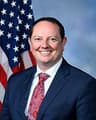 Eric Burlison
Republican · Missouri
 Sheri Biggs
Republican · South Carolina
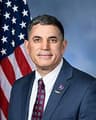 Andrew Clyde
Republican · Georgia
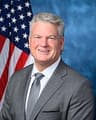 Mike Collins
Republican · Georgia
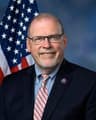 H. Griffith
Republican · Virginia
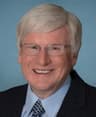 Glenn Grothman
Republican · Wisconsin
 Marjorie Greene
Republican · Georgia
 Erin Houchin
Republican · Indiana
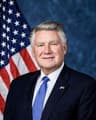 Mark Harris
Republican · North Carolina
 Anna Paulina Luna
Republican · Florida
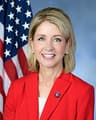 Mary Miller
Republican · Illinois
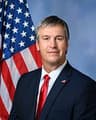 Barry Moore
Republican · Alabama
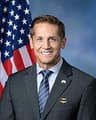 Richard McCormick
Republican · Georgia
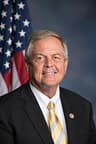 Ralph Norman
Republican · South Carolina
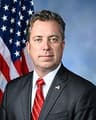 Andrew Ogles
Republican · Tennessee
 Beth Van Duyne
Republican · Texas
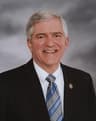 Daniel Webster
Republican · Florida